
How to See More of Europe Without Constantly Flying
Europe is one of the easiest places in the world to look at a map, see that your next destination is in another country, and immediately start searching for a flight.
But a flight isn’t always the fastest, cheapest, or most enjoyable way to get there.
Sure, the actual flying part might only take an hour or two. But then add getting to the airport, arriving early, security, waiting around, baggage, and eventually getting into the city, and poof, more than half of your day is gone!
I’ve traveled around Europe a lot over the years, and one of the best things about traveling here is the options you have!
Depending on where you’re going, taking a train, renting a car, hopping on a bus or ferry, or even traveling by river can make way more sense than automatically booking another flight.
Here’s when I’d consider each one.
1. Take the Train When You’re Going City to City
If you’re traveling between major European cities, check the trains before you even bother looking at flights.
Rail stations are usually much more centrally located than airports; you don’t need to show up hours beforehand, and you can actually see where you’re going along the way instead of staring at clouds for two hours.
This makes sense on tons of routes, especially when you’re moving between well-connected cities in neighboring countries.
It’s also just nicer? You can get up, stretch your legs, watch the scenery go by, and generally avoid the whole airport experience.
Train travel does get more complicated once you start stringing together multiple operators or buying separate tickets, so definitely pay attention to connections and whether you’re booking one continuous journey or several independent ones.
Best for: Major cities, straightforward routes, and anyone who really doesn’t feel like visiting another airport.
2. Rent a Car When the Places Between the Cities Are the Point
There are plenty of European trips where I would absolutely not want a car.
Driving into the middle of an unfamiliar major city and then spending the next hour hunting for parking? No, thank you!
But once you get outside the cities, having your own wheels can completely change a trip.
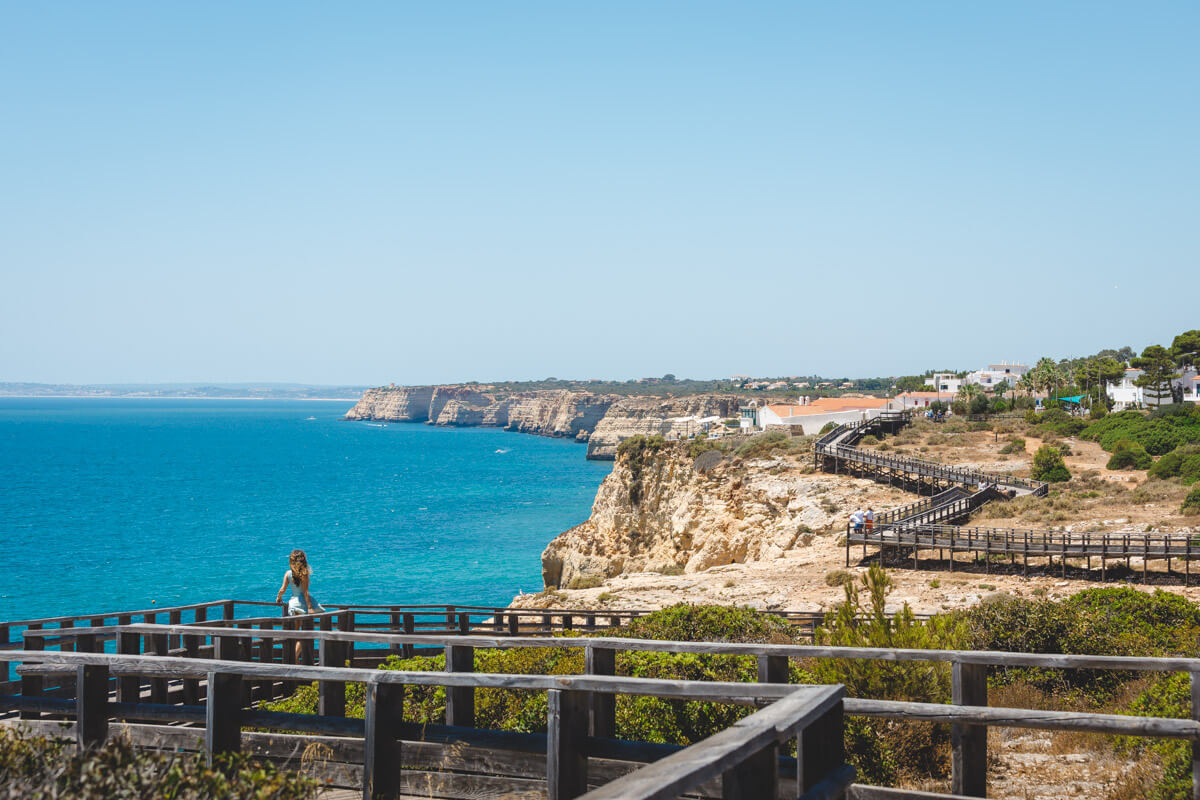
The Algarve is a perfect example. I’ve spent a lot of time there, and having a car makes it much easier to reach beaches, viewpoints, surf spots, hiking trails, and little towns that aren’t always sitting beside a convenient train station.
If you’re planning to beach hop around the Algarve, having your own wheels gives you the freedom to stop whenever you see something worth pulling over for.
That’s really the point of renting a car in Europe. Sometimes it’s less about getting from one major city to another and more about having access to everything in between.
Best for: Coastlines, countryside, national parks, small towns, and trips where you want flexibility.
3. Don’t Sleep on Buses
Buses aren’t always the glamorous answer, but sometimes they’re the obvious one.
They can fill in the gaps where trains don’t go, connect smaller cities and towns, and often cost considerably less.
They’re especially useful when you look up a train route and discover that something geographically close somehow requires two transfers and six hours of your life.
In that situation, check the bus.
Just remember that buses are more vulnerable to traffic, and depending on the route, the station may not be right in the center of town.
Still, I’ve taken enough random buses around the world to know that sometimes the decidedly less exciting transportation option is simply the one that makes the most sense.
Best for: Budget travel, smaller destinations, and filling gaps in the rail network.
4. Let the Transportation Become Part of the Trip With a River Cruise
This one is a completely different style of travel because your transportation and your accommodation essentially become the same thing.
Instead of packing up, checking out, getting yourself to a station or airport, traveling for several hours, finding your next hotel, checking in, and doing the whole thing again a few days later, you’re sleeping onboard while continuing to the next place.
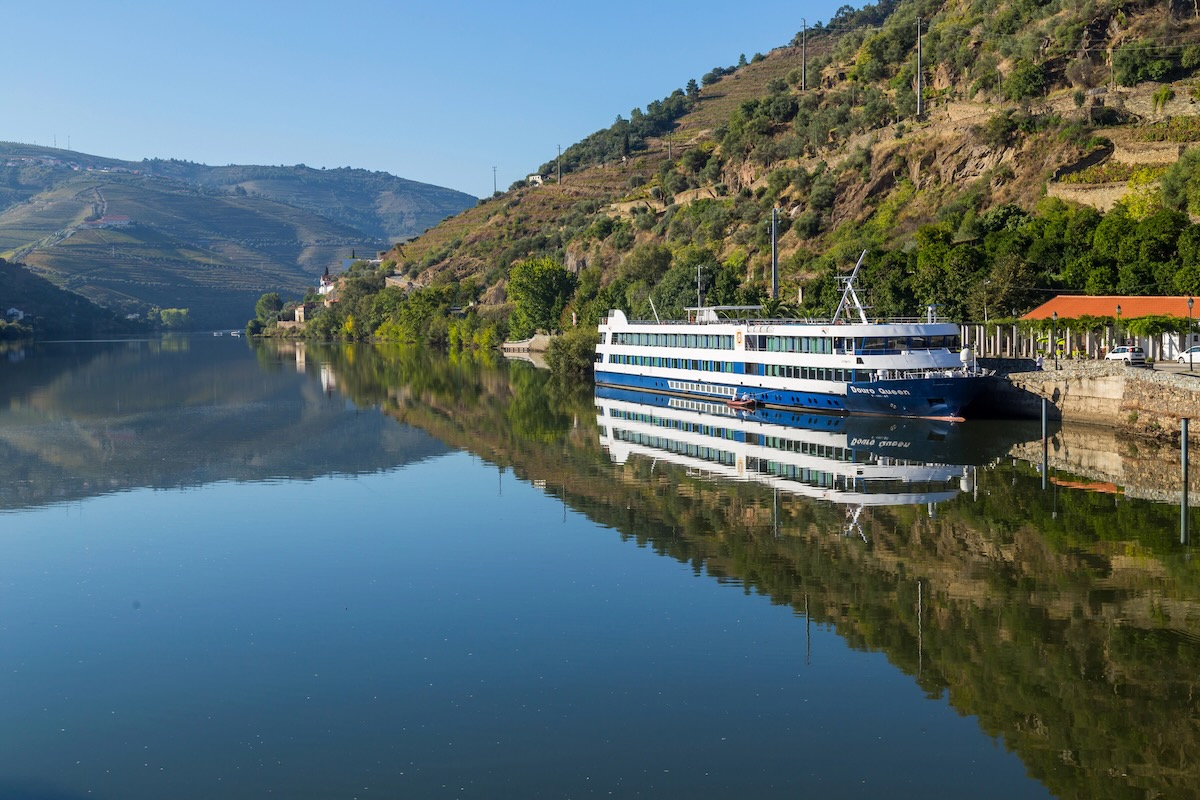
That’s one of the biggest appeals of river cruise tours, particularly on routes along rivers like the Danube or Rhine.
There’s another logistical perk that I think gets overlooked too.
On many itineraries, you’re not simply cruising around and ending up exactly where you started. You’re actually traveling from one destination to another while stopping at places along the way.
So instead of losing a day to a transfer, the transfer is the trip.
You’re sleeping somewhere, seeing things along the route, and getting yourself closer to your next destination at the same time.
That’s pretty solid travel math!
Best for: Travelers who want to visit several destinations without constantly changing hotels, unpacking, repacking, and organizing separate transfers.
5. Take the Ferry When Geography Makes the Decision for You
Sometimes there’s a bunch of water in the way.
Problem solved. Get on the boat.
Ferries are obviously a huge part of traveling around islands, but they’re also worth checking for coastal routes where traveling overland would mean going massively out of your way.
I’ve done the ferry from Corfu to Bari, Italy, before, which is a perfect example of using the water to get you somewhere completely new instead of backtracking overland or sorting your liquids out again for another flight.
Depending on the journey, you might have everything from a basic passenger ferry to an overnight ship with cabins.
And again, this is one of those situations where the journey can actually be part of the fun instead of something you just want to get over with.
I’d much rather sit outside watching the coastline disappear than spend those same few hours in another airport terminal.
Best for: Islands, coastal destinations, and routes where going overland makes absolutely no sense.
RELATED: How to Travel Europe for Cheap! How Far a $2k Budget Can Get You
6. And Once You’re There… WALK!
Did you even go to Europe if your phone didn’t congratulate you for walking 20,000 steps before dinner?
Walking is genuinely one of my favorite ways to experience European cities.
Yes, public transportation is usually great, and I absolutely use it when I need it, but so many cities are best explored on foot.
You notice the weird little side streets. You find the cafe you weren’t looking for. You stumble across a viewpoint, a market, a tiny bar, or some bizarre building that never would have made your itinerary.
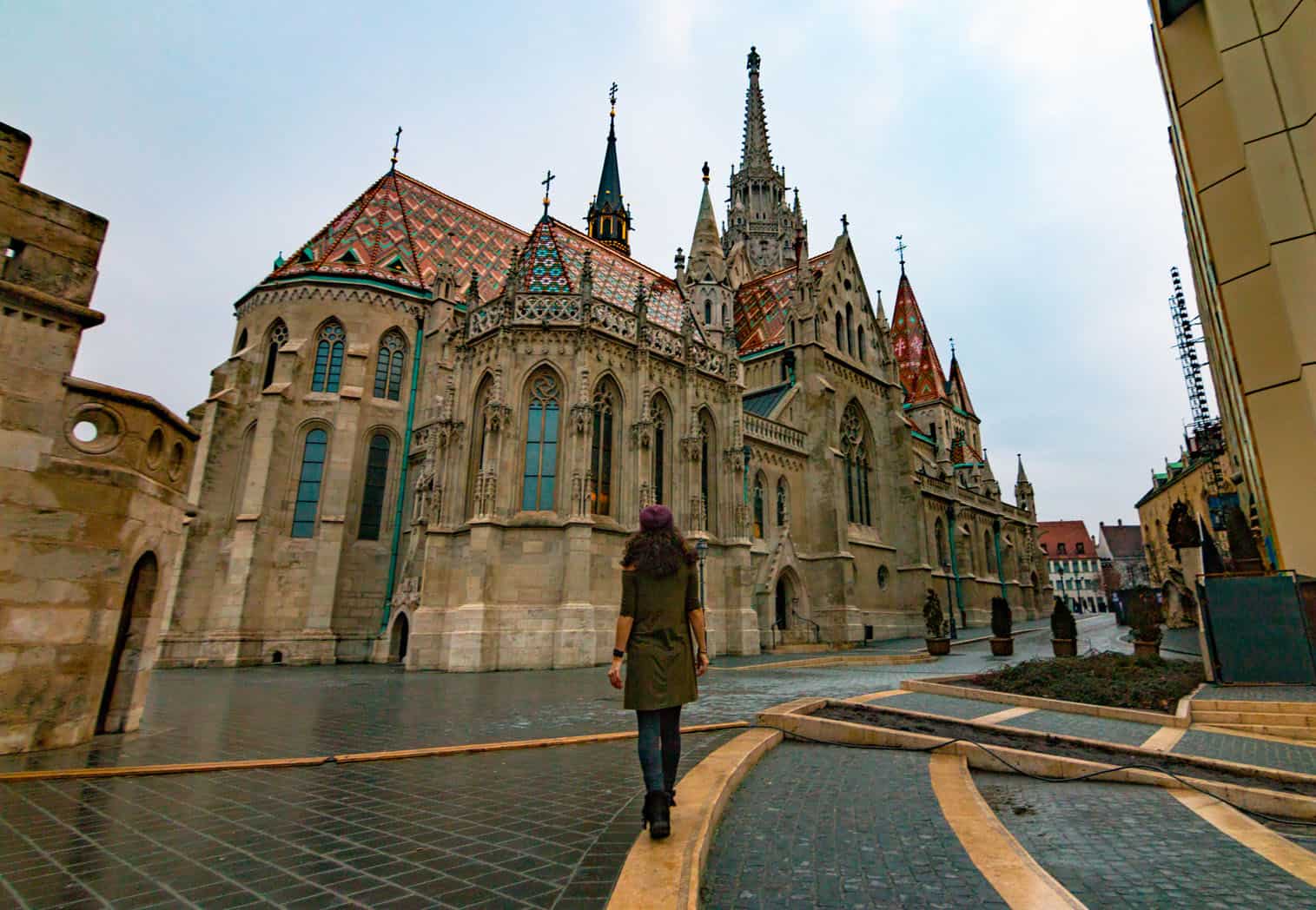
When I stayed in Budapest, I walked all over both Buda and Pest, including across the Danube, despite visiting in winter when my Florida blood was definitely questioning my life choices.
Sometimes the best part of Europe is everything you find in the 20 minutes between Point A and Point B.
So What’s the Best Way to Travel Around Europe?
Honestly, mix them!!
- Train: Great for hopping between well-connected cities.
- Car: Best when the places between your destinations are half the reason you’re traveling.
- Bus: Useful for budget trips and filling the gaps in the train network.
- River cruise: Great when you want accommodation, transportation, and sightseeing bundled together.
- Ferry: Perfect when there’s quite literally a sea in your way.
- Walking: Once you’re there, walk until your phone starts praising you for your athletic achievements.
The main thing is to stop assuming that every new country on your itinerary requires another flight.
Europe has one of the most varied transportation networks in the world, and sometimes slowing the journey down just a little means you actually get to see more of it.
The transportation doesn’t always have to be the boring bit between the places you came to see.
Sometimes it’s part of the trip!
