
Free rent for a few hours of work a day sounds like the ultimate travel hack — except in the U.S., where it’s illegal
Somewhere between “digital nomad visa” and “teach English abroad,” there’s a third way to live overseas for weeks or months without paying rent: work exchange platforms. Show up, work a few hours a day, and your housing, sometimes your food too, is covered. No employer, no work permit, no sponsorship paperwork.
I’ve done this twice myself, both times in Guatemala. A few hours of very normal work bought me a private room, meals, and a lake view that would’ve cost real money on Booking.com. Here’s the part that rarely makes it into the pitch: the exact same setup that’s completely normal in most of the world is against the law in the country a lot of these travelers call home.
How the trade actually works
Three platforms dominate this space, and the math on all of them is straightforward. Worldpackers charges $49 for a solo yearly membership, Workaway runs $69 a year, and WWOOF, the oldest of the three and built around farm work, costs $40 for solo membership in the U.S. Pay once, then contact and apply to as many hosts as you want for the next twelve months.
The work itself is rarely brutal. Workaway hosts typically expect about five hours a day, four to five days a week. WWOOF caps its hosts at 25 hours a week and requires three meals a day in return, not just a bed. Compare that to a year of hotel bills, and the math isn’t close — one membership fee usually pays for itself the first week you use it.
The catch nobody puts in the brochure
Here’s where it gets uncomfortable. In the United States, this exact arrangement, unpaid labor from a foreign visitor in exchange for room and board, isn’t legal. U.S. immigration treats any work performed by someone on a tourist visa or the visa waiver program as a violation, paid or not. A farm stay that’s completely routine in France or Guatemala would get a foreign visitor in real trouble on American soil.
Other countries land in murkier territory. Australia generally allows it as long as tourism is still the actual purpose of the trip and the work isn’t displacing a job a local would otherwise get paid for. New Zealand technically doesn’t allow it either, even though backpackers do it constantly, because the law there counts free food and lodging as a “reward,” which is exactly what turns volunteering into work. Nobody hands you a universal green light here, and that’s not an oversight — it’s just how unevenly immigration law treats unpaid labor.
What it actually looked like for me
My first work exchange was in Xela, Guatemala, where I spent over a week helping a local host practice her English in exchange for a private room. We hiked Santa Maria volcano together, went out for karaoke, and I picked up more Spanish from her in a week than I had from any app.
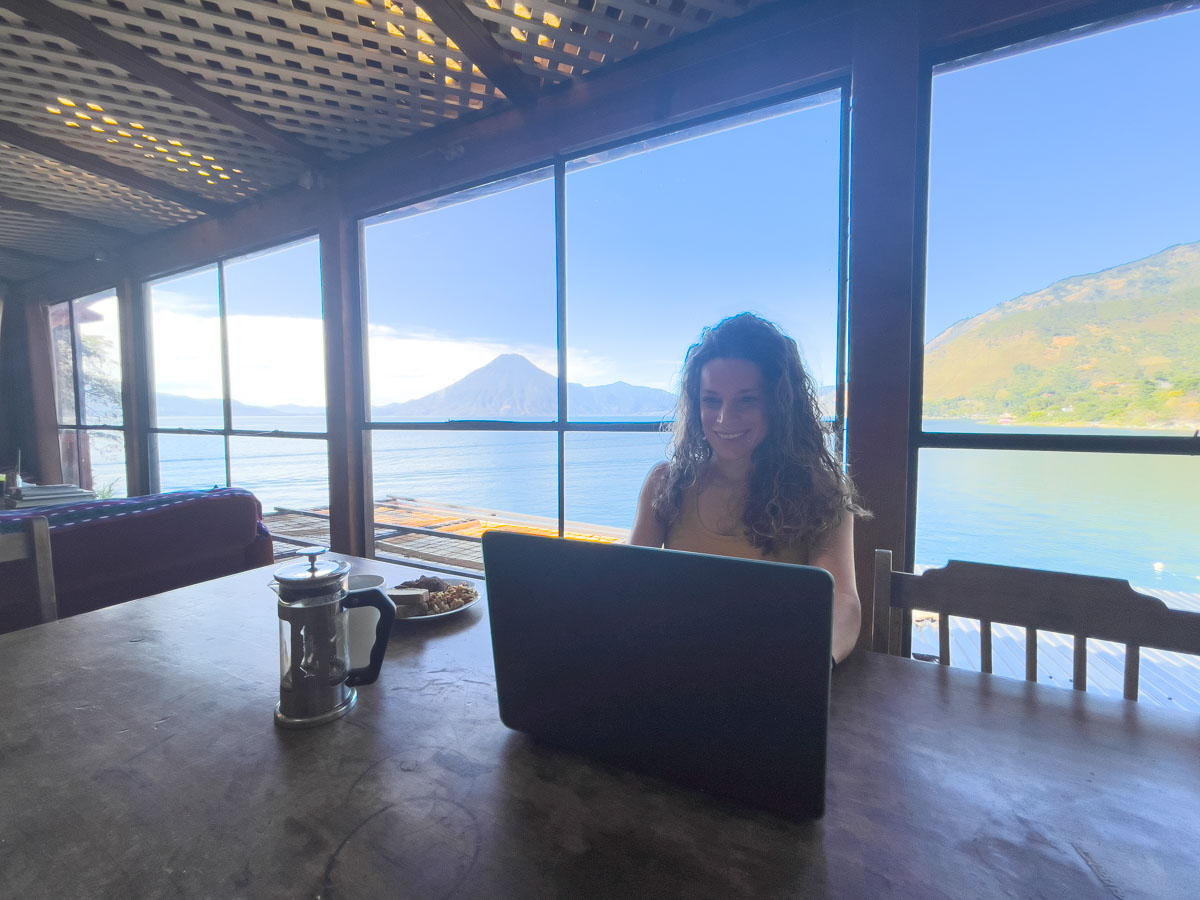
The second was on Lake Atitlan, where a lodge owner wanted photos and social content in exchange for nine nights in a room with a volcano view and vegan meals every day. I broke down exactly how that platform works, cost and all, in my full Worldpackers review. I was still doing my own remote work most mornings, and nobody was clocking my hours, a fact I definitely didn’t take for granted.
This is all a murky grey area, but only doing a week here and there, I wasn’t too cheeky.
Is it worth it anyway?
It’s also not the free ride the name implies. These platforms cover housing and sometimes food, but essentially never flights, insurance, or the days between placements when you’re paying full price like everyone else. Budget for that gap, and you’ll come out ahead. Skip it, and you’ll wonder where your “free” trip’s money actually went.
If you want to try Worldpackers first, this is the $10-off signup link I use myself — no reason to pay full price for your first year.
A few hours of gardening, bartending, or answering emails in exchange for a place to sleep is a fair trade almost anywhere you go.
