
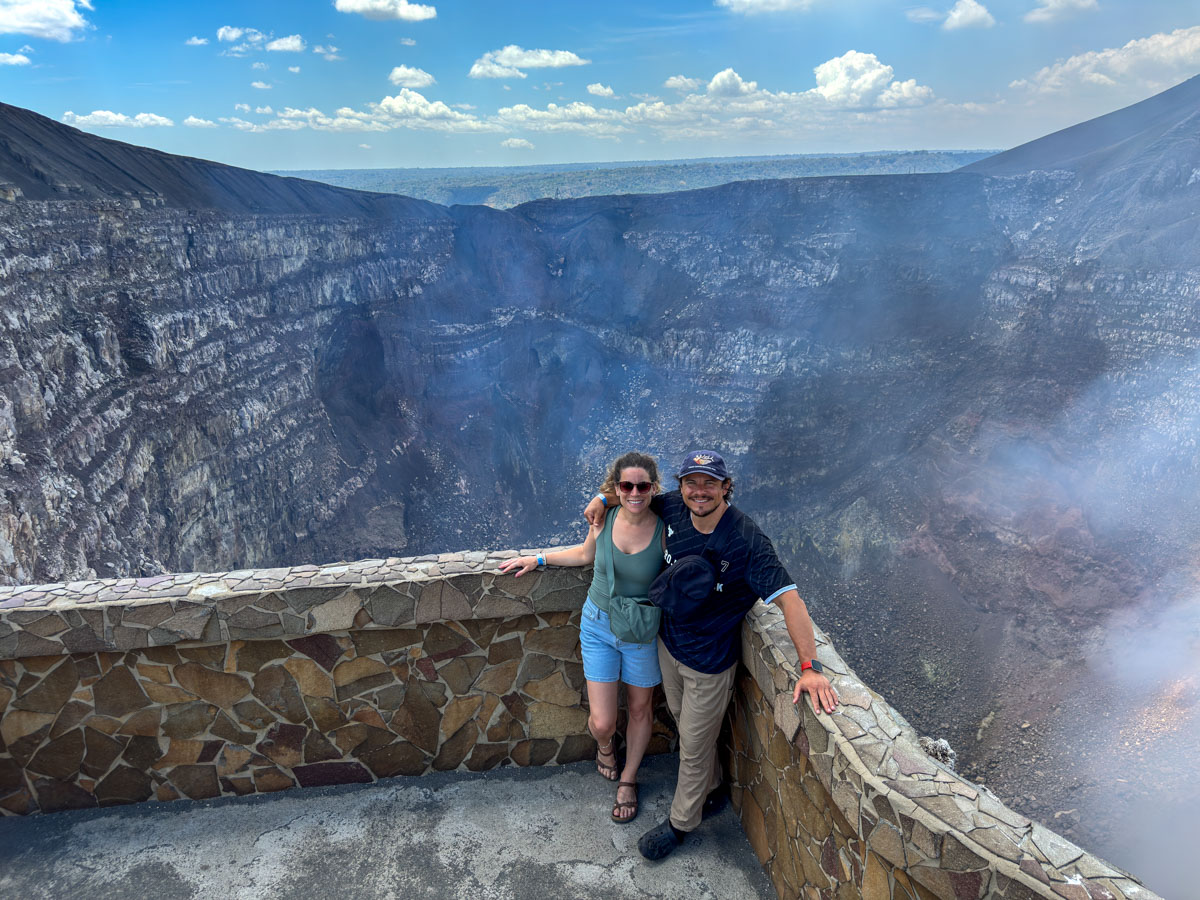
Visiting Masaya Volcano in Nicaragua: Day vs Night + What to Expect
If you’ve Googled Masaya Volcano, you’ve probably seen photos of people standing over a giant glowing-red lava lake.
Just know that Masaya doesn’t look exactly like those old photos anymore.
The volcano is still extremely active. You can see smoke pouring out of Santiago Crater, hear activity beneath you, and potentially catch a red glow after dark. But changes inside the crater have altered how much lava you can actually see.
I visited Masaya Volcano during the day in March 2026, and I’m actually really glad we did.
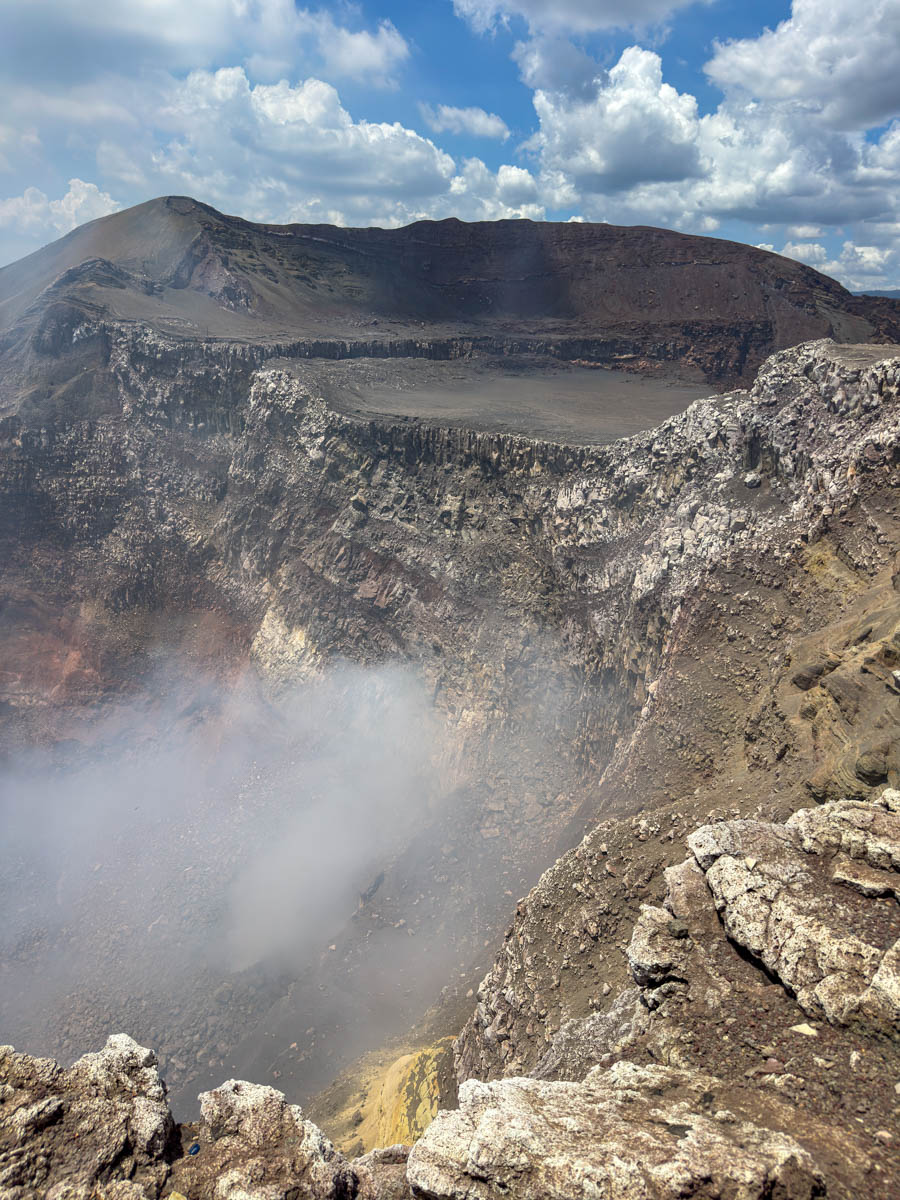
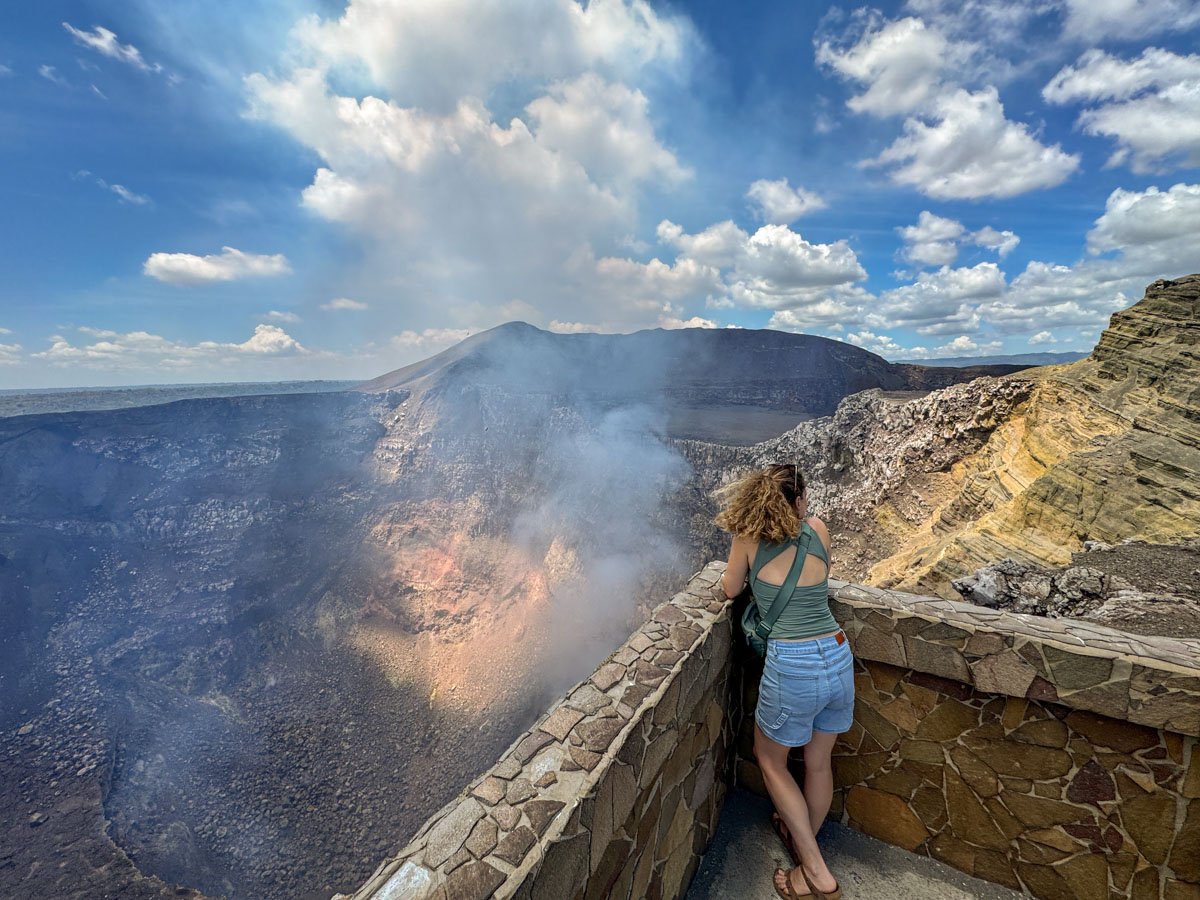
We could see deep into the crater, watch sulfurous smoke blow across the viewpoint, and actually appreciate the volcanic landscape around us.
So, should you visit Masaya Volcano during the day or at night?
Honestly, I don’t think nighttime automatically wins anymore.
Masaya Volcano: Quick Lowdown
🌋 Masaya at a Glance
- Best for: Seeing an active volcanic crater without a huge hike
- Day vs night: I’d choose daytime for the better overall views
- Nighttime: Better if seeing a red/orange lava glow is your main priority
- From Granada: Easy with a rental car or as part of a tour
- Time needed: Relatively quick unless you’re adding hikes or other stops
🗺️ Top Tour
- No car? This Masaya Volcano, Art Market + White Villages tour covers the crater plus Catarina, a Laguna de Apoyo viewpoint, and San Juan de Oriente.
🏨 Where to Stay
- Boutique Hotel Secret Garden Granada: Where we stayed in Granada. Quiet, central, with breakfast and a pool.
- Casa Bella, Laguna de Apoyo: Where we stayed the night before Masaya. Right on the crater lake.
🚘 Looking for a way to get around?
Compare rental cars here or book buses, shuttles, and ferries here.
🛟 Safety
Travel insurance is a must, and it doesn’t have to cost much. Here’s what I use.
Is Masaya Volcano Worth Visiting?
Yes!
Masaya is ridiculously accessible for how wild the actual attraction is.
You don’t have to hike for hours or climb thousands of feet. We literally drove through the national park and parked near Santiago Crater.
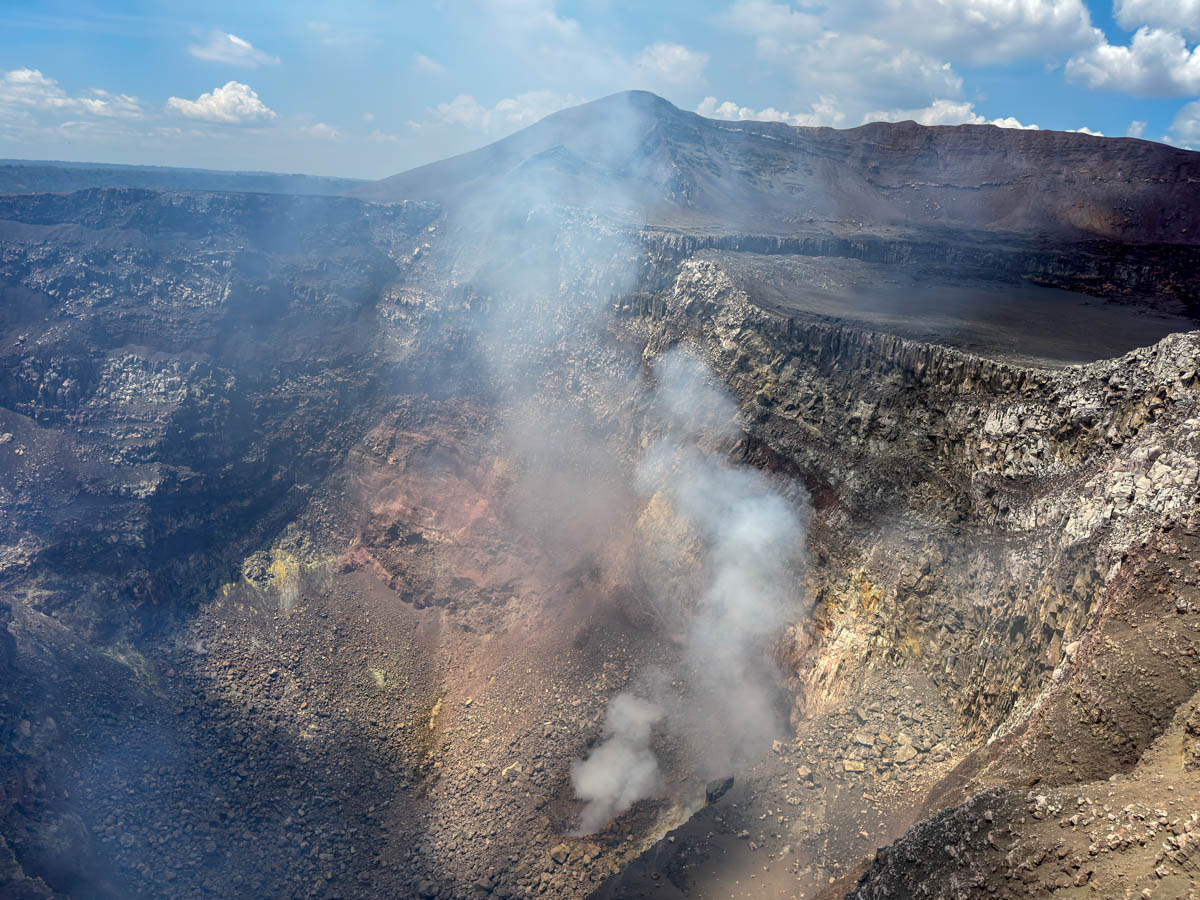
Then you’re suddenly standing there looking into an active volcanic crater while huge clouds of sulfurous smoke blow past you.
Super casual! No biggy! lol
We actually felt three small tremors while staying at Laguna de Apoyo the night before we visited, so this thing is very much still alive.
The main thing is to arrive with realistic expectations, especially if you’re coming because you’ve seen those insane nighttime lava photos.
What Happened to the Lava at Masaya Volcano?
For years, Santiago Crater had a very visible lava lake that made Masaya especially famous at night.
But conditions inside an active volcano aren’t exactly permanent.
Changes and collapses inside the crater have altered the view. When we visited, our guide explained that part of the crater wall had collapsed.
We could see fallen rock and fumaroles releasing smoke, and at times we could even hear movement somewhere below us.
What we couldn’t see was a giant red pool of lava.
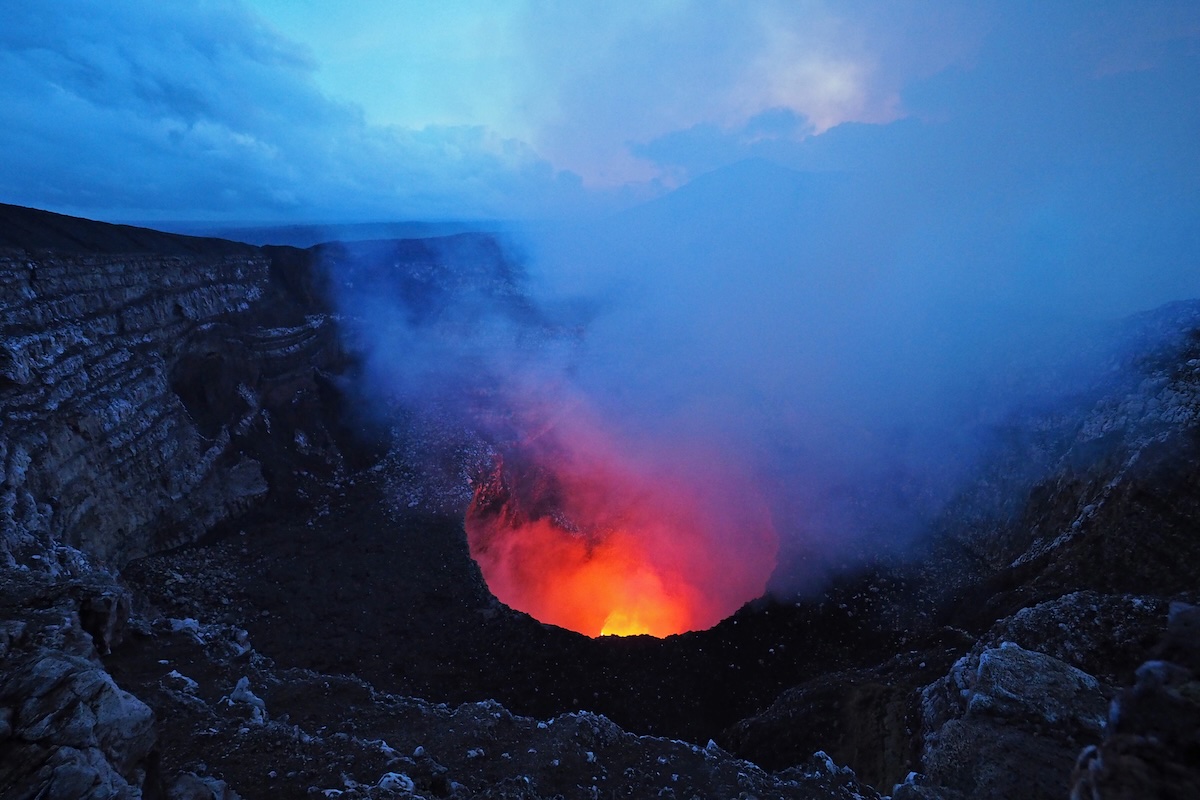
Nighttime visitors can still potentially see an orange or reddish glow inside Santiago Crater, but don’t expect the dramatic exposed lava lake you’ve probably seen in older photos.
🌋 Important: Masaya is an active volcano, so opening hours, trails, crater access, and visibility can change. Check current conditions shortly before visiting instead of relying on an old blog post. Yes, including this one!
👉 NO RENTAL CAR? This Masaya Volcano + White Villages tour visits the volcano during the day and also includes Catarina, Laguna de Apoyo views, Masaya’s artisan market, and San Juan de Oriente.
Masaya Volcano During the Day vs Night
Traditionally, visiting Masaya at night has been THE thing to do because darkness makes the glowing lava easier to see.
But now? There’s a legitimate argument for daytime.
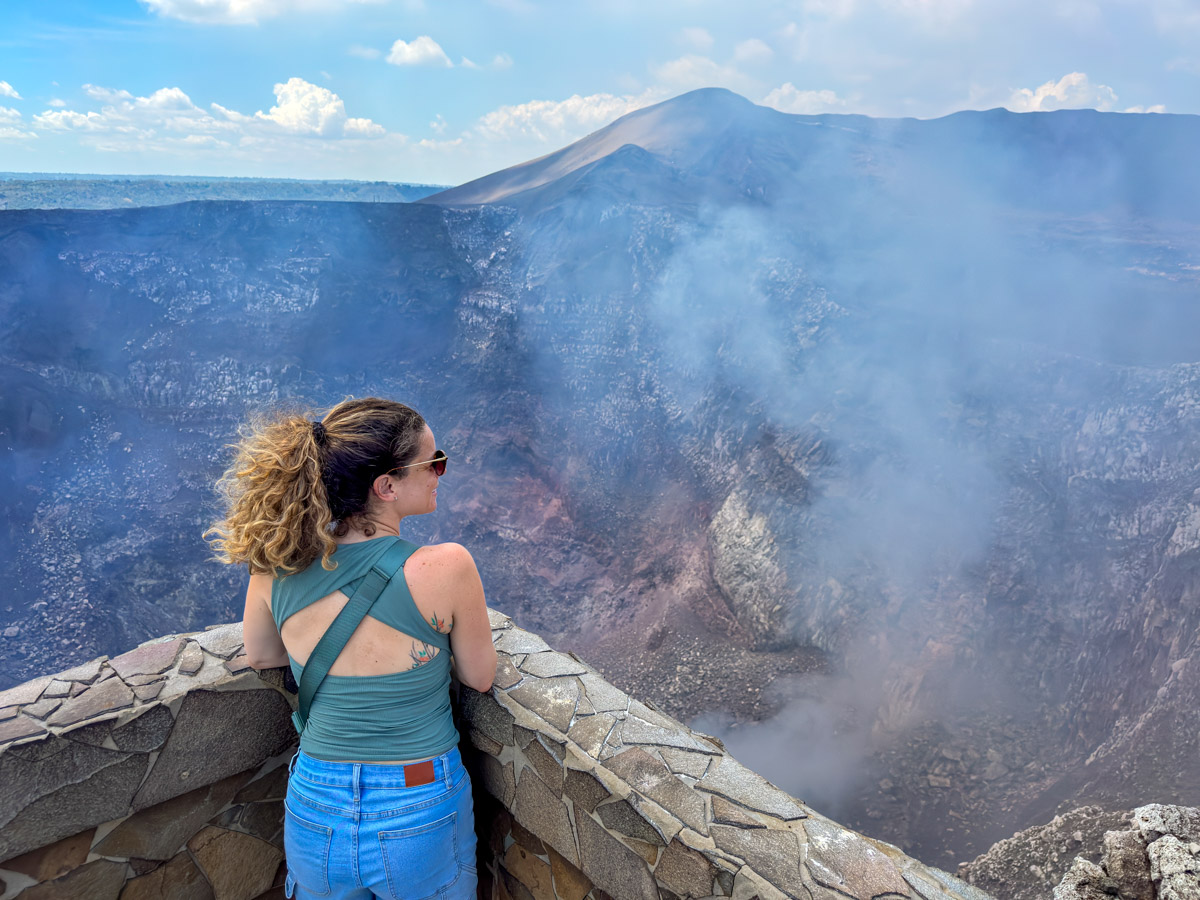
DAYTIME MASAYA is best for:
- Seeing the actual crater and fumaroles
- Volcanic rock colors and formations
- Photographing the surrounding landscape
- Visiting the museum and any open trails
NIGHTTIME MASAYA is best for:
- Seeing whatever red/orange glow is currently visible
- A more dramatic nighttime volcano experience
- Anyone whose main goal is seeing glowing lava
The downside is that once it’s properly dark, you can’t see nearly as much of the crater or landscape. Night visits may also be very quick, with limited time at the viewpoint.
So Is Masaya Volcano Better During the Day or Night?
I’d choose daytime.
Before visiting, I assumed nighttime would automatically be better because… lava.
But during the day we could actually see the massive crater, sulfur deposits, volcanic rock, smoke shifting with the wind, and birds casually flying over this giant smoking hole in the earth like nothing weird was happening.
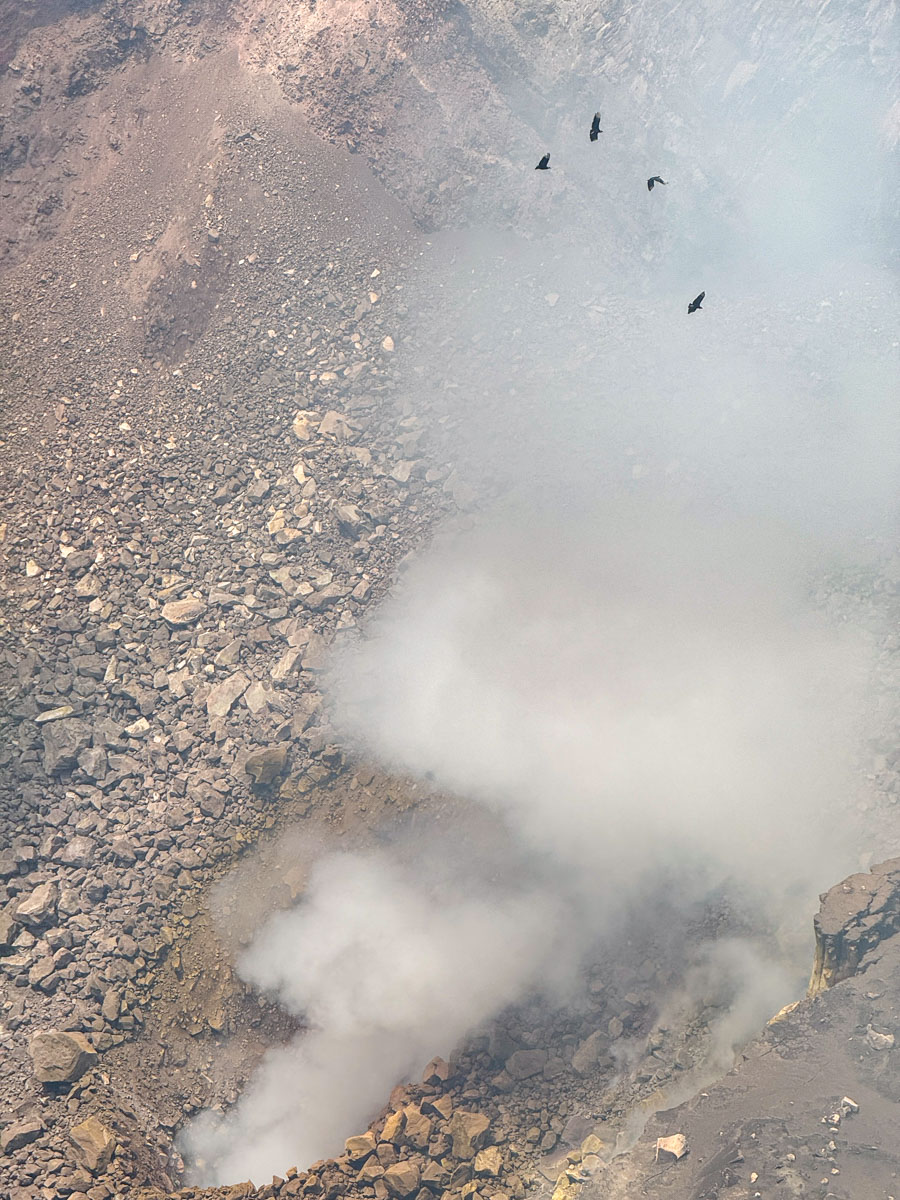
Plus, it wasn’t busy when we visited.
If seeing red lava is specifically on your bucket list, go at night, but keep your expectations in check.
Otherwise, I genuinely think daytime gives you a better overall look at Masaya Volcano.
What It’s Actually Like Visiting Masaya Volcano
Our visit was ridiculously easy.
We drove almost all the way to Santiago Crater, parked, and walked to the viewpoint with a guide. No major hike required.
And holy hell, there is a LOT of smoke.
Huge clouds of volcanic gas would roll through depending on the wind. One minute we’d have a clear view inside the crater, then another cloud would obscure everything.
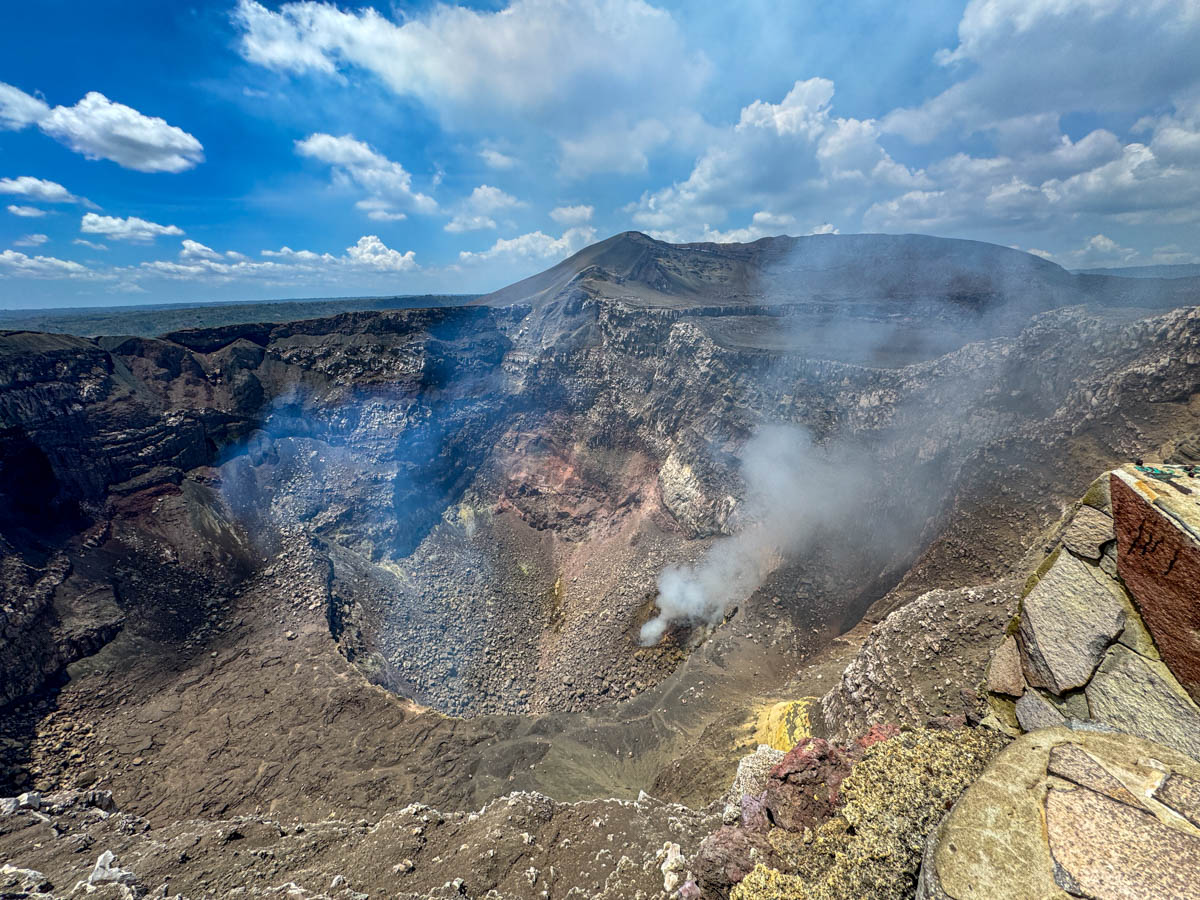
You could see yellow sulfur-like coloring and reddish and brown layers inside the crater.
The coolest part for me was actually hearing it.
If we stood quietly, we could hear rocks moving somewhere below us.
It’s a bizarre feeling standing next to a volcano that’s basically reminding you, “Yeah. I’m still doing stuff down here.”
We spent around 15 to 20 minutes at the crater, although viewing times can change depending on volcanic gases and park rules.
There’s also a small museum with information about the volcanic landscape and a viewpoint behind it looking across the surrounding area. It’s worth a quick stop while you’re already there.
How Long Do You Need at Masaya Volcano?
If you’re only visiting Santiago Crater and the museum, Masaya doesn’t take very long.
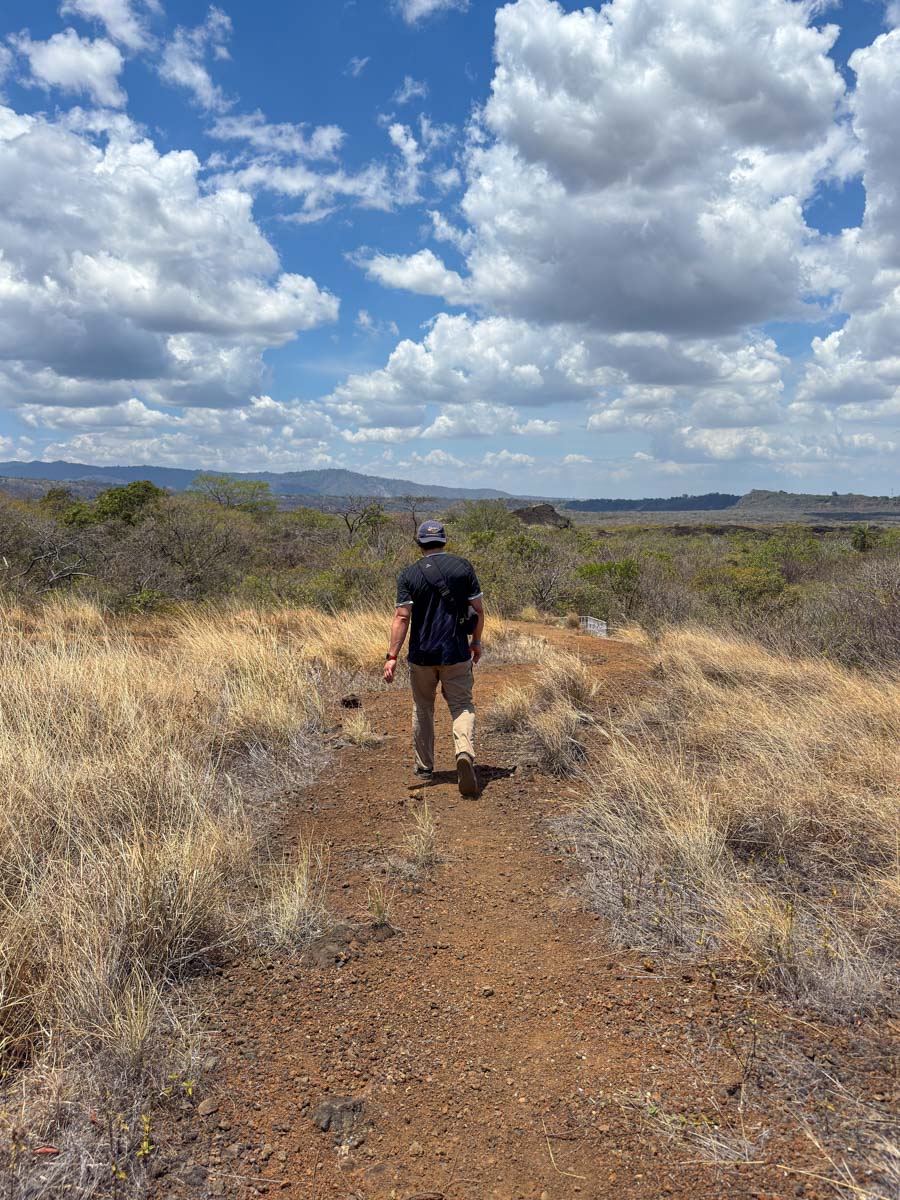
You can drive in, visit the museum, see the crater, take your photos, and be on your way.
There are additional trails and viewpoints, although what’s open changes with volcanic activity. Some paths were closed when we visited, and we skipped the longer walks because it was hot AF and we had somewhere else to be.
How to Visit Masaya Volcano: Rental Car vs Tour
Masaya is one of the easiest day trips from Granada, and how I’d do it depends on whether you have transportation.
If you have a rental car: Just drive yourself. That’s what we did, and I wouldn’t pay for a tour solely to visit Masaya if you already have a vehicle.
If you don’t have a car: I’d book a tour instead of messing around with transportation for what can otherwise be a fairly quick visit.
This is the tour I’d pick:
👉 CHECK IT OUT: Masaya Volcano, Art Market + White Villages Tour
It visits the volcano during the day and also includes Masaya’s artisan market, Catarina, a Laguna de Apoyo viewpoint, and San Juan de Oriente’s pottery and ceramics.
Instead of arranging transportation just for the crater, you’re turning it into a proper day trip.
READ MORE: 8 BEST Things to Do in Granada, Nicaragua
🚗 Getting Around Nicaragua
Getting around Nicaragua doesn’t have to be complicated.
👉 Want the freedom to explore? Compare rental cars here.
👉 Rather skip the driving? Book buses, shuttles, and ferries here.
Things to Know Before Visiting Masaya Volcano
- The sulfur fumes can be intense. Don’t be surprised if a smelly cloud rolls over you.
- Crater time can be limited. This depends on volcanic gases, activity, and current park rules.
- Don’t expect the old lava photos. You may see a reddish glow at night, but conditions change.
- Bring sun protection during the day. There’s very little shade around the crater.
- Wear decent shoes if you’re exploring beyond the main viewpoint.
- Listen to the park staff. It’s an active volcano. If something is closed, there’s a reason.
Don’t skip Masaya because somebody told you the giant lava lake isn’t visible like it used to be.
The volcano is very much still doing volcano things!
More Nicaragua:
Read more of my Nicaragua guides:
- Nicaragua Itinerary: 1-3 Weeks of Volcanoes, Surf Towns + What to Know
- 19 TOP Things to Do in Nicaragua
- Your Guide to León, Nicaragua
- Volcano Boarding in Nicaragua: What to Know About Cerro Negro
- Las Peñitas, Nicaragua: Things to Do + Is It Worth Visiting?
- 8 BEST Things to Do in Granada, Nicaragua
- 5 Best Day Trips From Granada, Nicaragua
- Visiting Masaya Volcano in Nicaragua: Day vs Night + What to Expect
- Laguna de Apoyo, Nicaragua: How to Visit + Is It Worth It?
- You Can Stay on Your Own Private Island in Nicaragua: Isla Mirabel
- ChocoMuseo Granada: Is the Chocolate-Making Class Worth It?
- 10 Most WORTH-IT Things to Do in Ometepe, Nicaragua
- Where to Stay in Ometepe: 4 Best Areas + Where We’d Book
- Visiting Ometepe: 9 Tips to Know Before You Go
- Cascada de San Ramón: Ometepe’s Best Waterfall Hike
- Your Guide to San Juan del Sur, Nicaragua
- 7 Beaches of San Juan del Sur, Nicaragua: Which to Visit?
- Your Mini Popoyo, Nicaragua Guide
