
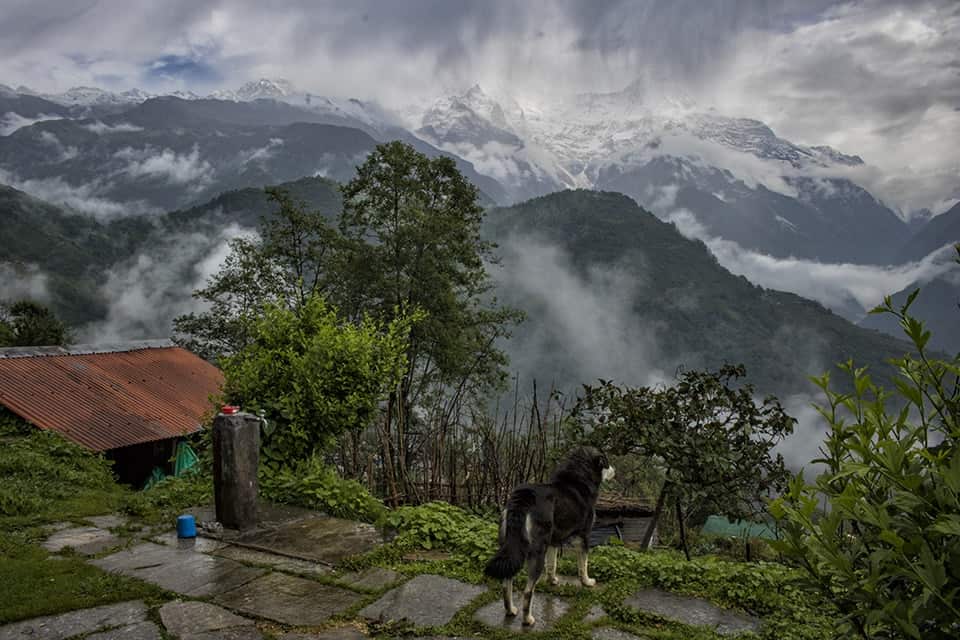
What Food and Drinks Can You Find on Nepal’s Trekking Trails
When you picture trekking in Nepal, food probably isn’t the first thing that comes to mind. You’re thinking about the Himalayas, suspension bridges, little mountain villages, prayer flags, yaks, and those moments when you look up and realize you’re surrounded by huge mountains. But after walking uphill for a few hours, you start thinking about food pretty quickly.
The fun part is that trekking in Nepal is not just about eating whatever is available at a teahouse. Along the trail, you can try foods and natural products that local people have used for generations, often with an interesting story behind them.
Some of these foods may be familiar, while others are completely new. So, if you’re wondering what you’ll actually eat and drink while trekking in Nepal, here’s what to expect.
Dal Bhat Is the Big One
If there’s one Nepali meal you should try while trekking, it’s dal bhat. It comes with rice, lentil soup, vegetables, curry, and pickle, although the sides can vary from one teahouse to another. After several hours of walking, a warm and filling plate of dal bhat can be exactly what you need.
Dal bhat is also popular with trekkers because you can usually ask for extra rice and dal. The rice provides carbohydrates for energy, while lentils add protein to the meal. You’ll find it on menus throughout the trekking routes, and it often remains available even when the menu gets smaller at higher elevations. That’s where the famous “dal bhat power” starts to make sense.
Momos Are Basically a Must
I’m not sure you can visit Nepal without trying momos.
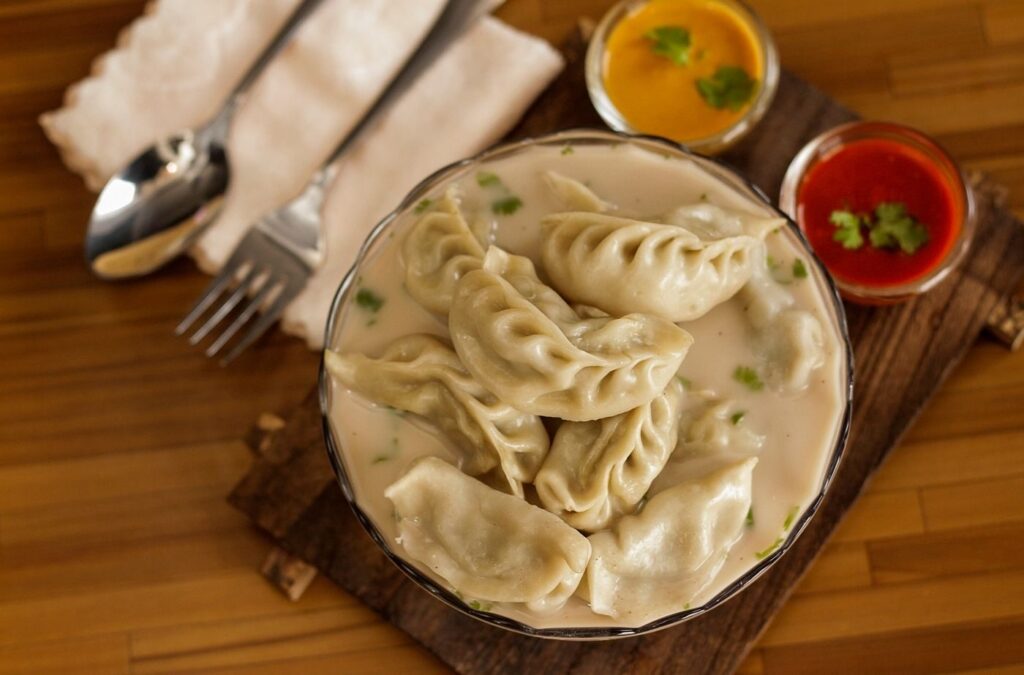
These are steamed or fried dumplings filled with vegetables, meat, cheese or other fillings, depending on the restaurant and location. They usually come with a spicy dipping sauce.
On a trekking trail, momos make a great lunch or dinner when you want something different from rice.
Steamed momos are my pick after a long walking day. They’re warm, filling and easy to share if you’re traveling with friends.
You’ll find them on menus in places like the Everest, Annapurna and Langtang regions, though the fillings and quality can vary from one teahouse to another.
If you see them on the menu, I’d give them a try.
Try Mad Honey
Honey shows up in a few different ways on the trekking trails.
You might have honey with Tibetan bread, pancakes or toast. You can also add it to lemon or ginger tea.
And Nepal has a rather unusual type of honey that you may hear about while traveling:
Mad honey comes from bees that collect nectar from rhododendron flowers. It contains naturally occurring grayanotoxins, so it is not the same as regular table honey and should not be treated like an ordinary sweetener.
If you’re curious about taking some home, you’ll find Nepalese suppliers selling different varieties of mad honey. If you’re going to buy it, look for clear information about where it was sourced and whether the batch has been tested.
Check out the Himalayan Mad Honey and choose the type that interests you. If it’s your first time trying it, follow the recommended serving guidance and start with a very small amount rather than treating it like a regular honey or a quick trekking energy shot.
Tibetan Bread and Pancakes for Breakfast
Breakfast on a Nepal trek is not going to be the same as breakfast at your favorite café back home.
That said, there are some pretty good options.
Pancakes are common in trekking lodges, and you can usually get them with honey, jam, butter or peanut butter.
Then there’s Tibetan bread.
It’s a thick, fried bread that is simple but very satisfying when you’re heading out for a long day. Add some honey or jam and a cup of hot tea, and you’ve got a solid mountain breakfast.
Eggs are also available at many teahouses. You can usually order them scrambled, fried, boiled or as an omelet.
Porridge, muesli, toast and potatoes also show up on breakfast menus.
So no, you don’t have to start every morning with dal bhat.
RELATED: How to Go Trekking in Nepal and What NOT to Do—Poon Hill Trek
Thukpa Is Perfect When It’s Cold
There’s something about eating a bowl of hot noodle soup when you’re sitting in a cold mountain village.
Thukpa is a Tibetan-style noodle soup made with noodles, vegetables and sometimes meat or egg. The exact recipe depends on the kitchen.
It’s warm, filling and gives you some much-needed liquid after a day of walking.
If you’re trekking somewhere high and the temperature drops once the sun disappears, thukpa can be exactly what you want.
You’ll also find other soups on teahouse menus, including vegetable soup, mushroom soup, potato soup and the famous garlic soup.
What About Garlic Soup?
Garlic soup gets mentioned a lot in conversations about trekking in Nepal.
You’ll find it on menus at many higher-altitude teahouses, and trekkers love ordering it when they’re cold.
You’ll also hear people say garlic helps with altitude sickness.
I wouldn’t treat garlic soup as an altitude-sickness treatment. It isn’t a replacement for proper acclimatization, staying hydrated or descending if you become seriously unwell.
But as a warm bowl of soup after hours outside?
Absolutely.
You Can Still Get Pasta and Pizza
This might surprise you.
Nepal’s trekking trails are remote, but teahouse menus aren’t limited to traditional Nepali food.
On popular routes, you can find pasta, pizza, fried rice, chow mein, spring rolls, sandwiches and even things like apple pie.
The selection depends heavily on the route and altitude.
A teahouse in Namche Bazaar has access to far more food than a tiny lodge several days farther up the Everest Base Camp trail.
As you get higher, menus tend to become smaller and prices go up. That makes sense when you remember that supplies have to travel into the mountains.
So if you’re craving pizza at 4,000 meters, you may be able to get it. Just don’t expect it to taste exactly like your favorite pizza place back home.
Tea Is Everywhere
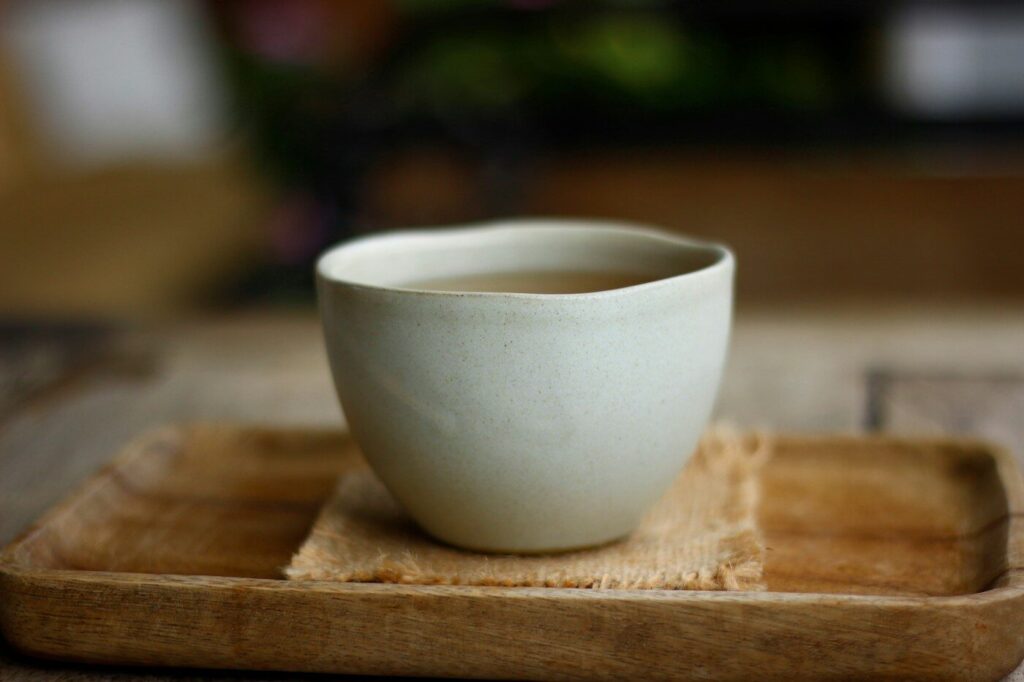
Now we get to the drinks. Tea is a huge part of trekking in Nepal, and you’ll quickly notice that a hot cup of tea can feel like a small reward after walking through cold weather, rain, or snow.
If you’re also trying to make healthier choices while traveling, this is a good chance to try some herbal teas and other natural ingredients instead of always reaching for coffee or sugary drinks.
Ginger, lemon, mint, and other herbal options are commonly used in Nepal, and they can be a nice addition to your meals and daily routine.
Just keep in mind that herbal teas are not a cure for digestive or other health problems, but they can be a simple way to add variety to what you drink.
In larger trekking towns, you’ll find proper cafés with better coffee, snacks, and somewhere comfortable to sit for a while. Namche Bazaar is a good example, with plenty of cafés where you can grab a coffee and a slice of cake before continuing higher into the mountains.
What About Water?
This is one area where you need to be a little more careful.
Don’t assume that water from a mountain stream is automatically safe to drink.
Trekkers normally use filtered, boiled or treated water. You can carry a reusable bottle and use purification tablets, a filter or another treatment method.
Most teahouses can provide boiled water for a fee, which is a good option if you want to avoid buying lots of plastic bottles.
Staying hydrated is important on any trek, and even more so when you’re walking at altitude.
Carry enough water for the section you’re walking and refill when you have a reliable source.
What About Alcohol?
You won’t have to give up alcohol completely while trekking in Nepal. Beer is available at many teahouses along the popular trekking routes, and you’ll also come across local drinks such as raksi.
After a long day of walking, sitting outside with a cold beer and a mountain view can sound pretty tempting. But once you’re at higher elevations, it’s better to take it easy.
Alcohol can contribute to dehydration and may make it harder to sleep, and getting good rest is already important when your body is adjusting to altitude. If you want to enjoy a few drinks, Kathmandu or Pokhara is a much better place to do it. Up in the mountains, I’d stick to tea, water, and whatever helps you feel ready for the next day’s walk.
Snacks Are Worth Carrying
While trekking to Base camp you will find the various teahouses where you can get a lot of snacks. But I would suggest you carry only a few of your favorite snacks.
Chocolate, nuts, dried fruit, granola bars, energy bars and biscuits are easy to keep in your daypack.
You’ll also find small shops along many trekking routes selling snacks and drinks. But up there the prices increase.
That chocolate bar that seemed reasonably priced in Kathmandu can suddenly feel very expensive after several days of supplies being carried into the mountains. For example: 200rs chocolate bars could cost you 500 rs so make sure you have your favorite easy to carry snacks.
What If You’re Vegetarian or Vegan?
Nepal is actually a pretty easy destination for vegetarians.
Dal bhat can be vegetarian, and you’ll find vegetable momos, vegetable noodles, soups, potatoes, rice dishes and other meat-free meals on trekking routes.
Vegans may need to ask a few more questions because dairy, butter and ghee can appear in dishes you might not expect.
It helps to explain your dietary requirements clearly when ordering.
The further you go into the mountains, the more limited the choices can become, so it’s worth carrying a few snacks that fit your diet.
Food Gets More Expensive Higher Up
One thing to remember is that food prices on trekking trails are not the same as in Kathmandu. The higher and more remote you go, the more you’ll pay. You’ll notice this on the Annapurna Circuit, but it’s the same in other trekking areas.
Rice, vegetables, eggs, drinks, and other supplies have to be carried by porters, animals, or local transport, so the cost naturally increases as you get farther from the cities. Still, even in remote villages, you’ll usually find plenty of food and basic supplies.
Your guide can also introduce you to some of the local foods and natural products you might not find on a regular restaurant menu. Depending on the region and season, you may get the chance to try rhododendron products, local honey, mad honey, shilajit, yak milk, or traditional yak tea. Some guides may even offer you something from their own local supply to taste.
It can be a fun part of trekking because you’re not just eating standard teahouse food you’re getting a small taste of what people in the mountains have traditionally used and enjoyed.
What Should You Actually Eat?
If I were putting together a simple Nepal trekking food plan, I’d keep it pretty straightforward.
- Have pancakes, eggs or Tibetan bread for breakfast.
- Grab momos, noodles, fried rice or thukpa for lunch when you want some variety.
- Have dal bhat for dinner when you want a filling meal that will keep you going the next day.
- Drink plenty of water and have tea whenever you feel like warming up.
- Keep some chocolate, nuts or other snacks in your bag for the gaps between meals.
- And try a few local foods rather than sticking to pizza and pasta the entire time.
One of the fun parts of trekking in Nepal is that the food becomes part of the trip. You might spend six hours walking through some of the most incredible scenery on earth, then end the day sitting around a warm stove with a plate of dal bhat and a cup of ginger tea.
Honestly, that’s a pretty good way to spend a day!
