
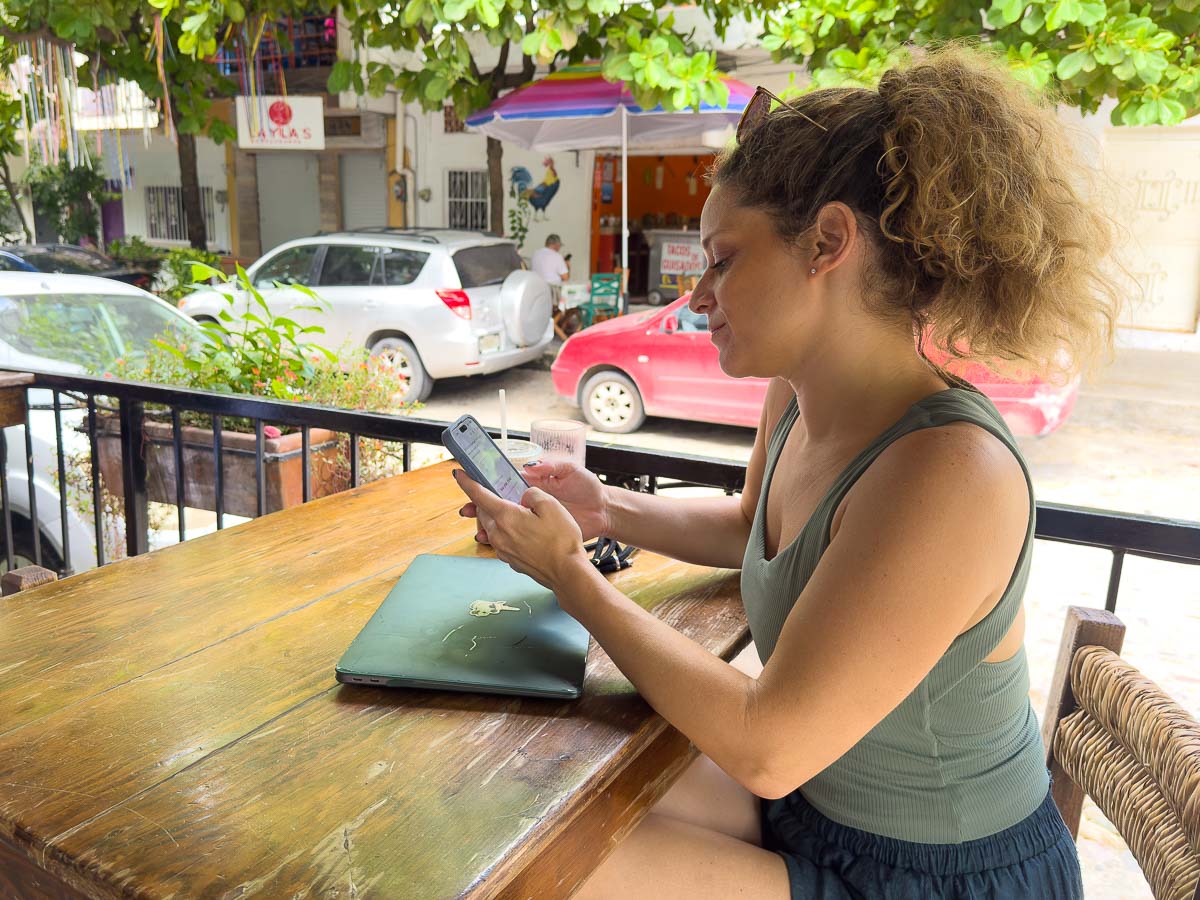
ZenSim Review: An eSIM With a Purpose
I test a lot of eSIMs. At this point, I basically live inside my phone settings.
Most travel eSIM brands blur together: similar prices, similar setup, slightly different logos, and the same “we care about our customers” copy pasted on every page.
ZenSim is one of the few that actually feels a bit different. It’s an Australian-born, fully digital travel eSIM provider with coverage in over 200 countries, flexible prepaid plans, a genuinely decent app, and a surprisingly strong sustainability angle that isn’t just one line in the footer.
If you’re an American heading abroad and you want something simple, app-based, and not totally soulless, ZenSim is worth a look.
Quick Pros & Cons on ZenSIM
Pros 🤩
- Coverage in 200+ countries, plus global and regional plans.
- Clear, prepaid travel eSIMs with no contracts or sneaky renewals.
- Easy app-based setup.
- Strong sustainability angle (remote company, reef support, tree planting).
- Great reviews and ratings.
Cons 😔
- Data-only travel eSIMs – no local phone number (like most eSIMs).
- Plans don’t auto-renew, you have to remember to top up.
- Not always the absolute cheapest option if you’re chasing rock-bottom prices at all costs.
What Is ZenSim, Exactly?
ZenSim started as a couple of Aussie guys looking at the telco world and going, “This is a bit of a mess, yeah?” Their whole thing is stripping away the confusing contracts, fine print, and “call this number to cancel” nonsense.
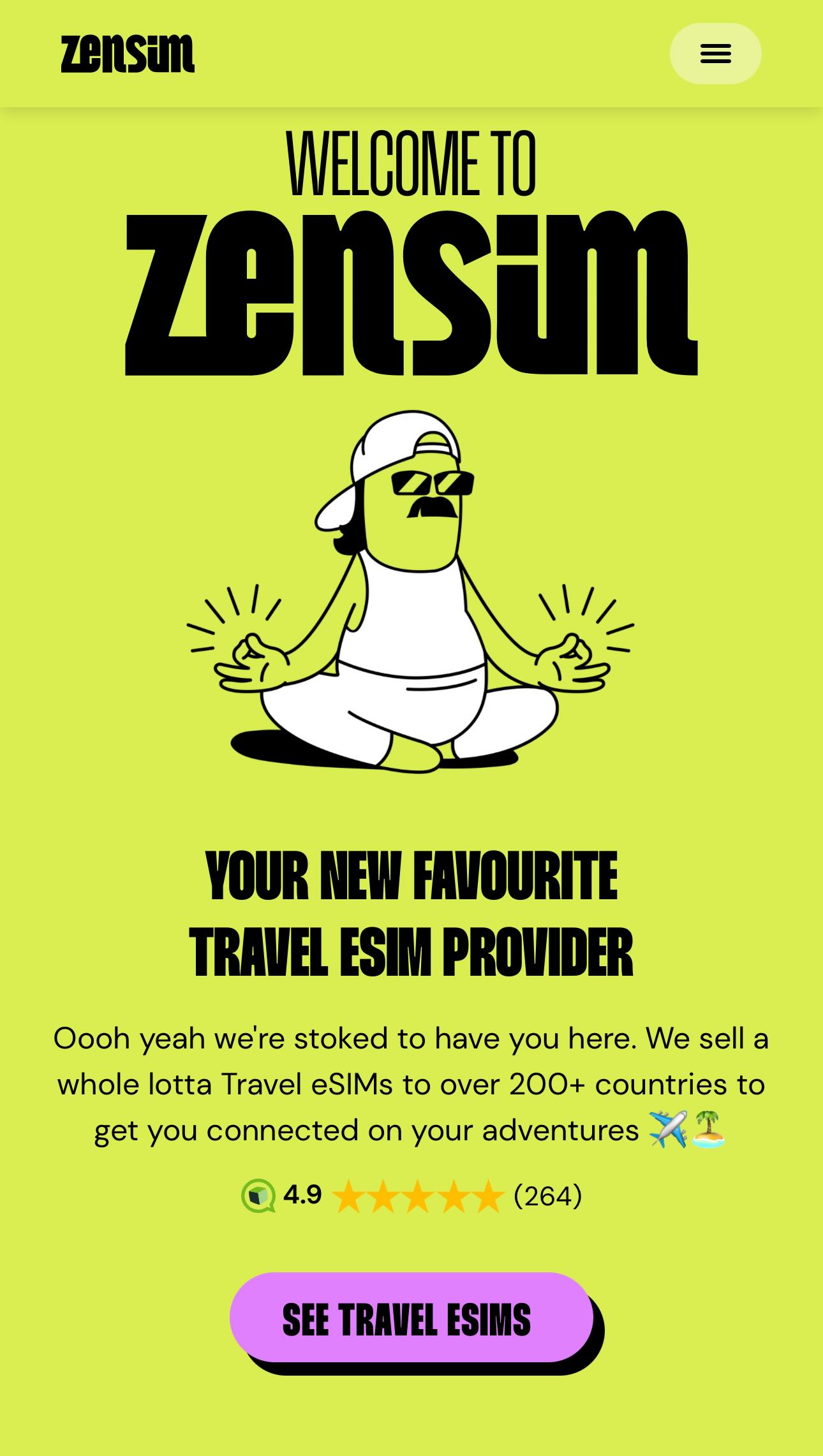
Instead, they’ve leaned into:
- Travel eSIMs you can set up before you leave
- A clean, simple app instead of clunky portals
- A remote-first, sustainability-focused business model
So instead of being yet another giant provider trying to upsell you ten bundles you don’t need, ZenSim sits more in the “lean, modern, let’s-keep-this-simple” category.
How ZenSim Travel eSIMs Work
The good news: if you’ve used any other travel eSIM before, you’ll feel right at home. If you haven’t, the process is still very manageable and way less painful than hunting for a SIM kiosk at the airport.
Here’s how it usually goes:
- Choose your destination or region.
You pick your country (or region/global option) and select how much data you want and how long you need it for. - Buy your plan online or in the app.
Once you check out, you’ll either get a QR code or you’ll install the eSIM directly via the ZenSim app. No mailing, no plastic, no store visits. - Add the eSIM to your phone.
In your phone’s settings, you add the new eSIM, give it a label (like “Travel Data”), and set it to handle mobile data. - Land, switch on data, and go.
When you arrive at your destination, you flip data over to the ZenSim eSIM and it connects to one of their partner networks. You’re online without begging the airport Wi-Fi to load one more page.

The app is helpful here because you can:
- See your active plans,
- Check how much data you’ve used,
- Top up if you’re burning through GBs faster than expected.
So instead of scrolling twelve emails deep for a QR code, you just open the app and everything you need is staring back at you.
Plans, Coverage & Data Options
ZenSim covers over 200 countries, which is plenty for most trip ideas. The plans fall into a few main buckets:
- Single-country plans – Great if you’re going to one destination (like the US, Japan, or Thailand) and staying put.
- Regional plans – Handy if you’re bouncing around multiple countries in one area on the same trip.
- Global plans – A single eSIM that works in a big list of countries for those “Europe + Asia + who knows where else” itineraries.
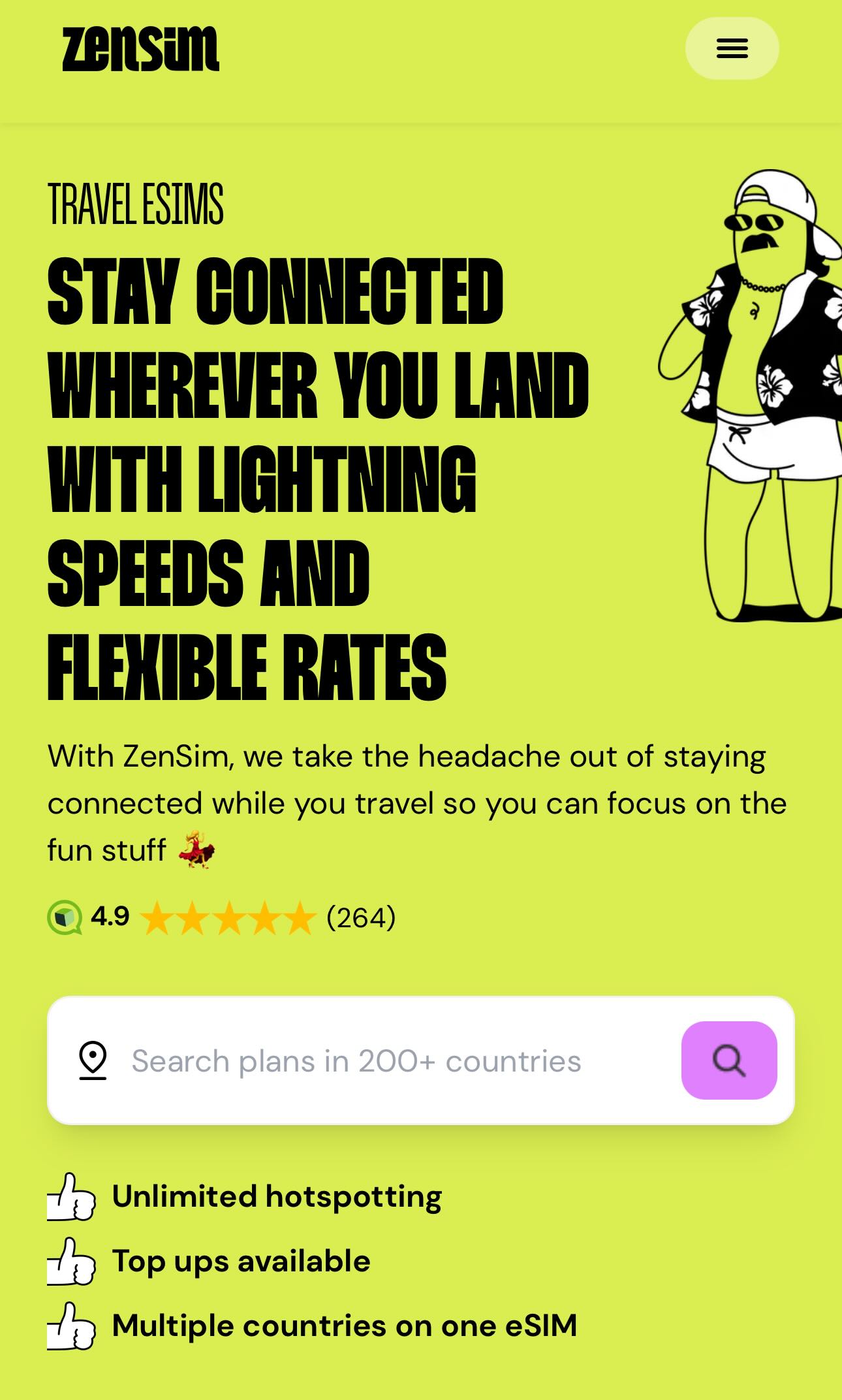
Within each of those, you’ll usually see different data sizes and durations to pick from – smaller plans for quick trips, bigger or “unlimited” options for heavier users in some destinations.
Because everything is prepaid, you:
- Pay for exactly what you pick
- Use it for the set number of days
- Top up if you need more
No “congratulations, you just subscribed to something forever” vibes. If you stay longer than planned or start working online on the road, topping up through the app is usually quicker than trying to find a local SIM and dealing with language barriers plus random ID requirements.
ZenSim’s Sustainability Angle
Here’s where ZenSim actually stands out.
They’re not just saying “digital is more eco-friendly” and calling it a day. They’ve built the brand with a few specific choices:
- They operate as a fully remote company, which cuts down the usual office-related waste and commuting.
- They donate a portion of profits to support reef protection projects in Australia.
- They back tree-planting initiatives to help offset some of the footprint of all this glorious internet time we’re all using.

Is that going to single-handedly save the planet? Obviously not. But if you’re going to buy data anyway, it’s nice when your money doesn’t just disappear into a generic telecom black hole.
If you care where your dollars go, this is a legit bonus point for ZenSim versus some of the more anonymous, “who even runs this?” eSIM brands.
What ZenSim Doesn’t Do (So You’re Not Surprised)
Let’s talk limits so expectations are actually realistic.
- No local phone number with travel eSIMs.
These travel plans are data-only. For most travelers, that’s fine because you can just use WhatsApp, iMessage, FaceTime, etc. for calls and texts. But if you need a physical local number for old-school calls or certain verification texts, you’ll need a local SIM or another solution. Read more about how to stay connected abroad. - No auto-renewing travel plans.
Everything is prepaid. When your data or days run out, that’s it. You’ll need to top up or buy another plan. Personally, that’s a plus – I’d rather be in control than hunting down mystery subscription charges later – but it does mean you should glance at your data usage in the app once in a while. - Not always the cheapest thing on earth.
You can sometimes shave a few dollars off by buying a random local SIM in person or chasing ultra-budget providers. ZenSim fits more into the “good value + easy + feels like a legit brand” category than the “I saved three dollars but spent an afternoon stressed at a kiosk” category.
Who ZenSim Is Best For
Based on how it’s set up, ZenSim makes the most sense for:

- Americans traveling abroad who want something simple and don’t feel like playing SIM roulette at the airport.
- Remote workers and long-term travelers who appreciate a global or regional plan they can manage from one app.
- Eco-conscious travelers who like the idea of some of their spend going toward reef protection and tree planting instead of just endless shareholder bonuses.
- Non-techy friends and family – the app and flow are simple enough that this is something you can recommend to your parents without becoming unpaid tech support for three days straight.
If you’re obsessed with having a local number, plan on staying in one country for six months, or are on a super tight budget and happy to deal with local SIMs, there are other setups that may be better suited.
Sooo – Is ZenSim Any Good?
Yep. ZenSim is a genuinely solid travel eSIM option that hits a sweet spot between ease, ethics, and price.
You get:
- A clean app
- Straightforward plans
- Wide coverage
- Actual humans on support
- A bit of feel-good factor with their sustainability projects

It doesn’t try to be the cheapest, the most “premium,” or the most complicated. It just quietly does what most travelers actually want: make it easy to stay online without getting destroyed by roaming fees or buried in telco nonsense.
If you’re building out your personal eSIM toolkit for future trips, ZenSim deserves a seat at the table.
Final Thoughts
In a sea of copy-paste travel eSIM providers, ZenSim manages to feel a little more human and a little less like a faceless telecom experiment. It’s especially appealing if you:
- Prefer app-based everything,
- Don’t need a local number for calls,
- Care even slightly about where your travel money ends up.
Is it going to revolutionize your life? No. Is it a smart, low-fuss way to get data in a ton of countries, with a side of Aussie attitude and eco-consciousness? Yep.
Add it to the list of “things that make travel days slightly less chaotic,” which is honestly all most of us are asking for!
