
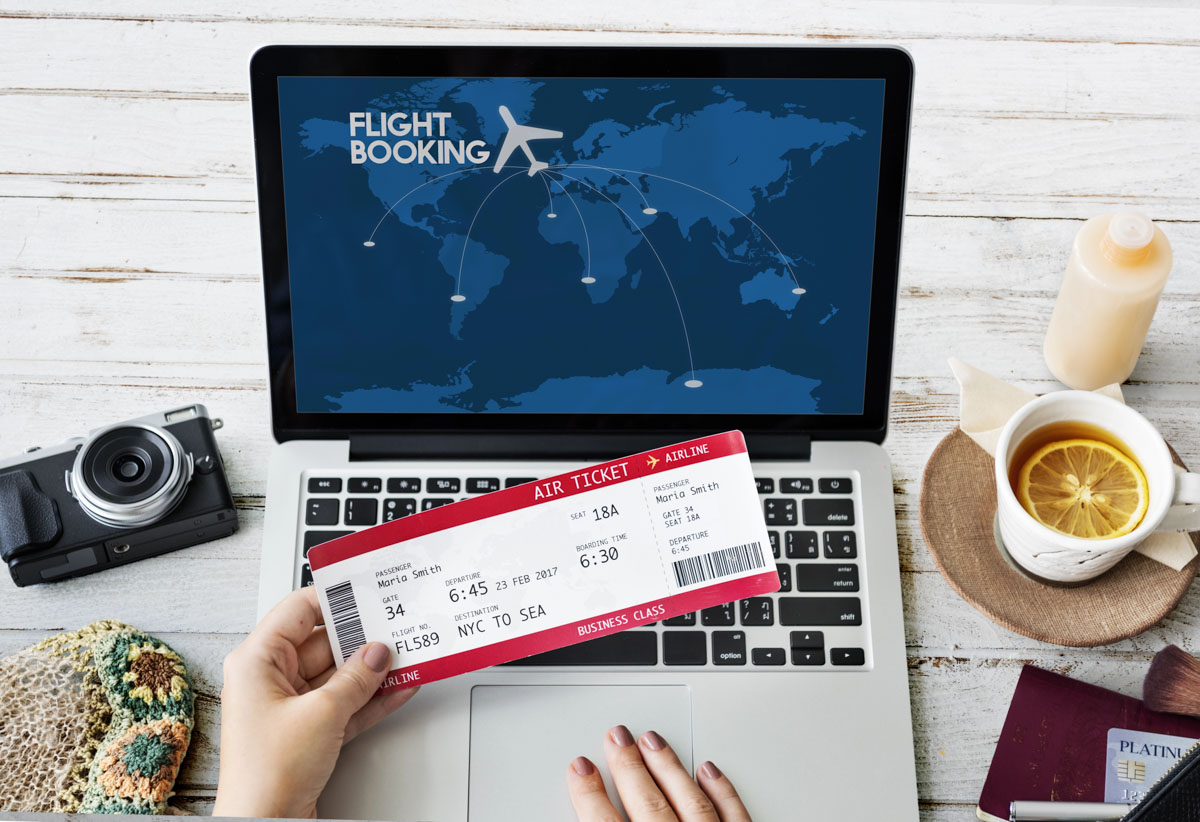
How to Actually Run Your Online Business From Abroad (Without Everything Falling Apart)
Alright friend, if you’re reading this, you’re probably already halfway convinced you can run your business from anywhere. Or you’re doing it already and things are… kinda holding together, kinda not. I get it. I’ve been running my stuff online while traveling for over a decade at this point, and I can tell you: the whole “laptop + good wifi = digital nomad dream” thing is a lie. It’s WAY more than that.
The good news is it’s absolutely doable. The less good news is that most people set it up wrong at the start, learn the hard way, and lose real money (or clients, or their sanity) along the way. So let me save you some of that. Here’s what actually matters if you want to run your online business from abroad long-term — not just for a two-week “workation” but as a real, sustainable life.
Your Banking Setup Comes First (Yes, Really)
Before you worry about anything else — before the fancy productivity apps, before the coworking memberships — sort out how you’re getting paid and how you’re paying people while abroad. This is the #1 place I see people trip up.
You need a bank account that doesn’t destroy you with foreign transaction fees, a way to invoice clients in different currencies without losing 4% on every payment, and ideally a business account separate from your personal spending. Wise Business is one option a lot of location-independent business owners swear by because you can hold and receive multiple currencies. Pair that with a good travel debit card (Charles Schwab is still my go-to for Americans), and you’ve got the basics.
Also — and I cannot stress this enough — have a backup. Two cards. Two banks. Something goes wrong (and it will, at some point), and you don’t want to be the person stranded in Bali with a frozen account and no way to pay your team.
RELATED: The Best Travel Cards to Travel With!
The Wifi Situation Is More Serious Than You Think
Okay, let’s talk about the least sexy but most important part of running a business abroad: the actual connection you’re working from.
You’re going to be logging into your business accounts from a mix of hotel wifi, cafe wifi, coworking spaces, your Airbnb’s sketchy router, maybe an airport lounge, and occasionally your phone’s hotspot. Every one of those is a network you don’t control — which means anyone else on the same network can potentially see traffic that isn’t properly encrypted. And when you’re a business owner, that traffic includes client emails, payment portals, admin logins, and possibly client data you’re legally responsible for.
This is where a business VPN earns its keep. It’s not the same as the free “VPN” apps you see advertised — a proper business-grade one encrypts your connection, gives you consistent access to your work tools no matter which country you’re in, and (this matters if you have a team) lets you keep everyone’s access to shared systems locked down. If it’s just you, a personal VPN might be enough. Once you’re a real business with clients, contractors, and client data flowing through, you want the business version. Set it to run automatically whenever you’re on wifi you didn’t set up yourself, and forget about it. Done.
Backups. Backups. BACKUPS.
Laptop stolen. Laptop dropped in a pool (yes, I know someone). Hard drive died mid-flight. Local wifi died the day of a big client deadline. All of these have happened to people I know.
If your business lives on your laptop, your business is one bad day away from disaster. Cloud backup everything — Google Drive, Dropbox, whatever you already use — and set it to auto-sync. Keep your invoices, client contracts, and important business files somewhere that isn’t just “on my laptop.” And keep a secondary device (an old laptop, an iPad, whatever) that can get you online in a pinch.
Your accounts also need backup. Use a password manager. Turn on two-factor authentication on your business email, your payment platforms, your invoicing tools, and honestly anything with money attached. And — this is the one people forget — save your 2FA backup codes somewhere offline before you travel, because being locked out of your business email in a country where your usual phone number doesn’t work is a very special kind of nightmare.
RELATED: 22 FREE Online Tools Every Remote Worker Actually Needs
Time Zones Are Your Business’s Silent Killer
If you have clients or a team, time zones are going to shape your entire day whether you plan for them or not. You can pretend they won’t and just wing it, but I promise you’ll end up on 2 a.m. calls or missing important stuff.
Be upfront with clients about your hours and location. Nobody I’ve worked with cares that I’m not in the US — they care that I respond when I say I’ll respond. Set boundaries early. Batch your “synchronous” work (calls, live meetings) into a specific window and let async work fill the rest. And when you pick a new country to base yourself in, seriously consider the time zone relative to your main clients before you book anything. Southeast Asia is amazing, but if all your clients are in New York, you’re going to hate your life on daily calls at midnight.

The Boring Stuff That Actually Matters (Taxes, Visas, Registration)
I’m not going to pretend to be a tax expert, and neither should you. But the thing nobody tells you is that running a business “from abroad” doesn’t magically disconnect you from your home country’s tax system. Americans especially — you owe taxes to the IRS no matter where in the world you live. There are exclusions and credits that can help (the Foreign Earned Income Exclusion is a big one), but you have to file, and you probably need a tax professional who specializes in expats.
Visa-wise, most tourist visas technically don’t allow you to work — even if you’re working remotely for clients back home. Enforcement is inconsistent, but the rules are the rules, and “digital nomad visas” now exist in a bunch of countries specifically to fix this gray area. If you’re going to base yourself somewhere for more than a couple months, it’s worth looking into whether that country has a real remote-work visa option. Also check my move abroad checklist for more of this pre-departure logistics stuff — there’s a lot of it and it saves you future headaches.
READ MORE: Taxes as a Nomad: What You Need to Know
Don’t Let “Location Freedom” Become an Excuse to Not Work
Real talk: your first month running a business from a new country is going to be less productive than you expect. There’s no way around it. Jet lag, figuring out where to get groceries, testing which cafe actually has usable wifi, adjusting to the noise, the food, the culture — it all takes energy.
The people who make this lifestyle work long-term are the ones who slow down. Don’t try to hop between countries every two weeks while also running a real business. You’ll burn out and your work will suffer. Base yourself somewhere for a month or three minimum. Build a routine. Find your cafe. Get to know your neighborhood. Then work.
The lifestyle you’re actually chasing isn’t “traveling constantly while running my business.” It’s “living an interesting life in different parts of the world while also having a business that pays for it.” Those are two different things, and the second one is way more sustainable.
The Bottom Line
Running your business from abroad isn’t harder than running it from home. It’s just different. You have to think about wifi and time zones and banking and visas in a way people who stay in one place don’t. But once your systems are set up, it becomes background — and you get to live your actual life while your business runs.
Get your banking sorted, protect your connection, back up everything, respect time zones, handle the boring legal stuff, and don’t let “I’m traveling” become an excuse. Do that, and you can absolutely build the life you’re picturing.
Now go make it happen, friend. I’ll see you out there.
