
Most people treat Iceland’s Reykjanes Peninsula like an airport hallway. They’re skipping the weirdest part of the trip.
Most people treat Iceland’s Reykjanes Peninsula like a hallway. You land at Keflavík, squint at the lava fields out the window, and head straight for the Blue Lagoon or Reykjavik.
That’s a mistake, and a pretty big one. The stretch of land between the runway and the spa is some of the strangest scenery in the country, and most of it costs nothing to visit.
Yes, it’s volcanically active. Here’s what that means for your plans.
Let’s address the volcano first. Volcanic activity on the peninsula resumed in 2021 after roughly 800 years of quiet, and the Grindavík area has been the center of it.
The airport operator says Keflavík is operating normally and that the eruptions have been lava flows rather than ash blasts. The Blue Lagoon, though, has closed temporarily during periods of nearby activity and reopened when conditions allowed.
Does that mean skip it? No, but it does mean you check Safetravel.is and the Icelandic Met Office before you go and again once you land. Respect every road closure, and never wander toward an eruption site on your own.
Gunnuhver is the one that stops you in your tracks
Forget the pretty-spa energy. Gunnuhver is a high-temperature geothermal field where steam roars out of the ground, mud churns, and the whole place smells like sulfur (yes, really).
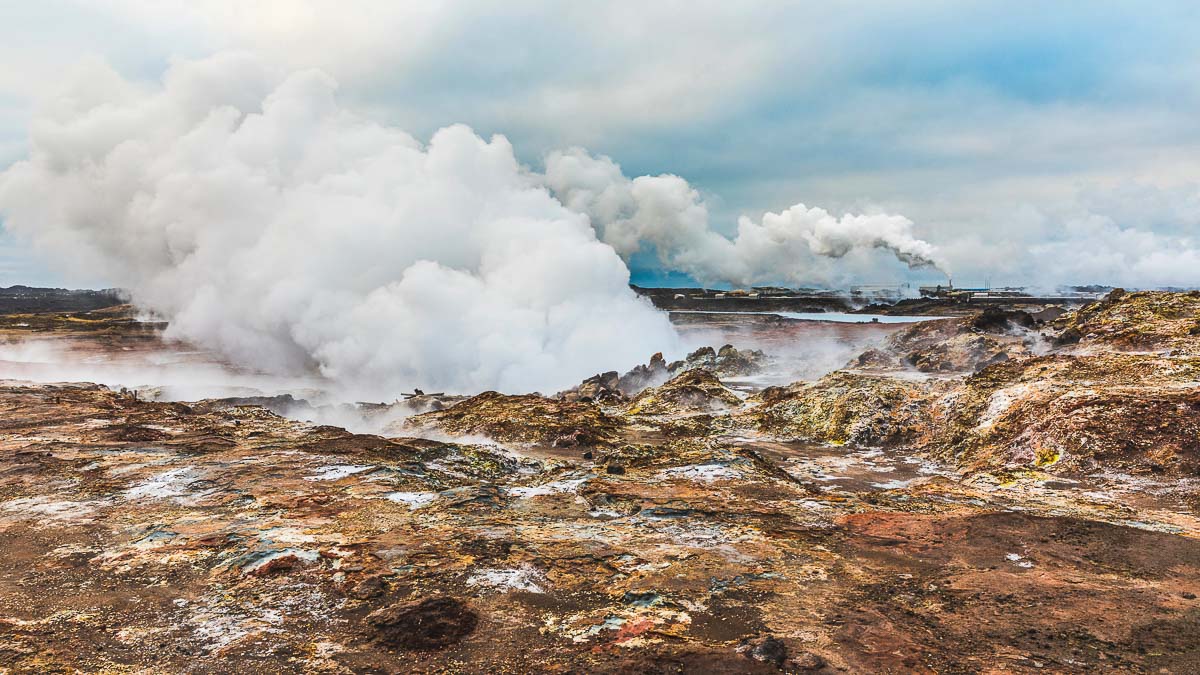
The ground is stained yellow, orange, gray, and white against black lava, and the site has Iceland’s largest mud pool at about 20 meters across. It’s free, it’s open 24 hours, and you watch it all from raised boardwalks. Stay on them, because the ground out there is dangerously hot.
Where does the name come from? An angry ghost called Gunna, who supposedly haunted the springs in the 18th century until a priest trapped her spirit in the boiling water. My take: it’s a better origin story than most museums manage.
Seltún and Kleifarvatn: the quiet, moody side
Seltún is the easy win if you want geothermal weirdness without a long walk. Wooden boardwalks wind past bubbling mud pots and steaming vents, with hillsides in orange, yellow, and green.

Just nearby, Kleifarvatn is a big, brooding lake ringed by dark hills. There’s not much to “do” there, which is exactly the appeal. Pull over, walk to the shore, and let the wind do its thing for a few minutes.
Want every stop mapped out in one place? I broke down the whole route in my guide to the Reykjanes Peninsula near Keflavík Airport.
A lighthouse, a rift, and a rock pool that fights back
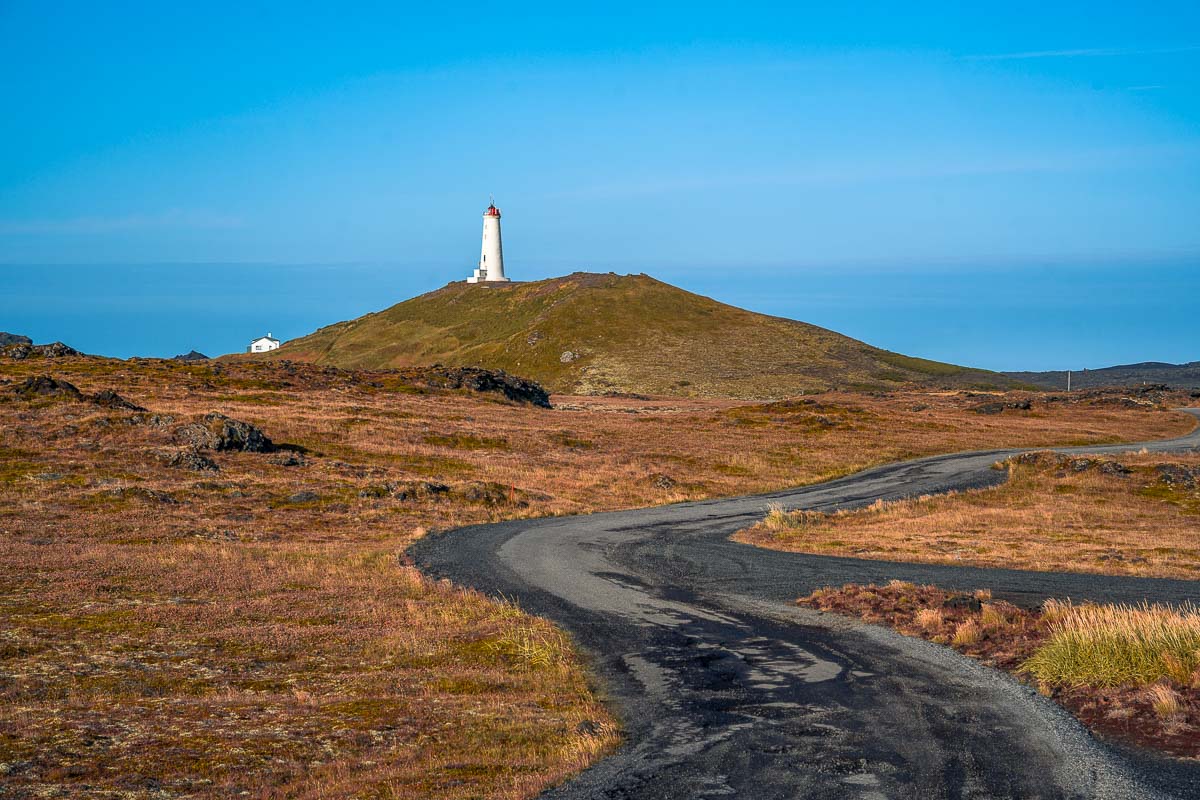
Reykjanesviti is the oldest lighthouse in Iceland, perched on the tip of the peninsula with cliffs and open ocean on all sides. It’s open around the clock, and the views are wide enough to make your phone camera feel inadequate.
Then there’s the Bridge Between Continents, a small footbridge over a rift where an information board explains the Eurasian and North American plates. It’s free and open 24 hours, so there’s no excuse to blow past it.
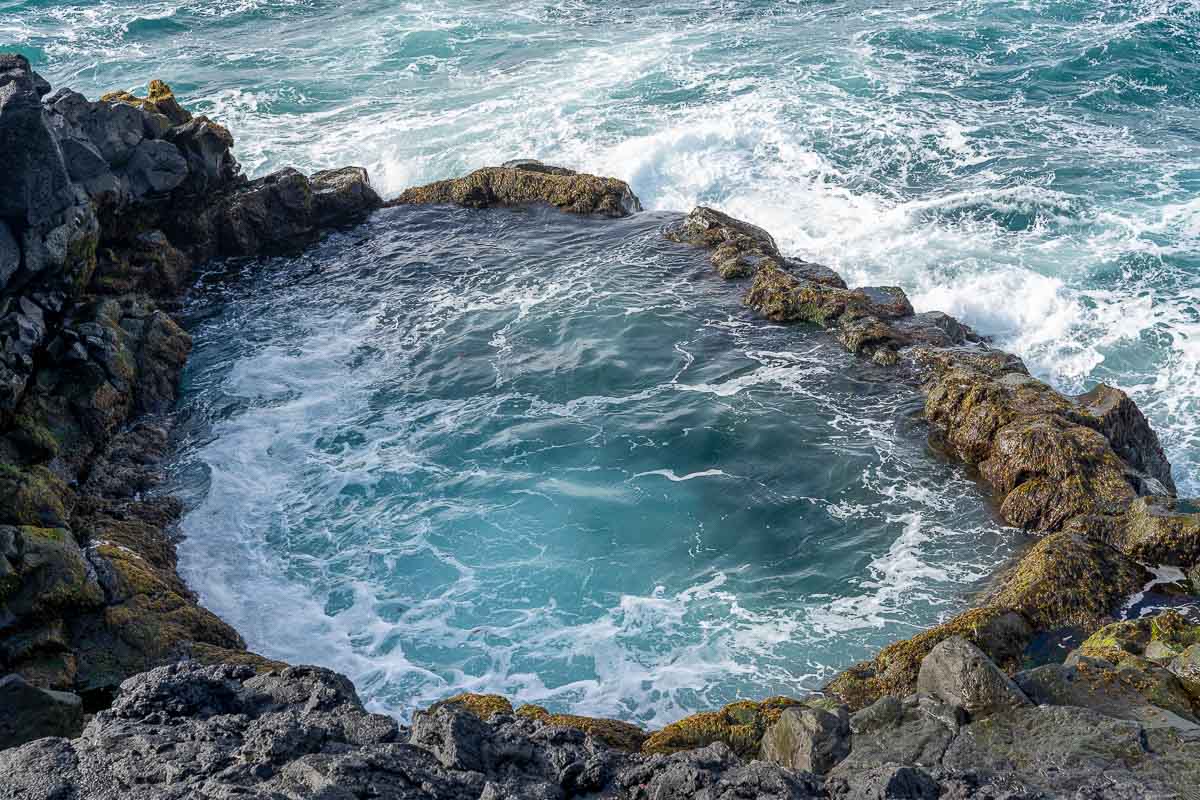
Brimketill is the showstopper on a windy day. It’s a natural lava rock pool right on the coast, and you absolutely cannot swim in it, but watching waves slam into it beats plenty of paid attractions.
How to actually do it without overthinking
You can drive it yourself in a day, which is the cheapest route if you’re already renting wheels. Compare rental cars and campervans here if you want the freedom to linger.
Rather let someone else handle the driving? You can check availability for a guided Reykjanes Peninsula tour that hits the main stops for you.
If the Blue Lagoon is a must for you, book ahead, since it isn’t a show-up-and-hope kind of place. Just treat it as one stop on the peninsula, not the whole plan.
So here’s my question: would you rather spend your first hours in Iceland in a spa queue, or standing in a cloud of volcanic steam?
If Iceland has you curious, my Iceland category has more.
