
Four Canadian Destinations Worth the Drive from the US
Canada is right there. Literally right there.
And yet a surprising number of Americans have never crossed the border for a road trip despite having some of the most spectacular destinations on the planet sitting a reasonable drive away. If you have been sleeping on this, consider this your wake-up call!
1. Banff National Park, Alberta
- Drive time from Seattle: approximately 8 hours
- Drive time from Great Falls, Montana: approximately 4 hours
If you have never been to Banff, the photos do not prepare you. But you can go and find out for yourself because it is accessible from the US via Montana and Alberta’s Highway 2, making it one of the more approachable big-destination drives in North America. Great Falls to Banff is an easy day. Seattle to Banff is a long day but a beautiful one through British Columbia.
Once you are there, the Icefields Parkway between Banff and Jasper is the drive you do before you die. Moraine Lake, Lake Louise, Johnston Canyon, the Columbia Icefield: the list of things to do in Banff is long but as epic as it gets..
Summer is peak season and the parks get busy. Book accommodation early, be on the trails before 8am, and you will have a very different experience from the one the midday crowds are getting.
RELATED: Canadian Rockies Road Trip—An Epic 1-Week Itinerary
TIP: if you are flying into Canada at any point during your trip, you will need an Electronic Travel Authorization before you board. It is fast, inexpensive, and easy to sort through the Canada ETA VisaSyst before you travel. If you are driving the whole way, the land border crossing works differently and the eTA does not apply. Either way, check your entry requirements before you go and then forget about it.
2. Niagara Falls, Ontario
- Drive time from Buffalo: 30 minutes
- Drive time from New York City: approximately 7 hours
Niagara Falls is one of those places that manages to exceed expectations despite everyone having seen it in photos a thousand times. The sheer volume of water moving over those falls ensures that you feel it before you see it.
The Canadian side is the better side. This is not a debate. The views from Ontario put you face-on with the falls, the Maid of the Mist boat ride gets you close enough to get completely soaked, and the town of Niagara-on-the-Lake, about 20 minutes away, is one of the prettiest small towns in Canada.
From Buffalo, this is practically a day trip. From Cleveland, it is about three and a half hours. From Detroit, it is about four. Niagara Falls is the easiest Canadian border crossing on this list and a perfect introduction to cross-border driving for anyone doing it for the first time.
3. Vancouver, British Columbia
- Drive time from Seattle: approximately 3 hours
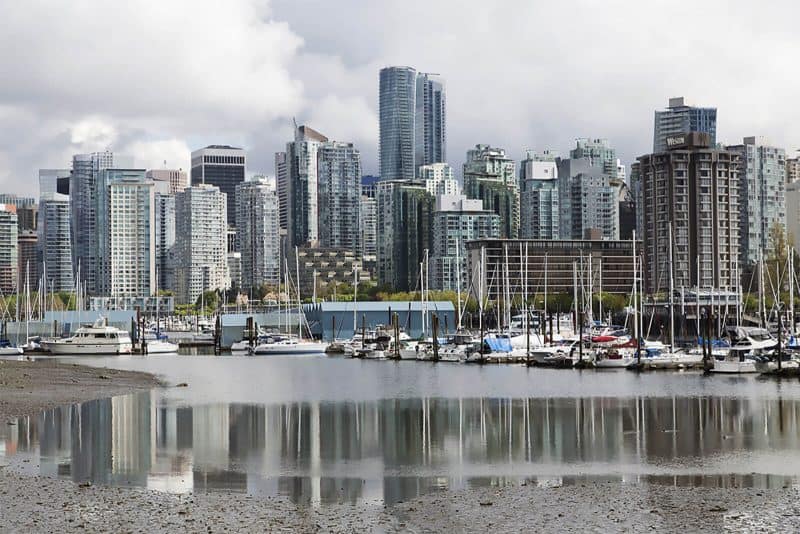
Three hours from Seattle and you are in one of the most beautiful cities in the world. That math should have more Americans making this drive on a regular basis.
Vancouver sits between the Pacific Ocean and the Coast Mountains in a setting that most cities can only aspire to. Stanley Park is 400 hectares of old-growth forest attached to the downtown core. Granville Island is a converted industrial site that now hosts one of the best public markets in North America. The food scene reflects the city’s Pacific Rim position perfectly.
The drive from Seattle follows I-5 north to the Peace Arch border crossing, which is one of the busiest land crossings in North America. Cross early in the morning or mid-afternoon to avoid the waits that build up around rush hour. Once through, you are in Greater Vancouver, and the city is about 45 minutes from the border.
If you want to add a ski trip or hiking weekend to the itinerary, Whistler is two hours north of Vancouver and operates year-round.
RELATED: How to Move From The US to Canada
4. Montreal, Quebec
- Drive time from New York City: approximately 5.5 hours
- Drive time from Boston: approximately 5 hours
- Drive time from Burlington, Vermont: approximately 2 hours
Montreal is the most European city in North America and Old Montreal’s cobblestone streets and 17th century architecture, the bilingual street signs, and café culture will make you feel the distance from the US.
The food is the headline. Montreal bagels from Mile End’s wood-fired ovens. Smoked meat at Schwartz’s. Poutine done properly at one of the city’s institutions. The Jean-Talon Market on a Saturday morning. This is a city that takes eating seriously, and the standard across the board reflects that.
Summer in Montreal is the peak festival season. The Jazz Festival, Just for Laughs, Osheaga: the city fills up, and the energy is exceptional. Book accommodation early if summer is the plan. The shoulder seasons of May and September offer the same great city with more breathing room.
The Border Crossing Basics
All four of these destinations involve crossing an international border, and a few things apply across all of them. A valid US passport is required. Standard customs declarations apply, and if you are bringing food across, agricultural rules are in effect, so check what is permitted before you pack the cooler.
Land border wait times vary significantly by crossing and time of day. The CBSA wait times app and the US CBP Border Wait Times tool both give live estimates that make it easy to time your crossing intelligently. Crossing mid-week and mid-morning is almost always faster than crossing on a Friday afternoon or a Sunday evening when everyone else is heading home.
Canada is an easy country to drive around; the roads are well maintained, speed limits are in kilometers per hour, so recalibrate accordingly, and the scenery across all four of these routes does a lot to make the miles pass. The only question is which one you are doing first.
