

First-Time Scuba Diving in Bali: 9 Things to Know Before You Go
Photo by Johnny Africa on Unsplash
Bali can be a fantastic place to try scuba diving, whether you want a supervised introductory experience or a full certification course. Shore dives around Amed and Tulamben are convenient, marine life is varied, and there are plenty of operators to compare.
But diving is not something to squeeze into your itinerary without planning. Health requirements, currents, equipment, and even your flight home can affect what you are able to do. Here are nine things to sort out before getting underwater.
1. Decide whether you want a trial dive or certification
An introductory dive, often called Discover Scuba Diving, lets you try scuba with professional supervision without earning a full diver certification. An Open Water course takes longer and includes theory, confined-water skills, and open-water training. If you just want to see whether you enjoy breathing underwater, a trial dive may be the easier first step.
Ask what supervision, depth limits, number of dives, equipment, and transport are included. You should not assume an introductory dive makes you qualified to dive independently afterward.
2. Complete the medical questions before your trip
PADI provides a diver medical questionnaire that helps identify health issues needing assessment before training. Depending on your answers, medical clearance may be required. Read the form ahead of time, answer accurately, and contact the dive operator about any questions rather than discovering a problem on the morning of your dive.
If you have a current illness or a condition that affects breathing, circulation, or your ears, ask an appropriately qualified medical professional about whether diving is suitable for you.
3. Do not force your ears to equalize
Pressure changes as you descend, and you need to equalize your ears early and often. If you feel pain or cannot equalize, stop descending and signal your instructor. Never push through it. Diving while congested can also cause problems, so tell your instructor if you are sick or struggling.
Your instructor should explain equalization and the hand signals during the briefing. There is no prize for reaching the bottom faster than everyone else.
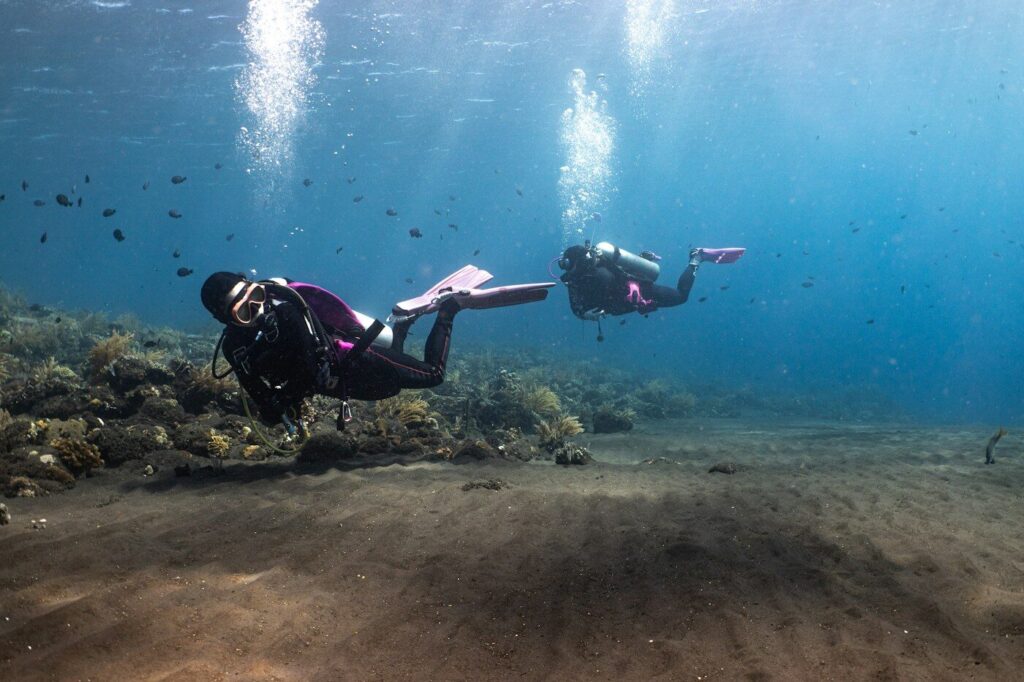
4. Pick the dive area that matches your experience
Bali has several very different dive regions. Amed and Tulamben on the east coast are known for shore access and sites that operators frequently use for training, subject to conditions. Tulamben is also home to the famous USAT Liberty wreck. Nusa Penida is known for mantas and seasonal marine life, but some sites have challenging currents. Menjangan in the northwest offers another option, though it is farther from the southern tourist areas.
Before choosing a shop, compare its actual beginner-friendly sites and weather policies. You can start exploring local options through Neptunescubadiving.com, then ask which site it would choose for your ability and travel dates.
5. Ask about water temperature and the right wetsuit
Tropical does not always mean warm underwater. Temperatures can vary by site, season, depth, and upwelling, especially around Nusa Penida. Ask what wetsuit is included and whether you can request a thicker one if you get cold easily.
Comfort makes it easier to concentrate on your breathing, buoyancy, and the reef instead of counting the minutes until the dive ends.
6. Check your insurance before entering the water
Some travel insurance policies include recreational scuba within particular depth or certification limits; others impose exclusions. Read the wording carefully. Ask whether medical evacuation and treatment for diving-related injuries are included, particularly when diving away from major medical facilities.
Do not rely only on a tour listing that says “insurance included.” It may refer to an operator’s limited liability coverage rather than your personal medical expenses.
7. Leave enough time before flying
Flying too soon after diving can increase decompression sickness risk. Divers Alert Network’s flying-after-diving research informs the commonly used minimum waiting recommendations of at least 12 hours after a single no-decompression dive and at least 18 hours after multiple dives or multiple days of diving. Longer intervals may be prudent; always follow professional guidance for your specific dive profile.
Avoid scheduling a dive for the morning of your international flight. Keep the final day for something on land instead.

8. Get the full price and logistics in writing
Ask whether the advertised package covers equipment, certification materials, instructor supervision, transport, meals, park or conservation fees, and any boat charges. Check where the day starts and finishes, because Bali traffic can turn a seemingly short transfer into a long journey.
If you are planning to spend longer on the island, this guide to living in Bali as a digital nomad covers the practical side of staying rather than just visiting.
9. Be realistic about the next dive destination
After your first dive, it is tempting to book a Komodo liveaboard or a trip to every famous site on Instagram. Build experience gradually instead. Get comfortable with buoyancy, mask clearing, buddy procedures, and conditions similar to those you will encounter. Some sites and itineraries are unsuitable for brand-new divers even when they appear on a standard tourist itinerary.
A good instructor should be willing to recommend a different site or postpone a dive when conditions are not suitable.
One final tip before booking
Contact two or three dive shops and compare the answers to the same questions: group size, instructor qualifications, dive site, included equipment, medical screening, insurance, cancellation policy, and what happens when weather changes. The best first dive is not the most ambitious one. It is the one where you feel safe, prepared, and excited to try again.
