
Everyone books Masaya Volcano for the lava-lake photo. That lava lake collapsed in 2024.
Search “Masaya Volcano” and the same photo shows up forty times over: a wide, glowing lake of molten lava lighting up a black crater at night. It’s the reason half of Nicaragua’s tour vans head there after dark instead of during the day.
Here’s the problem. That lava lake isn’t there anymore. A landslide buried it in March 2024, and plenty of people are still booking the night tour expecting the old photo.
The lava lake that made Masaya famous is buried
Masaya’s Santiago Crater used to be one of the only places on Earth where you could drive up to an active volcano and look straight down at exposed lava, no hike required. That access is what built the park’s reputation long before Instagram existed — Nicaragua named it the country’s first national park back in 1979.
Then, in March 2024, a landslide inside the crater collapsed onto the lava lake and buried the surface. What’s left after dark now is a glow rising off the vent, not the wide, exposed lake from the old photos and videos.
The volcano didn’t calm down, for what it’s worth — it just rearranged its own furniture. Santiago Crater is still degassing nonstop, and Masaya has had real eruptions as recently as 2015.
What you’ll actually see now
I visited during the day in March 2026, almost exactly two years after the collapse, and walked in expecting to feel cheated out of the classic shot.
I wasn’t. You still get a real look into an active crater: sulfur-yellow rock, thick clouds of volcanic gas rolling across the viewpoint, and — if you stand still long enough — the sound of rocks shifting somewhere underneath you. Our guide pointed out exactly where the crater wall gave way.
Was it the exact photo I’d seen online? No. Was it still worth standing at the edge of an active volcano? Absolutely.
At night you’ll get an orange-red glow instead of a lake, and it can still be striking. Just don’t walk in assuming you’re getting the wide, exposed-lava scene from five-year-old photos and videos.
Day or night? Here’s my honest take
Conventional wisdom says night wins because darkness makes any glow easier to see. I’d actually pick daytime, and I’ll die on this hill.
During the day you can actually see the crater itself, the layered volcanic rock, the smoke shifting with the wind, and the national park around it — and the viewpoint was nearly empty when we went. At night you’re often capped at a short window near the rim, sometimes just a few minutes, before you’re moved along for the next group.
If seeing a red glow is specifically the entire point for you, go at night. If you actually want to understand what you’re looking at, daytime wins, no contest.
Getting there, cost, and how long you actually need
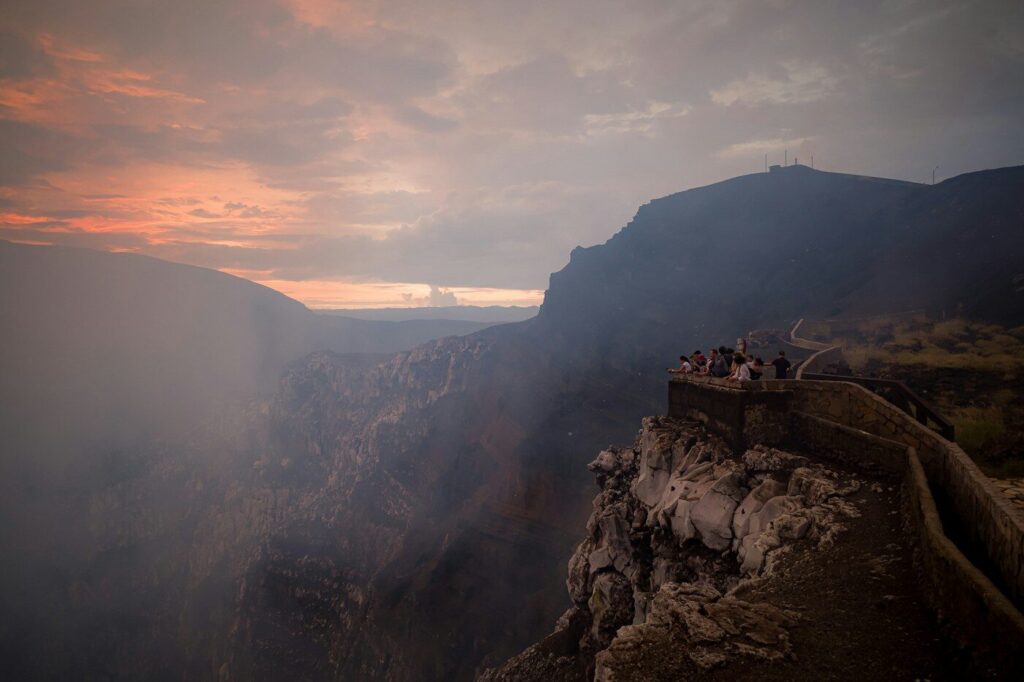
Masaya sits close enough to Granada that most visitors base themselves there and treat the volcano as a half-day trip, not a destination on its own.
Daytime entry runs around $4 USD, and the evening slot runs about $10 USD for foreign visitors, roughly half that for Nicaraguans — though prices and hours at an active national park can shift with little notice, so treat those as a starting point, not gospel. Crater viewing time is generally capped around 30 minutes to keep the rim from turning into a crowd scene.
If you don’t have a rental car, this Masaya Volcano, art market, and white villages day tour bundles the crater with a couple of nearby stops, including a viewpoint over Laguna de Apoyo, so the drive out there does more than just get you to one parking lot.
If lava is non-negotiable, Cerro Negro still delivers
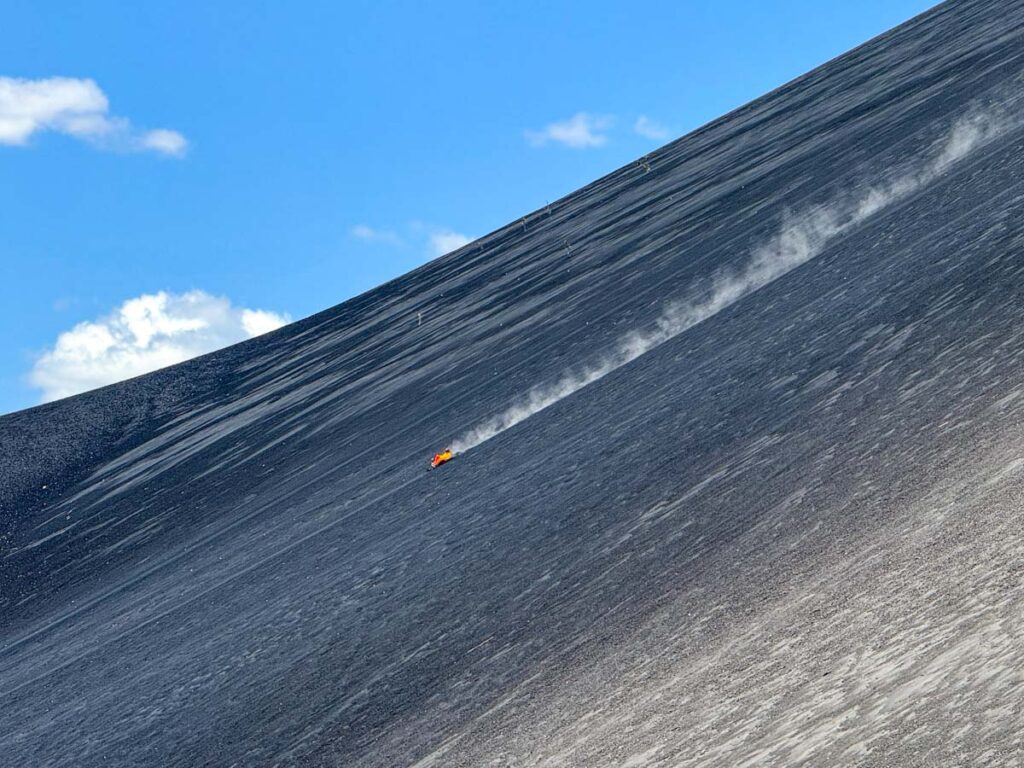
If the whole reason you wanted Masaya was fire, there’s a workaround about two hours away. Cerro Negro, outside León, is where people hike a black ash cone and slide back down it on a wooden board — no lava lake required, but plenty of spectacle.
It’s a completely different kind of volcano encounter, and a landslide hasn’t touched it. Think of it as the backup plan if an active crater without an exposed lava lake feels like a letdown.
So — still worth the drive to Masaya, glow instead of lake and all? For a park you can drive straight into and stand at the edge of an active crater within minutes, my answer is yes. Would the old lava-lake version have made a better photo? Sure. But would you really skip an entire active volcano over one missing shot?
