
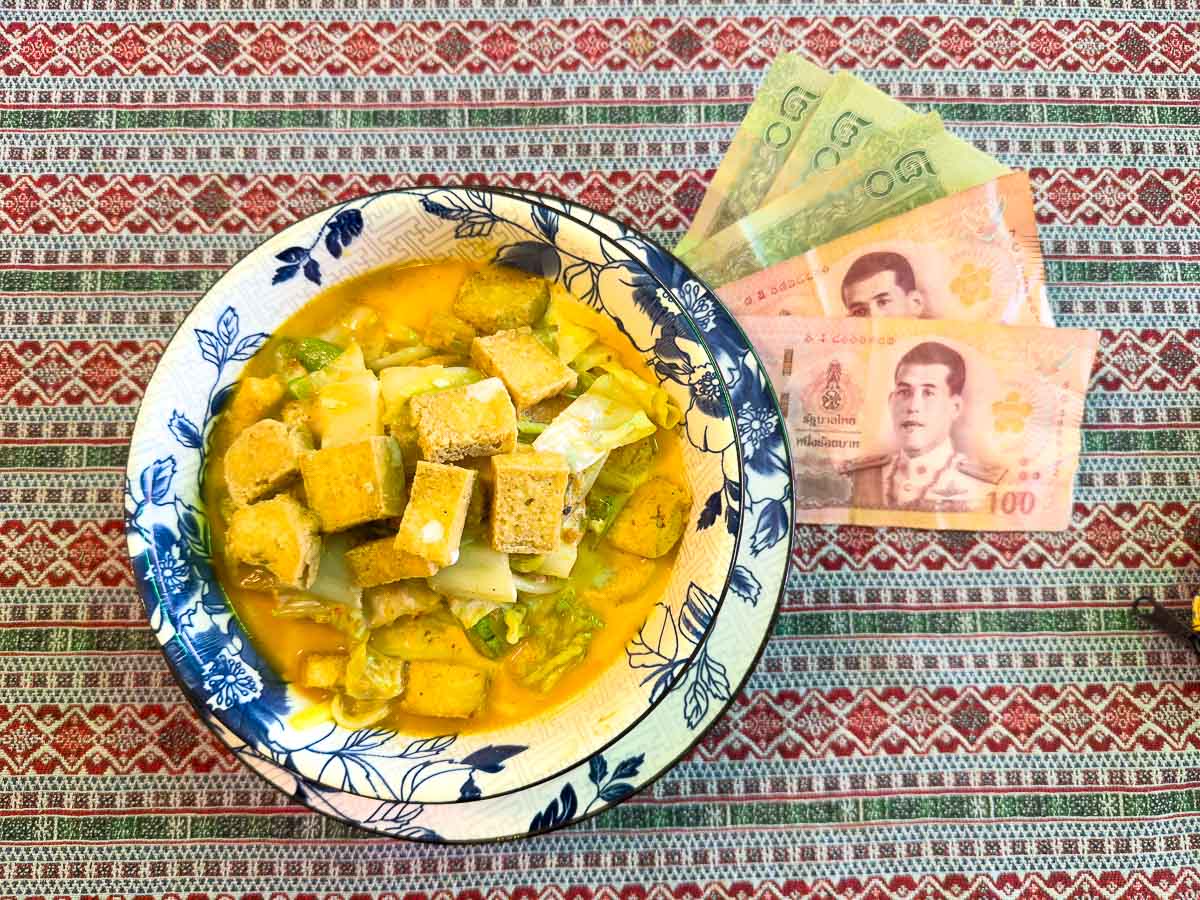
Cost of Living in Chiang Mai, Thailand
Chiang Mai has long been hyped as one of the best-value cities in the world—and it still delivers.
Whether you’re a digital nomad, remote worker, slow traveler, or just someone looking to stretch your dollars, this northern Thai city makes it pretty damn easy to live well for less.
I’ve lived here on and off for years (currently here again in 2025), and we track every baht so we can report back to you.
It’s one of my favorite places I’ve ever lived, and the cost of living in Chiang Mai is a big reason why I’ve come back so many times!
This post breaks down real monthly costs for a couple, with tips and pricing ranges so you can figure out what works for your budget.
Chiang Mai Cost of Living Snapshot
Here’s what we spend each month as a couple:
- Base living costs (rent, food, utilities, etc): ฿47,500 (~$1,330 USD)
- Extras (fun, massages, random stuff): ฿10,000 (~$280 USD)
- Muay Thai training (for two): ฿7,000 total (~$200 USD)
Total: under $2,000 USD/month for two people living comfortably
No penny-pinching. We order takeout, buy beer, hire a cleaner, and still spend less than we did in the U.S. just existing.
NOTE: All prices listed here are in baht (฿) and USD, with an estimated conversion rate of around ฿34 = $1. Exchange rates are constantly fluctuating.
Rent: ฿8,000–30,000+ (~$225–$850+ USD/month)
Chiang Mai’s rental market is a dream. You can find everything from budget studios to luxury condos with pools and gyms.
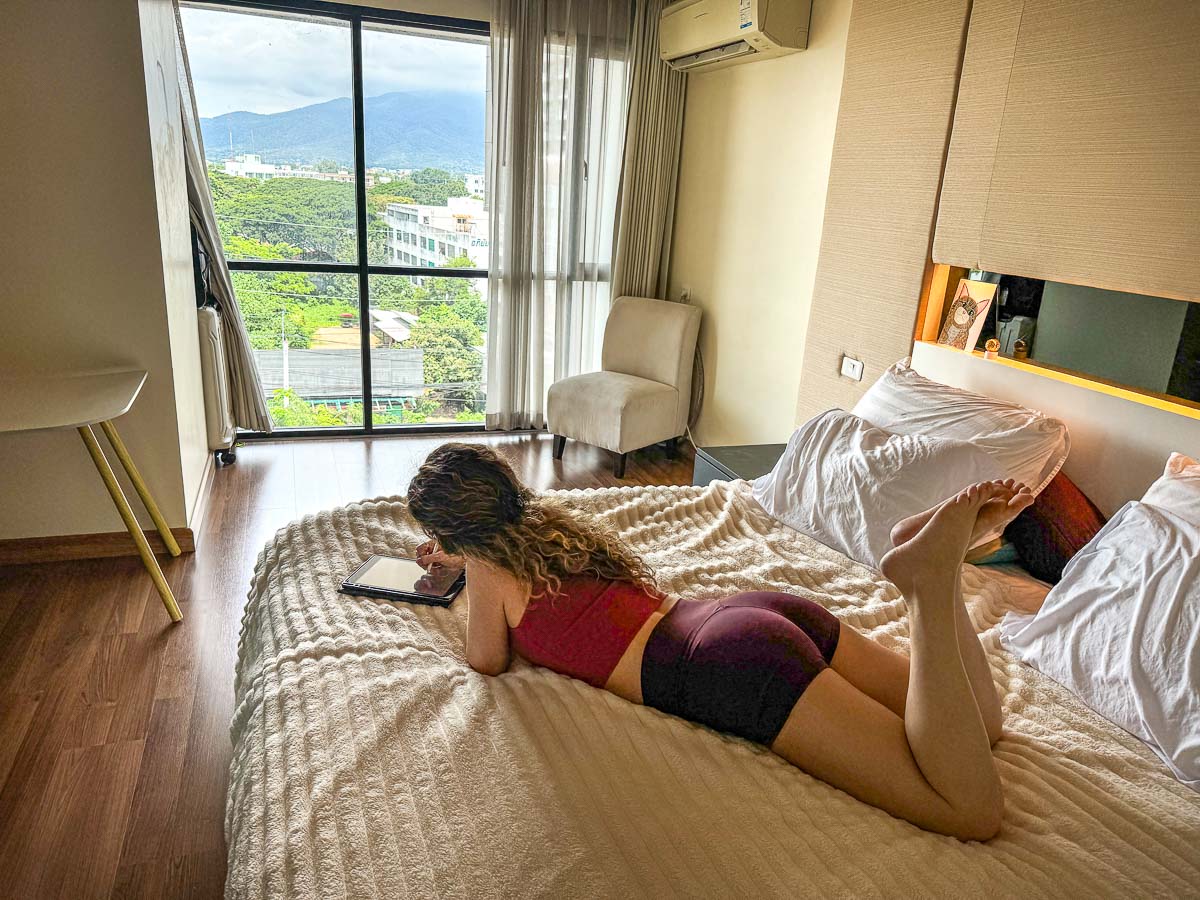
- Basic studio or small 1BR: ฿7,000–12,000 ($200–$340)
- Nice 1–2BR condo with amenities: ฿13,000–20,000 ($370–$570)
- High-end or brand-new condos: ฿25,000–30,000+ ($700–$850+)
We pay around ฿21,000/month ($640 USD) for a modern 1BR in a central area with a pool, small gym, and a 711 down the road (OK fine, almost everyone lives near one lol). It’s walkable, quiet, and close to everything.
🔑TIP: How to Find a Place
Skip the long-term rentals online as they’re mostly overpriced. Book a hotel or Airbnb for your first few days (we do 5–6 nights), then walk around.
Look for “For Rent” signs or head into condo buildings and ask the front desk. You’ll get better deals in person and avoid inflated tourist pricing.
Utilities: ฿2,000–3,500/month (~$55–$95 USD)
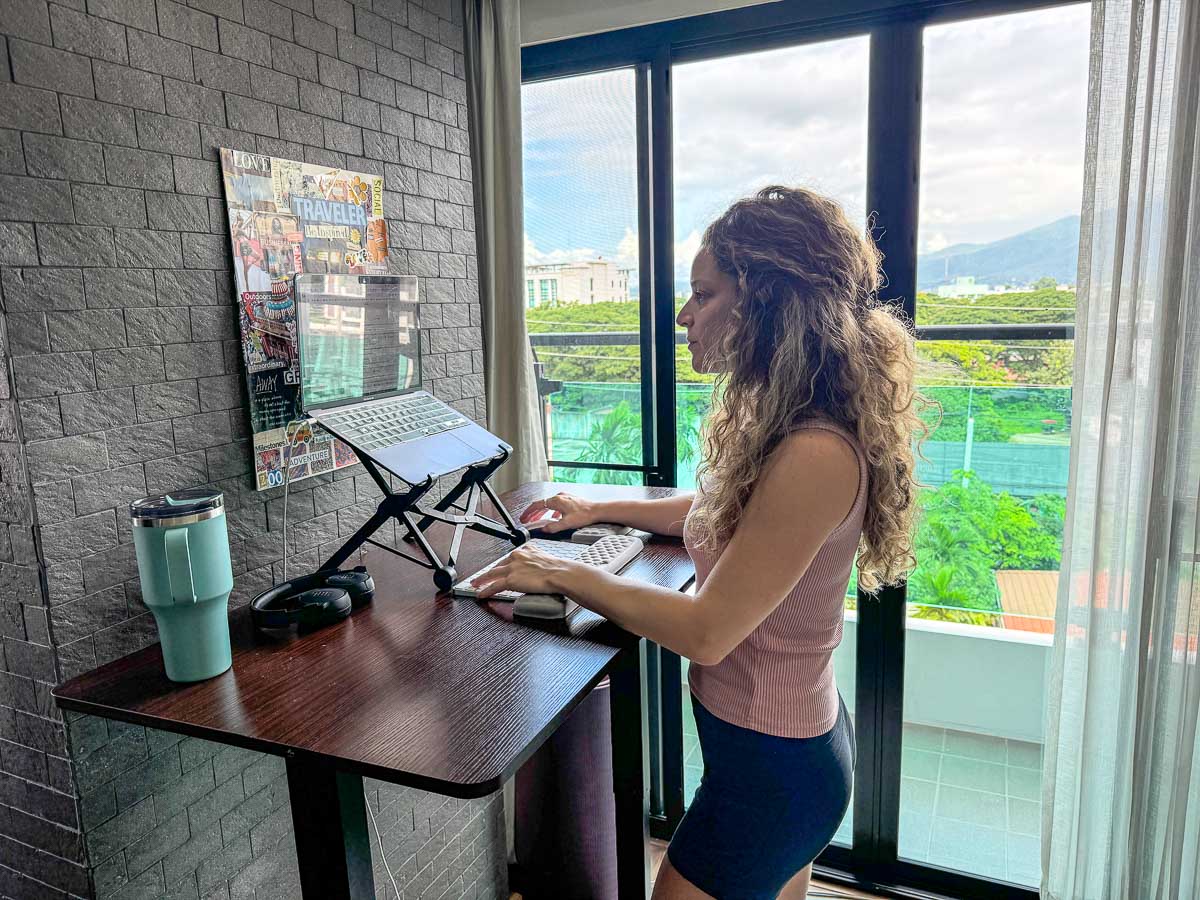
- Electricity: ฿1,000–2,000+ ($30–$55+), depending on your A/C use
- Water: ฿100–300 ($3–$8)
- Internet: ฿500–700 ($14–$20) for fast fiber
- Drinking Water: ฿100–300 ($3–$8) – refill jugs or water delivery
Some condos include some or all of these. Expect to pay a bit more for utilities in condos than in homes or random apartments.
Groceries & Eating Out: ฿18,000–22,000/month (~$520–$670 USD per couple)
We spend about ฿20,000/month on food — and we eat well. Lots of Thai meals, weekly brunches, Western meal splurges, and we keep cheese and good coffee stocked at all times.

GrabFood and meal delivery services also make frequent appearances in our house.
- Groceries: ฿6,000–9,000/month (~$180–$270 USD)
We shop at local markets for produce, Makro for bulk buys, and Rimping for import goods (hello, overpriced cheddar). Convenience stops at 711 happen a few times a week too. - Eating Out: ฿11,000–14,000/month (~$340–$430 USD)
Thai street meals run as cheap as ฿40–60 ($1.10–$2 USD), but we mix in Western restaurants, cafes, brunches, and delivery. We’re not eating on a backpacker budget anymore and it shows. - Meal Delivery Services: ฿8,000/month (~$225 USD)
When we’re feeling lazy or busy, we’ve used weekly meal prep services that deliver fresh, ready-to-eat meals daily (about ฿2,000/week). It’s convenient and still affordable.
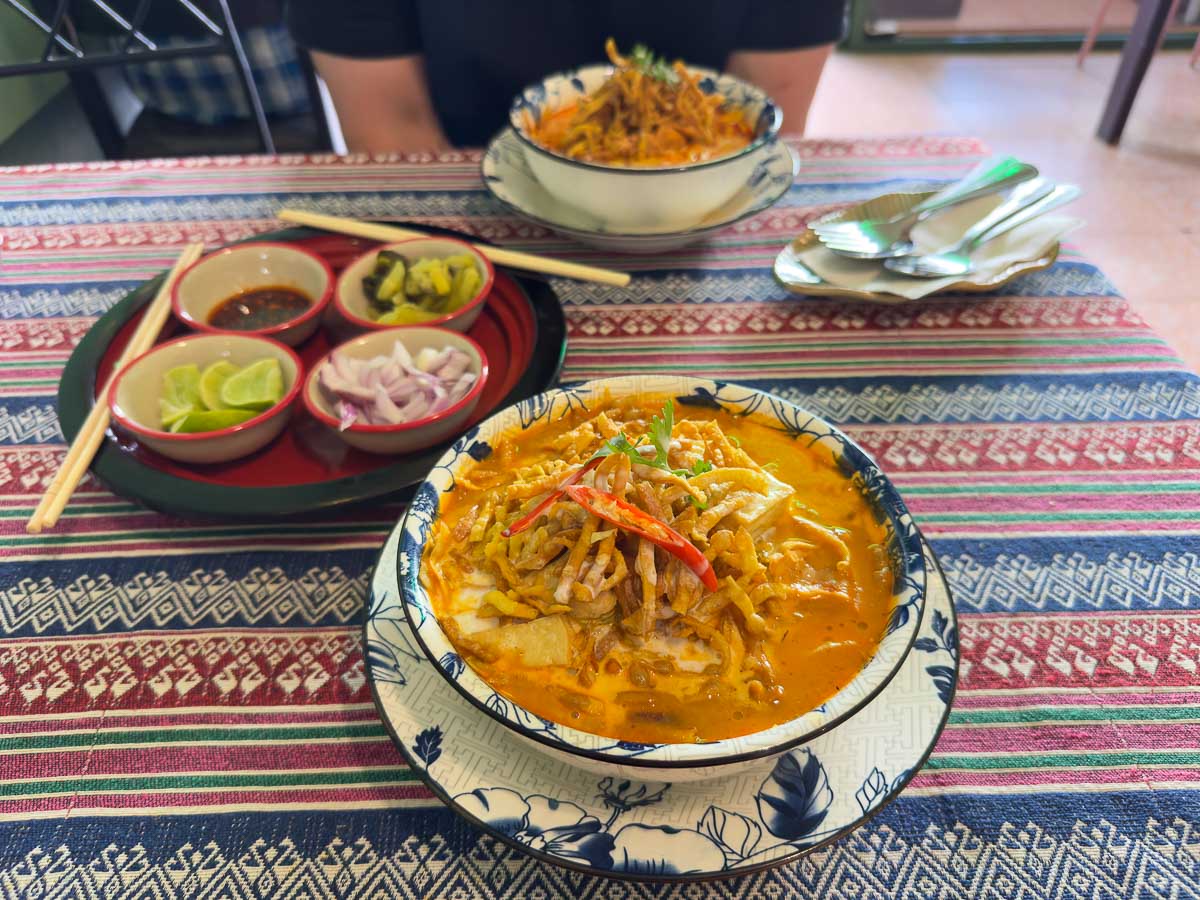
Tip: You can also order groceries through Grab if you don’t feel like dealing with a grocery run. Big C and Lotus are the go-tos.
PS: You can eat for MUCH LESS. Again, we are being a bit bougie with our food. You can eat strictly local food at small food stalls for $1-3 per meal, if you want to, and cut the cost nearly in half.
Transportation: ฿500–3000/month (~$15–$100 USD)
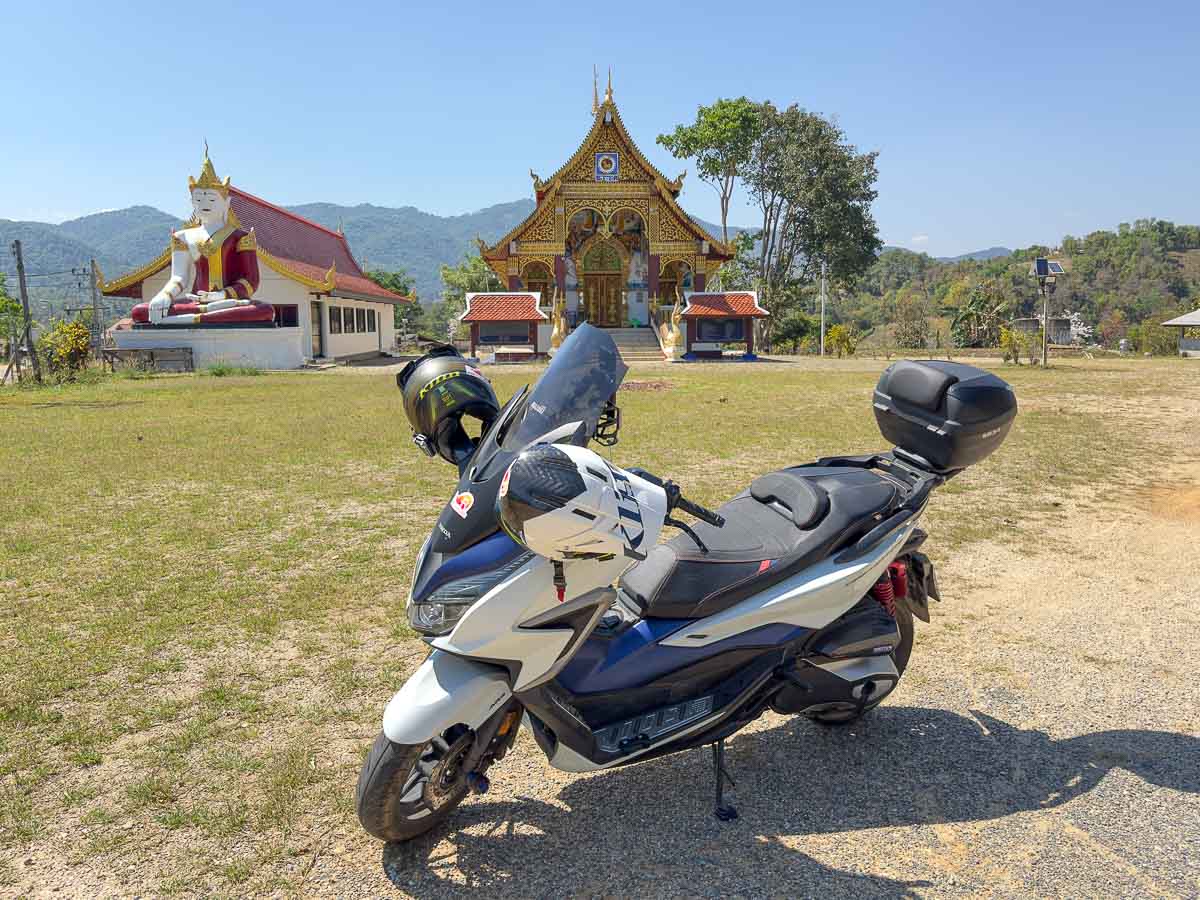
We bought a Honda Forza scooter for ฿130,000 (~$3,700 USD), which we use for errands and short trips. Monthly costs:
- Gas: ฿350–400 ($10–$11)
- Maintenance: minimal, but budget ฿200–500/month ($6–$14)
- Ride-hailing: Grab rides are affordable—฿60–120 ($1.70–$3.40) per ride in town.
Don’t want to drive? Songthaews (red trucks), taxis, and Grab are everywhere. Or live in a walkable area and skip transport altogether.
SIM Cards: ฿60–300/month (~$1.70–$8 USD)
- Dtac eSIM (prepaid 1-year plan): I paid ฿2,100 (~$60) for the year. So worth it.
- AIS top-ups: Garrett does monthly top-ups for around ฿200 ($5.50)
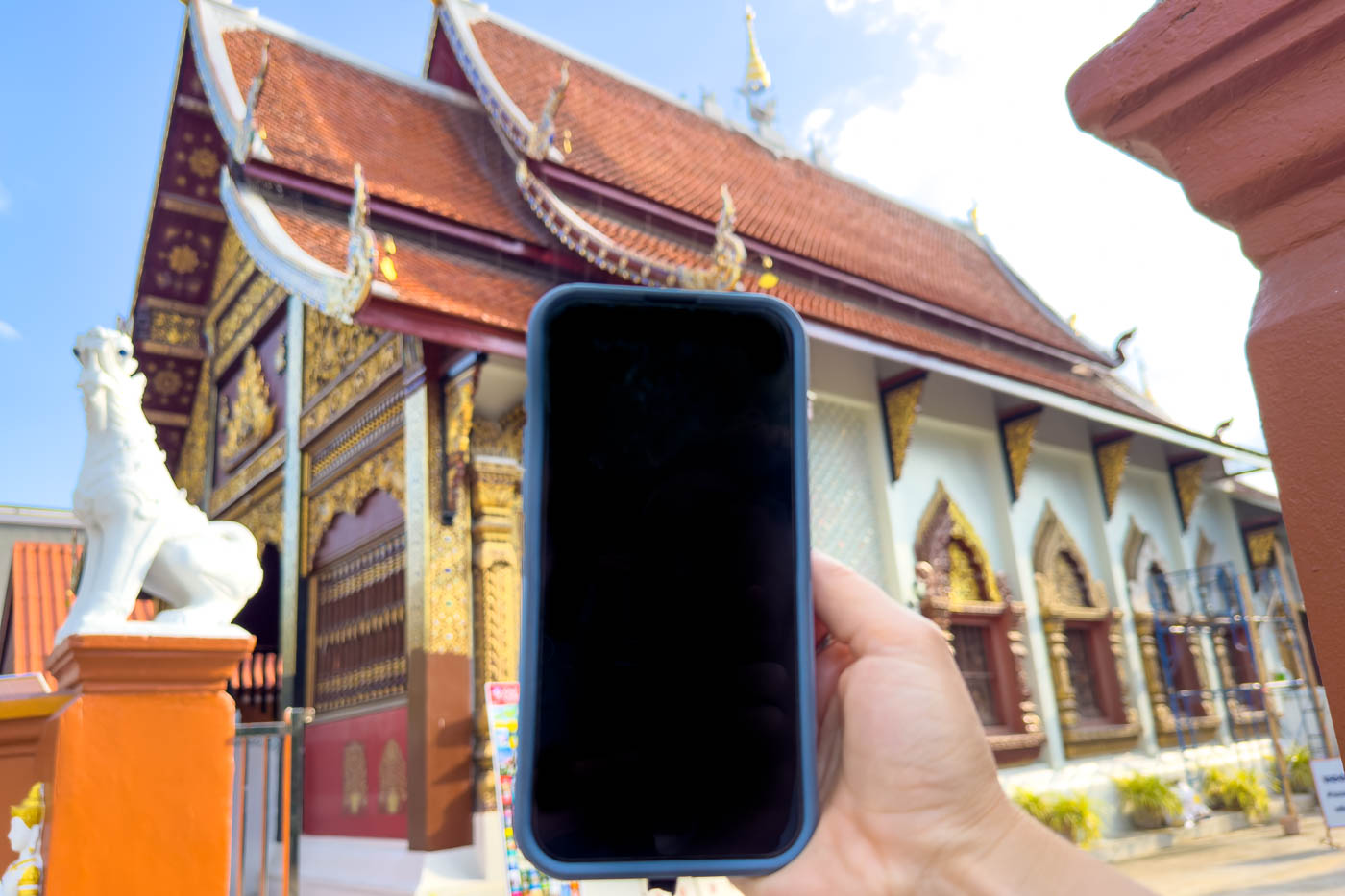
Both providers are solid. Grab an eSIM before you get here to get you going, but after that, just purchase a local eSIM so you can have a local Thai number and pay next to nothing!
Cleaning, Laundry, and Massages
- Cleaning Lady: ฿1,600/month (~$50 USD)
That’s for bi-weekly service in a condo. If you’re in a house or standard apartment, it will be a bit cheaper, depending on the size, of course. - Laundry:
- Self-service: ฿60–80/load (~$1.70–$2.30 USD)
- Drop-off: ฿30/kg (~$0.85 USD per kg)
Most places have a washing machine, but dryers are rare. Air drying is totally normal. If you really need a dryer, you’ll likely have to hit up a laundromat.
- Massages: ฿300–400/hour each (~$9–$12 USD)
We each get one a week. It’s one of those budget luxuries that never gets old.
Fitness & Wellness: ฿3,500–7,000/person/month (~$97–$195 USD)
We just do Muay Thai training. What kind of fitness do you enjoy? You’ll find it in Chiang Mai!

- Group Muay Thai Training: ฿3,500–5,000 ($97–$140)
- Private sessions or higher-end gyms: ฿6,000–7,000 ($165–$195)
- Gyms: ฿1,000–3,000/month ($28–$85)
- Yoga studios: ฿2,000–4,000/month ($55–$110)
Fun & Extras: ฿10,000/month (~$280 USD)
This covers:
- Date nights
- Drinks with friends
- Household odds and ends
- Anything spontaneous

We’re not splurgers, but we’re not skimping either. This buffer makes life enjoyable. Most of the time, we are just chilling in town, going out for food or drinks, or maybe an afternoon at a big pool with friends.
Visa Runs & Exit Trips: ฿3,000–10,000+ (~$85–$280+ USD)
If you’re on a tourist visa or Digital Nomad DTV, you’ll need to leave the country every 3–6 months depending on your visa.
- Quick flights to KL or Vietnam: ฿3,000–7,000 ($85–$200)
- Longer visa runs: ฿10,000+ ($300+), especially if you stretch it into a vacation
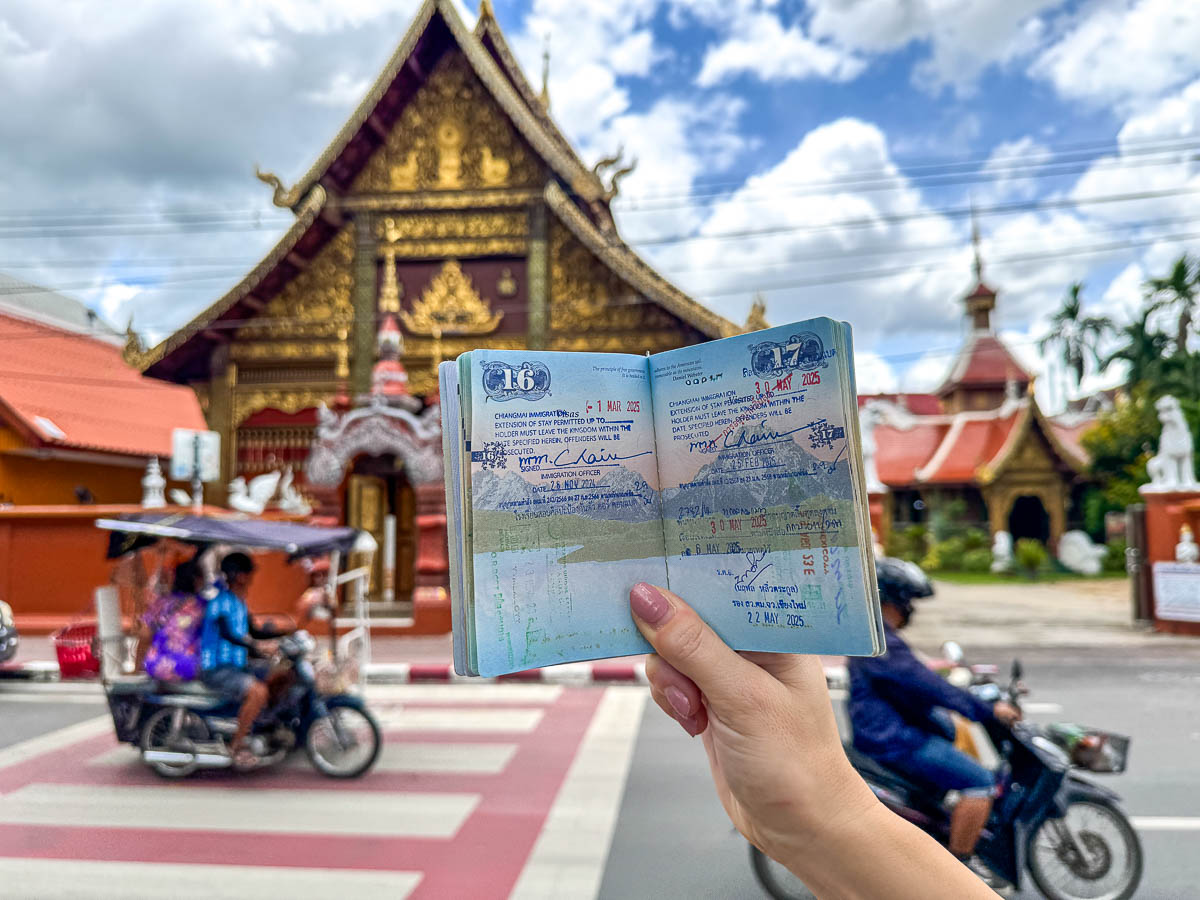
- Extensions: Depending on which visit you’re on, don’t forget about extension costs (usually around $60, depending). This is done in the country, so it is cheaper, but often overlooked.

We treat them as mini getaways and never just do a simple round trip on the same day. Why would I do that?! It’s an excuse to go somewhere fun or new for a long weekend, at the very least.
We rode the Ha Giang Loop, I went to Japan, and I spent a few weeks in Da Nang doing my “visa runs.”
Budget vs Luxury: Cost Ranges by Lifestyle (For Two People)
| Lifestyle Type | Monthly Cost (฿ / USD) | What That Covers |
|---|---|---|
| Shoestring | ฿25,000–30,000 / ~$700–$1000 | A basic studio, local street food, mostly walking or biking, minimal extras. Possible solo, prob too tight for couples. |
| Midrange (Us!) | ฿55,000–65,000 / ~$1,500–$2,000 | Nice condo, scooter, massages, gym, Western meals, food delivery. Comfortable living without splurging constantly. |
| Luxe Life | ฿78,000+ / $2,400+ | High-end apartment, dining out often, bars, spa days, fitness classes, and plenty of Grab rides and food delivery. |
Final Thoughts

Chiang Mai is still one of the best bang-for-your-buck cities on the planet. You can live well, eat well, move around freely, and stay active—all for less than what you’d pay for rent alone in many U.S. cities.
Our couple budget clocks in at under $2,000/month—without holding back. But it’s flexible: solo travelers can do it for far less, and big spenders will still get great value compared to back home.
Just be warned: once you see what life can cost here, you may never want to leave. Luckily, there are plenty of different visas available in Thailand, so you don’t have to say bye-bye after 30 days!
I hope this helps you understand what the cost of living in Chiang Mai, Thailand, can look like.
More On Living in Thailand:
Read more about living in Thailand:

This guide gives you the *exact* steps, visa options, and decision tools to pick the best country for *you*.
GRAB THE GUIDENo fluff. No BS. Just straight-up ✨virtual hand holding✨ so you can stop dreaming and get out of the US!