Australia’s minimum wage just hit A$26.44 an hour. Here’s what that does to a backpacker’s savings plan
Australia just raised its minimum wage to A$26.44 an hour, and that one number quietly explains more about backpacker bank accounts than any budgeting hack ever will.
Here’s the part most travel writing skips: a floor that high changes what a “boring” job is worth. Pouring coffee, folding swimwear, pulling pints. Nothing glamorous, all of it adding up.
Ready to see what that looks like on a pay slip? Let’s get into it.
Before you keep reading: if “moving abroad” has been a someday thought, I turned everything I wish I’d known into one guide. Visas, jobs, country picks — check it out.
The number, straight from the source
As of 1 July 2026, the Fair Work Ombudsman lists the National Minimum Wage at A$26.44 an hour, or A$1,004.90 a week based on a 38-hour week. This year’s increase was 4.75% for award-covered employees.
Casual workers get a bigger hourly figure, not a smaller one. Casual employees on the National Minimum Wage must receive at least A$33.05 an hour, which includes a 25 percent casual loading. Yes, really: casual is the higher number.
Now compare that with the US federal minimum wage of $7.25 an hour. Different currencies, so run the conversion yourself. Does it make you wince a little?
What a shop job looks like at that rate
I worked retail at a little surf shop in Darwin for six months, and it was easily one of the easiest jobs I’ve ever had. Folding clothes, reorganizing the floor, telling people they looked great in bikinis. I still banked money doing it.
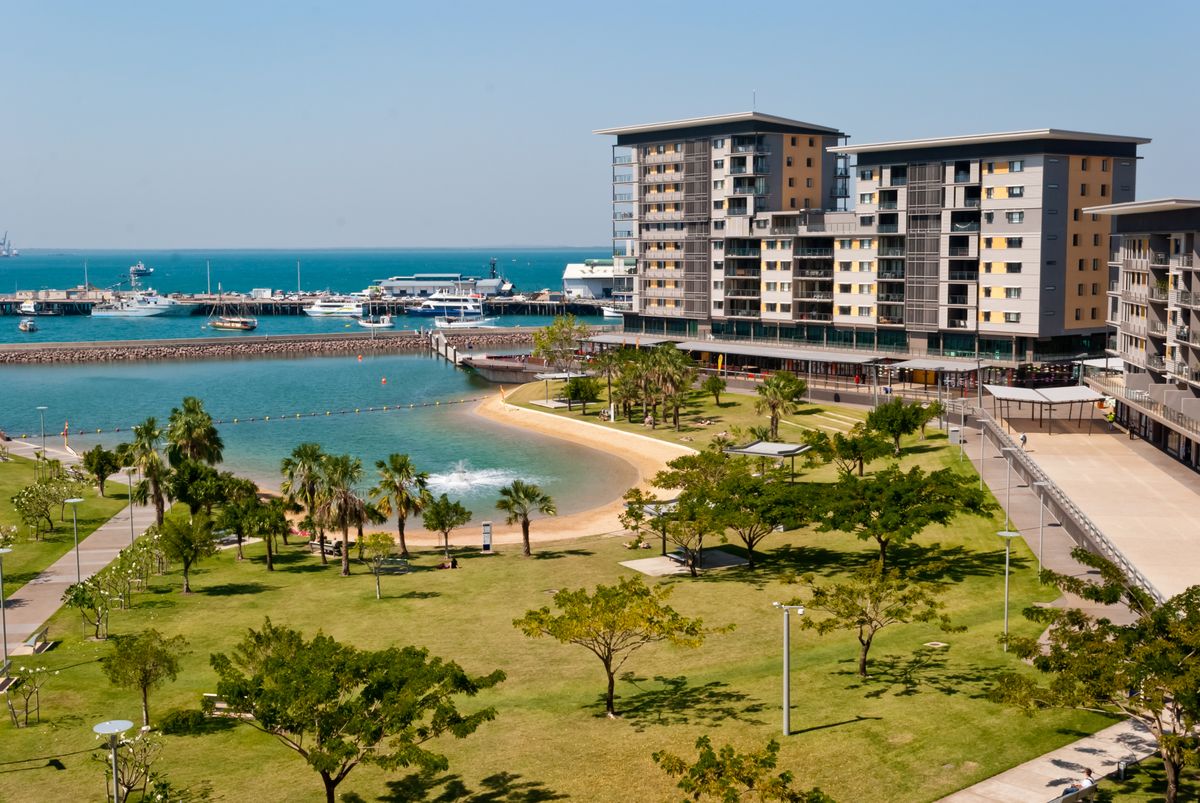
On top of retail, I waitressed and bartended, all on an Australian working holiday visa. Hospitality isn’t glamorous. But when the floor is A$26.44, even the “boring” jobs start to look like a savings plan.
Still think waiting tables abroad is a step down?
Saving it is the hard part
A high wage doesn’t save itself. I worked long hours, spent very little, and barely went out. That’s the unglamorous truth behind the number.
My own payoff: I saved over $20K USD in less than a year, and half of it paid for a five-month van life trip around New Zealand. In my opinion, the real draw of an Australian working holiday isn’t the beaches. It’s the pay slip.
Before you quit your job and book the flight
A minimum wage is a floor, not a promise. What you earn depends on the job, the hours, and your situation, and nobody can guarantee what you’ll walk away with.
Check the Fair Work Ombudsman’s current rates for your exact role before you accept an offer, and make sure you actually qualify for a working holiday visa, since eligibility depends on your passport. If you want the full playbook on living and working in Australia, I’ve got it covered.
So what would you do with a pay rate like that: save it, spend it, or build the trip of your life? Tell me in the comments.
If working abroad on a working holiday visa has you curious, my working holiday visa guides have more.
