
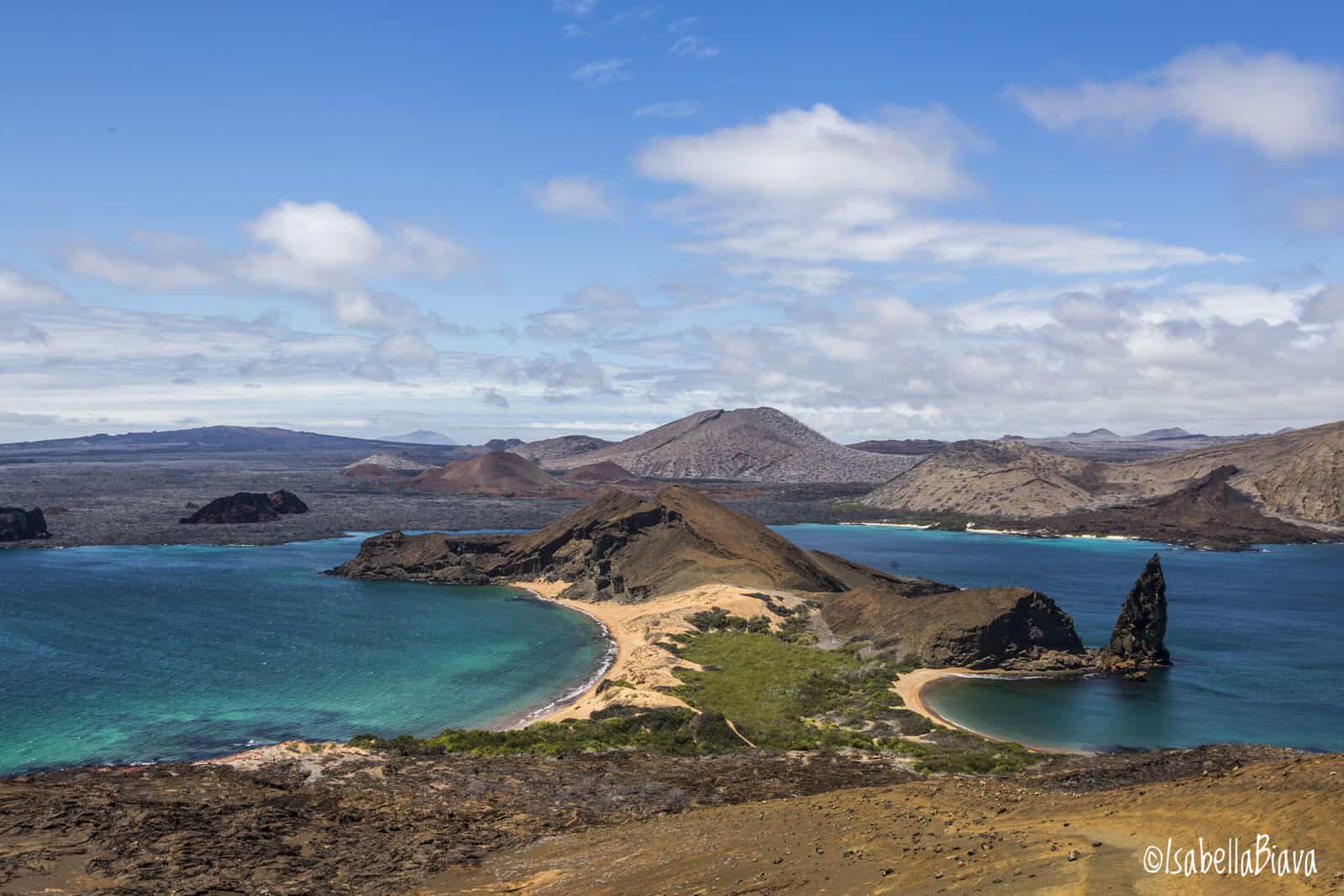
How to explore the Galápagos Islands without a cruise: island hopping explained
Hardly any other place in the world has such a fascinating ecosystem as the Galápagos Islands. Spread across more than 100 islands, visitors can experience not only rare plant life but also an extraordinary wildlife that has been able to develop largely undisturbed over millions of years.
This article shows which islands are particularly worth visiting and what you need to consider when island hopping.
RELATED: An Adventurous 7-Day Ecuador Itinerary (Plus Add Ons!)
Which islands are suitable for tours?
There are around 19 larger islands with an area of more than 1 km². In addition, there are over 100 smaller islands and individual rock formations. Altogether, this creates an area of roughly 130 islands and destinations—ideal for a multi-day trip.
Land-based Galápagos tours typically last between three and five days. The most recommended islands to visit are Santa Cruz, Isabela, and San Cristóbal. Depending on how much time you have and what you want to see and experience, beginners may find a three-day tour from Santa Cruz to San Cristóbal particularly suitable.
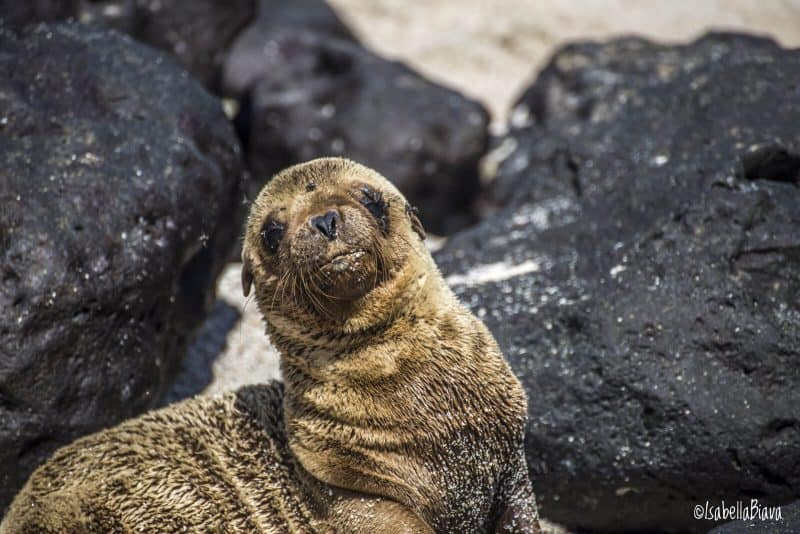
After arriving at Baltra Airport, you take a bus and ferry to Puerto Ayora. Once there, a visit to the Charles Darwin Research Station is well worth it. A walk through the town and along the harbor is also delightful—if you’re lucky, you may even spot sea lions lounging nearby.
The next day, the journey continues to San Cristóbal. A speedboat takes visitors to the island in about 2.5 hours in the morning. Here, too, there is plenty of flora and fauna to admire. A particular highlight is the sea lions at Playa Mann. Snorkeling right off the beach allows visitors to experience other marine life up close.
On the third day, exploration of San Cristóbal continues. La Lobería, home to a large sea lion colony, is a must-see. The day can then be perfectly rounded off with a scenic coastal hike.
Island Hopping – 4 Days: Santa Cruz to Isabela
Travelers with a bit more time can experience even more of the Galápagos Islands on this four-day island-hopping tour. The journey can also begin on Santa Cruz.
Countless lava tunnels and scenic viewpoints showcase the island at its most beautiful. To see giant tortoises in the wild, visitors should head to the highlands early in the morning, when these impressive island inhabitants are especially active.
On the second day of the tour, the journey continues early in the morning by speedboat to Isabela. Upon arrival, flamingos may already be waiting in the lagoons near Puerto Villamil. After a short stop at the accommodation, an afternoon snorkeling trip to one of the calm bays is highly recommended.
It is well worth staying an extra day on Isabela, as the island offers a great deal—especially thanks to its volcanoes. However, exploring on your own is not advisable due to the rough terrain.
A guided volcano hike, such as to Sierra Negra Volcano, is much safer and also provides valuable background information. This volcano is the most active in the Galápagos Islands. From the crater rim, visitors are rewarded with sweeping views over vast lava fields and the island’s unique landscape.
After two exciting days on Isabela, the fourth day begins with a boat trip back to Santa Cruz. From there, travelers can transfer to a boat heading to San Cristóbal.
To recover from the long travel day, a relaxing walk along the waterfront of Puerto Baquerizo Moreno is ideal after arrival. The following day, well-rested visitors can set out for final wildlife encounters or enjoy a scenic coastal hike.
Special Considerations: What to Keep in Mind When Island Hopping
Due to their geographical location, there are several special aspects to consider when island hopping in the Galápagos Islands. Travel between the individual islands is almost exclusively done by speedboat.
These crossings usually take around two to three hours and often depart early in the morning. Travelers who are prone to seasickness should prepare in advance, for example, by taking appropriate medication.
Weather conditions can also change quickly, so bringing a protective jacket and a hat is useful both for sun protection and to stay warm.
Seats on the boats are limited, which makes booking tickets as early as possible essential. In many cases, tickets can be conveniently purchased online or directly at the harbor.
During the high season for the Galápagos Islands (June to August and December), availability is particularly limited. For this reason, travelers should plan and reserve their island-hopping transfers well in advance to remain flexible and avoid unnecessary waiting times.
Another important consideration mainly concerns wildlife enthusiasts. Anyone hoping to observe tortoises and other animals should be aware of the activity patterns of the island’s wildlife.
Many species are most active early in the morning or late in the afternoon, retreating during the intense midday heat. Giant tortoises, for example, can be easily observed in the highlands in the morning. Sea lions also enjoy the cool morning hours and are often seen on beaches at that time.
If you are planning excursions into nature, it is advisable to check in advance whether these can be done independently or only with a certified guide. To protect the fragile ecosystem of the islands, the government has decreed that certain areas may only be explored with licensed naturalist guides.
