
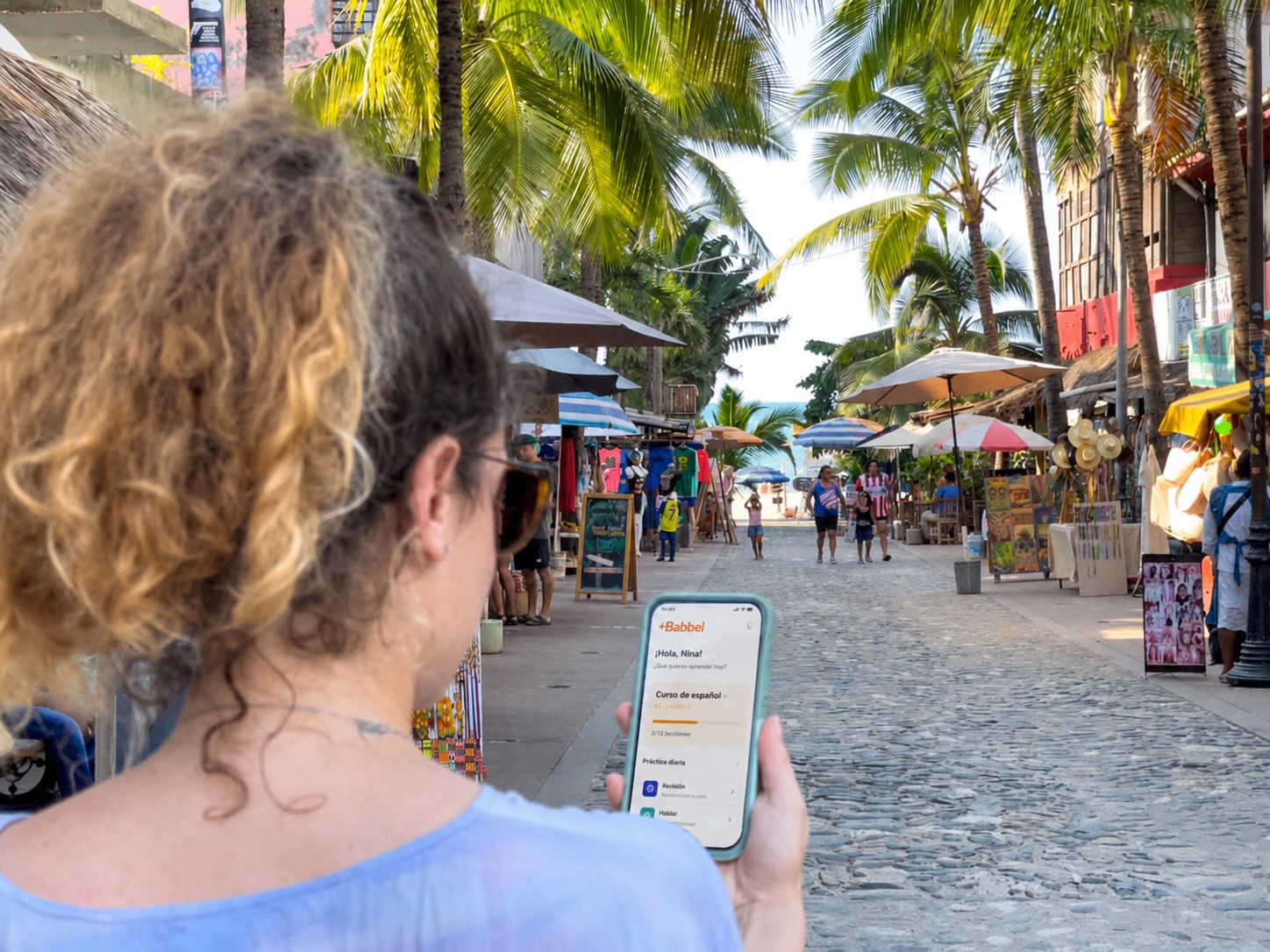
Babbel Review: Is It Worth It?
If you’ve been trying to learn a language and you’re not sure which app to actually commit to, you’ve probably come across Babbel.
It’s one of the most recognized language learning apps out there, and for good reason. But is it actually worth your money, or is it just another app that’ll collect digital dust after week two?
I put Babbel to the test to find out!
I’m a long-time traveler and digital nomad who’s been navigating Spanish (and failing at past tense) for years, so I came into this with a real use case.
Here’s my full honest Babbel review: what it does well, where it falls short, and who it’s actually a good fit for.
My Babbel Review: The Quick Lowdown
4.3/5
WORTH IT ✅
GREAT FOR
- Expats/immigrants and travelers wanting real skills
- Rusty speakers getting back on track
- Only 5-10 min a day to spare
- Beginners who want structure, not games
SKIP IF
- You’re already conversational/advanced
- You need a language outside their 14
- You want free with no subscription
- You need strict pronunciation feedback
What Is Babbel?
Babbel is a subscription-based language learning app available on both mobile and desktop. It offers structured courses in 14 languages, including Spanish, French, Italian, German, Portuguese, and more.
Unlike a lot of apps on the market, Babbel’s courses are built by a team of over 200 linguists and language experts. Not crowdsourced. Not AI-generated. Actual humans who know languages.
The content is also tailored to your native language, which matters more than you’d think. As an English speaker learning Spanish, the lessons are built around the exact hurdles English speakers hit, not a generic one-size-fits-all approach.
Independent studies from Michigan State University and Yale University have shown Babbel’s method leads to real progress, with 96% of learners improving their grammar and vocabulary scores after just 10 hours of use.
Lessons run about 5 to 10 minutes each, which makes it realistic for busy people to stay consistent. And with language learning, consistency is basically everything.
Getting Started with Babbel
When you first open Babbel, you take a quick placement test to find your level.
It’s a starting point, not a deep diagnostic. It placed me at beginner A2 for Spanish, which honestly tracks. I know enough to get by, but my grammar is rough, especially with tense conjugations (bane of my existence!).
From there, Babbel dropped me straight into a lesson on past tense verb conjugations, specifically ser and ir in the indefinido form, which is exactly the stuff that trips me up—BIG TIME!
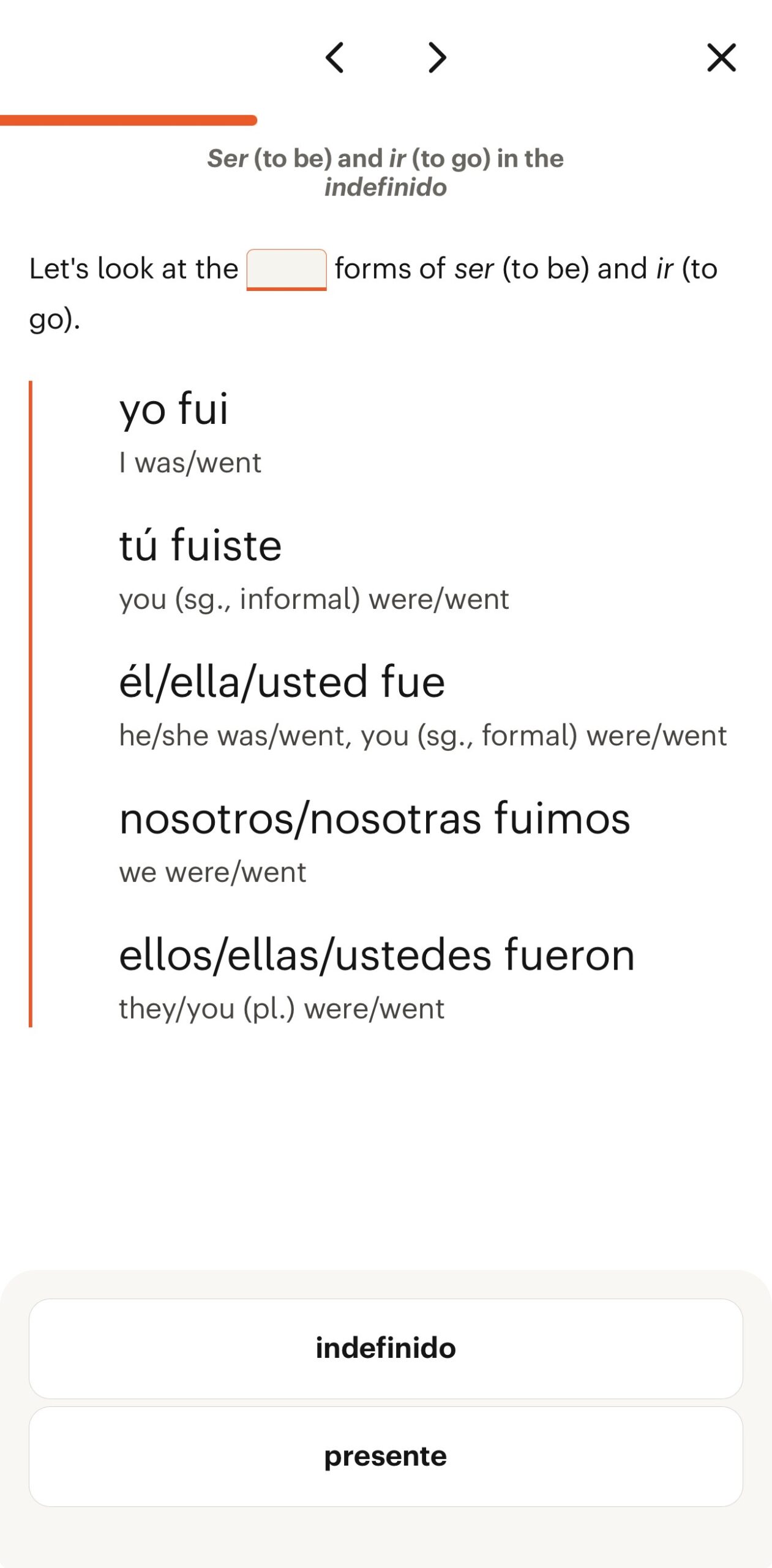
It wasn’t overwhelming. The app laid out the conjugation tables before drilling them, so you’re eased in rather than just quizzed cold. I appreciated that.
The interface is clean and intuitive. Zero issues figuring out where to go or what to tap, which isn’t always the case with apps trying to do a lot at once.
👉 TRY OUT BABBEL
0 risk, money-back guarantee!
What You Get with Babbel
Babbel covers all the bases you’d expect from a solid language learning app, and then some. Here’s how it breaks down.
The Core Stuff
These are the features doing the heavy lifting. The foundation of the app and what you’ll use most.
- Structured lessons and courses. Babbel feels like an actual course, not a game. Lessons build progressively, grammar shows up early and in context, and vocabulary comes through real dialogues rather than random word lists. You can track your completion percentage and go back to review anything you’ve already covered.
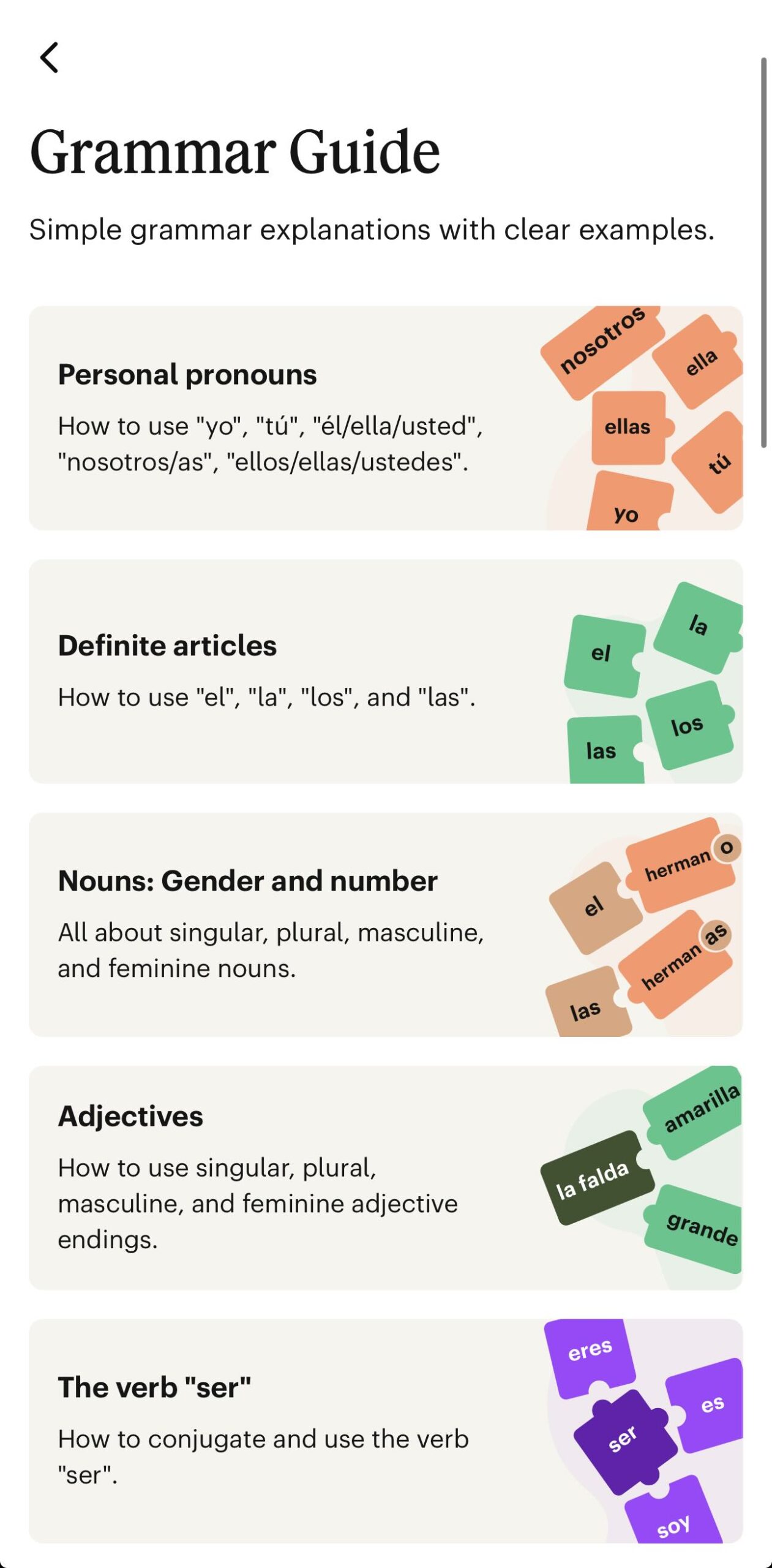
- Grammar guide. A standalone reference section you can dip into anytime, almost like a mini textbook built into the app. Struggling with when to use el vs. la? Look it up, read the explanation, and practice right there. You’re not locked into a course to access it.
- Speech recognition and pronunciation feedback. Babbel listens to you speak and gives real-time feedback. It works well for catching obvious errors, though it’s a bit forgiving. Take the green checkmarks as a guide rather than a final grade on your accent.
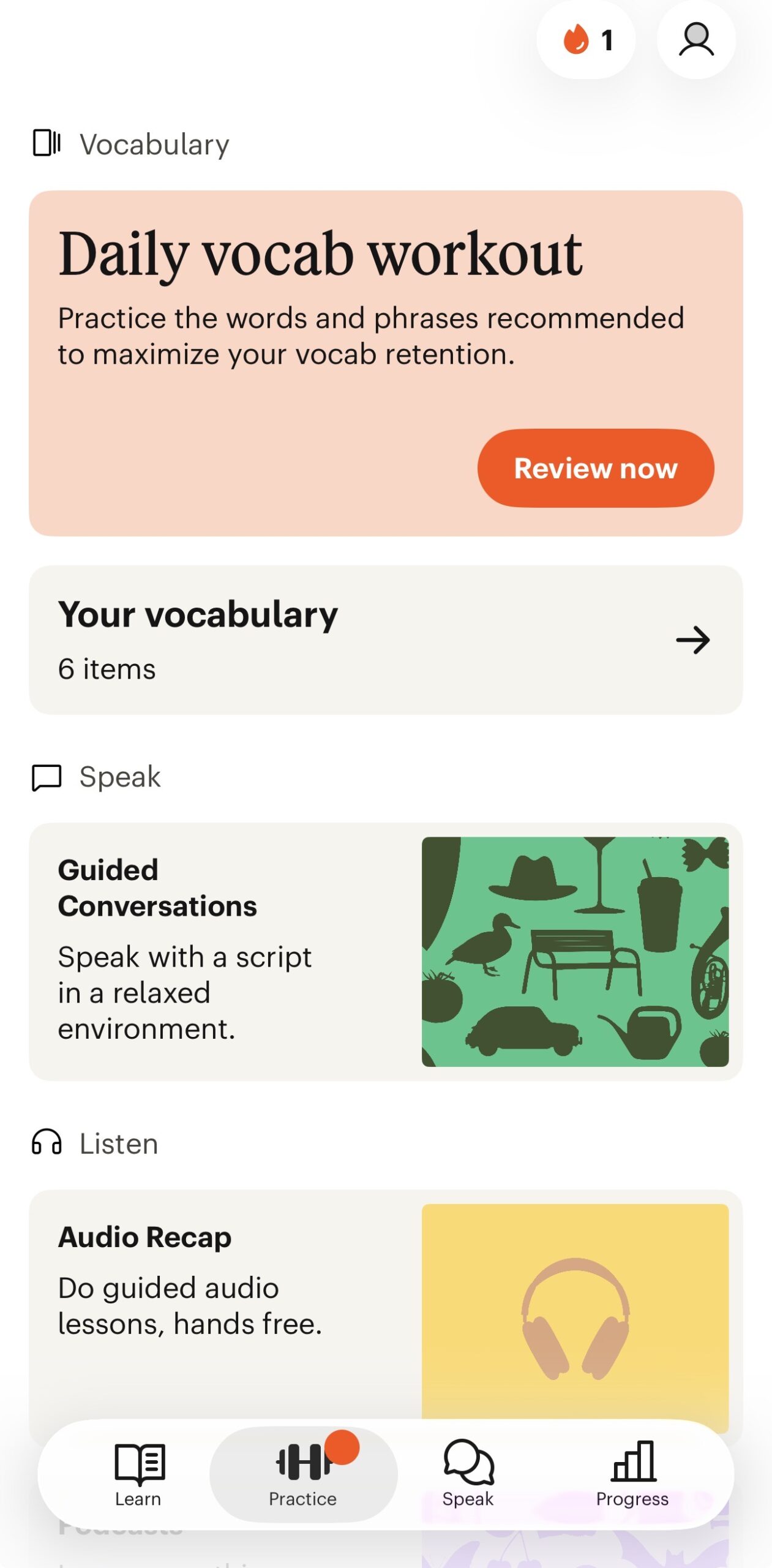
- Flashcards and spaced repetition. Babbel cycles back vocabulary you’ve already covered, surfacing weak spots before you forget them. For busy people doing short daily sessions, this is where the app earns its keep for long-term retention.
The Bonus Features (Genuinely Good Ones)
These are the extras that make Babbel stand out from a crowded field. Not every app bothers with this stuff, and it shows.
Word of the day. A small thing, but kind of delightful. Even if you only open the app for two minutes, you walk away with one new word. Low effort, keeps the language on your radar on off days.
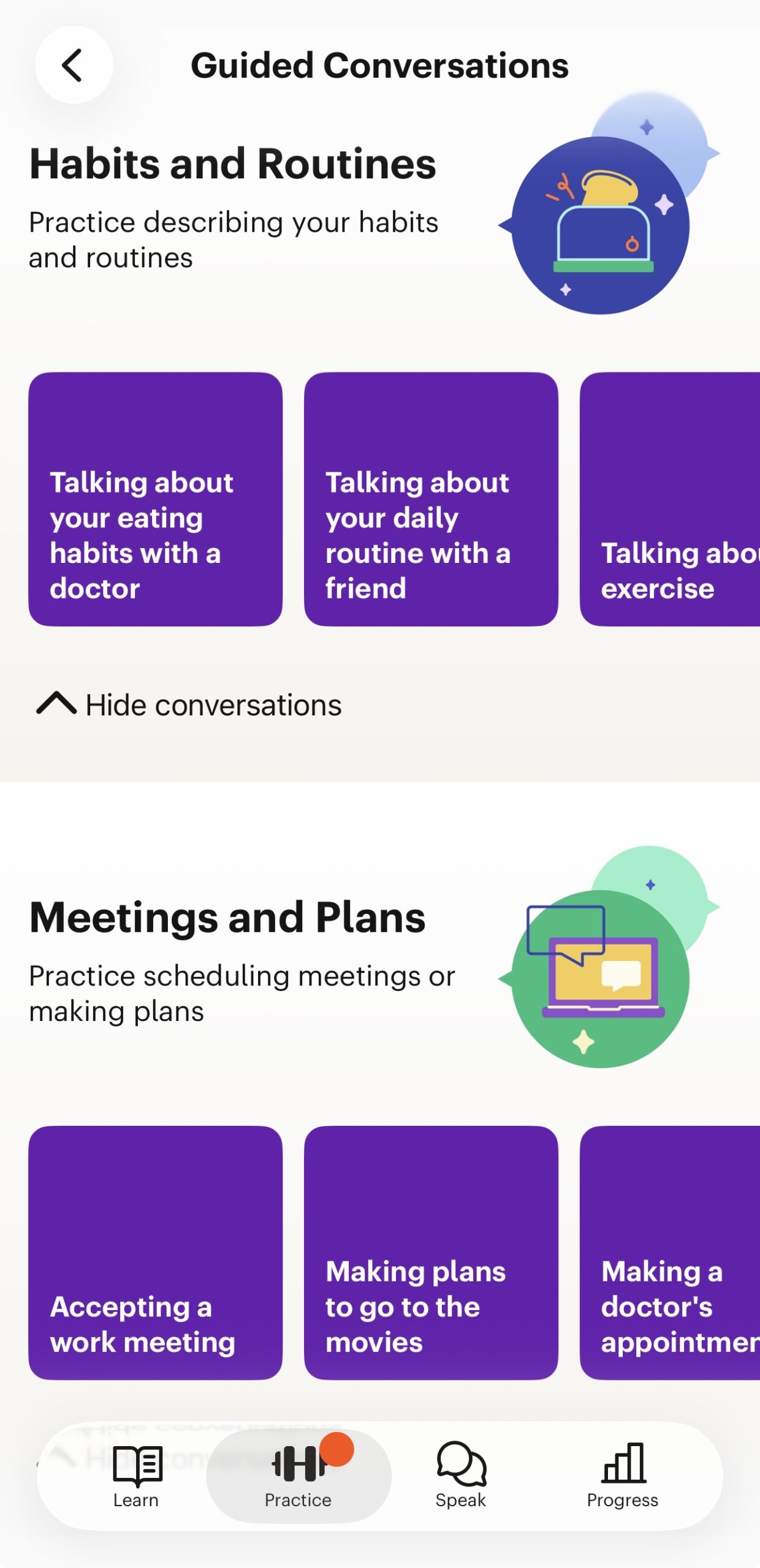
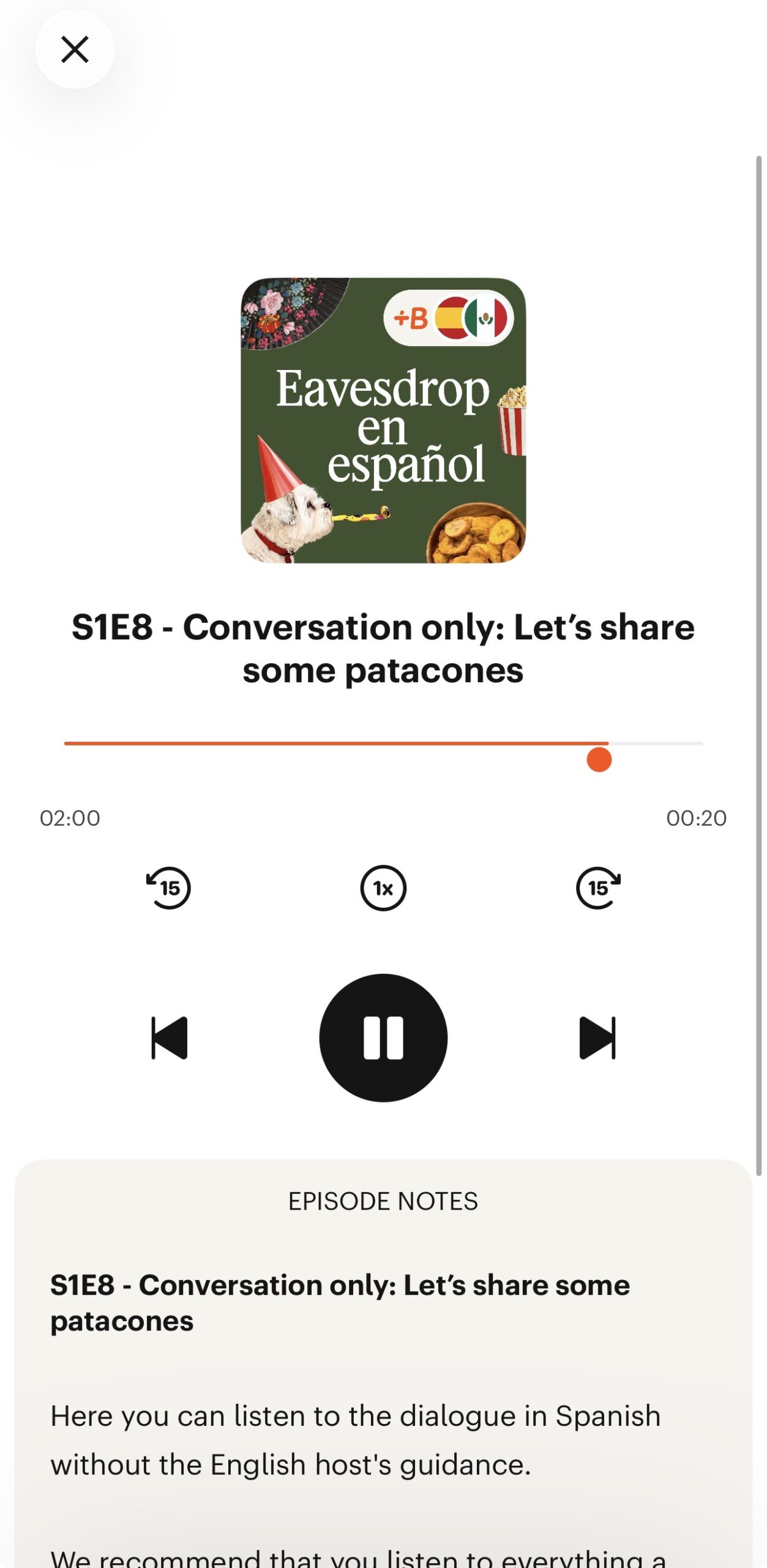
Guided conversations and podcasts. Choose from real-life topics like travel, habits, and routines for guided practice. Podcasts are built right into the app too, great for passive listening on a commute or flight when you don’t want to actively study.
Visual vocabulary. New words and sentences are often paired with photos. Small touch, but it genuinely helps with retention. Way more effective than staring at a word in isolation.
AI conversation partner (beta). This is the one I’m most excited about. You have a real spoken back-and-forth with an AI — it speaks, you respond out loud, and if it doesn’t catch your pronunciation, it asks you to try again. Still in beta and not perfect, but built-in speaking practice is a big deal, and I’d watch this space.

Babbel Pros and Cons
Pros
- Built by real language experts. Every course is designed by linguists, not generated by algorithm. The quality shows.
- Feels like a real course. Structured, progressive, and grammar-forward in a way that actually builds comprehension.
- Practical and conversation-focused. More interested in getting you to real sentences than drowning you in vocab lists.
- Lots of ways to learn. Structured lessons, podcasts, grammar guides, flashcards, speaking practice, AI conversation. You can mix it up daily.
- Short lessons that fit real life. 5 to 10 minutes is achievable on even a packed day.
- Offline access. Download lessons and study anywhere, no data needed.
- Science-backed results. Independent studies show real measurable improvement, not just app store hype!
- AI conversation partner is promising. Still in beta, but built-in speaking practice is a big deal.
- 20-day money-back guarantee. Low-risk way to actually try it.
- Start speaking a new language in 3 weeks. Yes, in less than a month you’ll be able to start making conversation!

Cons
- Only 14 languages. Covers the major European languages well, but no Thai, Japanese, Arabic, or other widely spoken languages outside that scope.
- Hits a ceiling around B1 level. Great for getting functional, but advanced learners will need to supplement to push past intermediate.
- Speech recognition is forgiving. Useful for building confidence, but not strict enough to catch every pronunciation mistake.
- Can feel overwhelming with choices. The variety is a strength, but a clearer suggested daily path would help when you’re not sure where to start.
- Limited free content. You can try a lesson for free, but most of the app requires a subscription.
👉 TRY OUT BABBEL!
You’ll start speaking your new language in 3 weeks!
Who Is Babbel Best For?
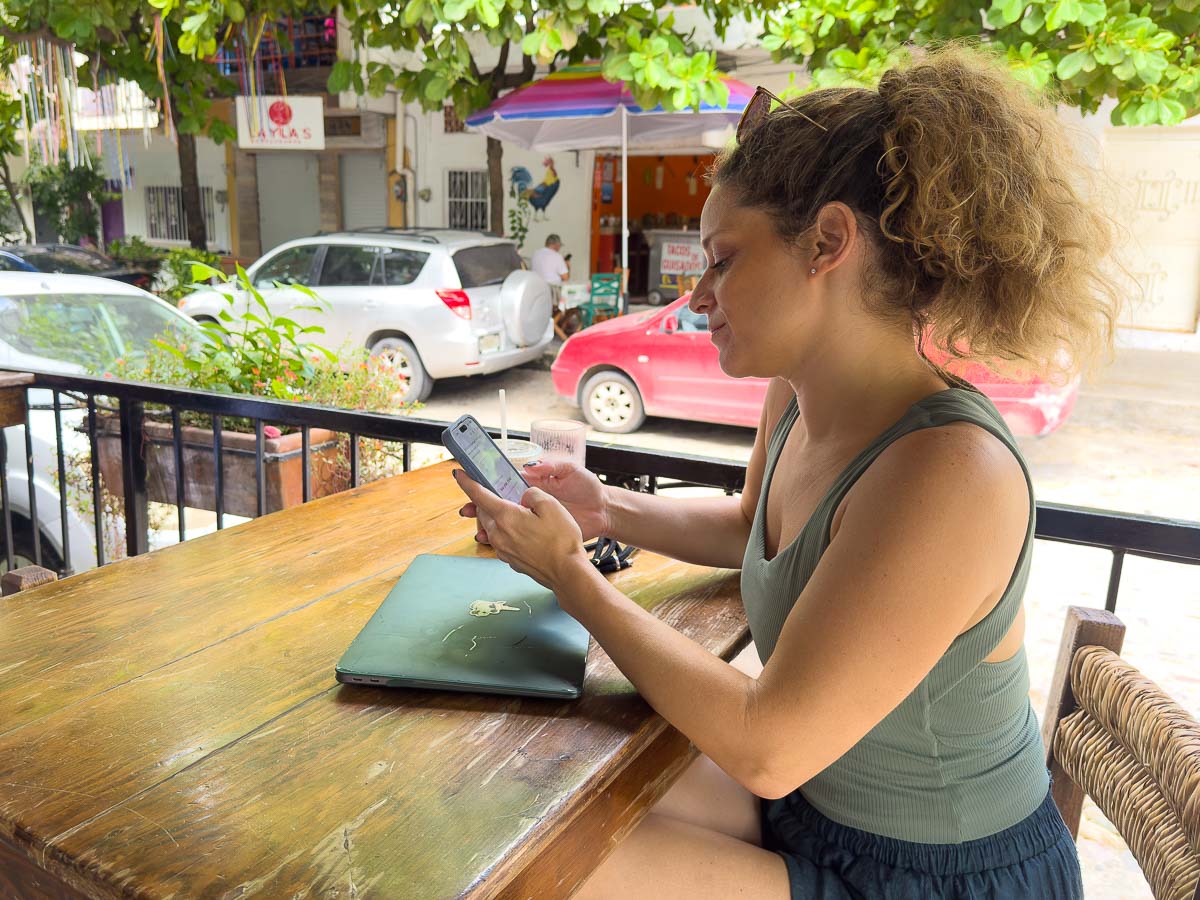
Babbel is a strong fit for travelers, expats, and digital nomads who want to actually communicate in another language.
If you’re heading somewhere and want to hold a real conversation, or you’re living abroad and tired of nodding blankly, this app will move the needle.
It’s particularly good if you’re a complete beginner or a little rusty and want something structured to get back on track. The lessons are short enough to fit real life, and the variety of tools means you won’t get bored doing the same thing every day.
It’s less ideal for advanced learners who are already conversational, or anyone trying to learn a language outside Babbel’s current library.
If you want to compare options, I’ve also reviewed Mondly and FluenDay.
Babbel Review Final Verdict—Is It Worth It?
Yes, for the right person. Babbel holds great ratings across the App Store, Google Play, and Trustpilot, and based on my experience, that tracks!
The lessons are well-built, the structure is solid, and the conversation-first approach means you’re working toward something you can actually use.
It won’t take you to fluency on its own, and if your target language isn’t in their library, you’re out of luck. But as a foundation, or a way to level up from rusty to functional, Babbel delivers.
Plans are reasonably priced, and they offer a 20-day money-back guarantee; it’s a pretty low-risk commitment to find out if it clicks for you.
Give it a try, friend. You’ve got nothing to lose!
Nina’s Verdict
4.3 / 5 ⭐
- ✅ 14 languages with structured courses
- ✅ Only 5-10 min a day to make progress
- ✅ Works offline — perfect for travel
- ✅ Speech recognition built in
- ✅ Backed by a 20-day money back guarantee
A solid daily habit for beginners and rusty speakers — if you have 5-10 minutes and want something that actually travels with you, it’s worth it!
