

Where $2,000/Month Still Buys You a Decent Life Abroad in 2025
If you’ve ever tried to do a “can I live abroad on $2,000/month?” search, you’ve probably gotten everything from “totally, bro” to “absolutely not, you’ll die.”
The truth sits in the middle: $2,000/month is still enough for a genuinely decent life abroad in 2025… if you pick the right region, city, and lifestyle. Not influencer-baller, not hostel-goblin. Just…comfortable.
Let’s break it down by region with rough sample budgets so you can see what life actually looks like at that number.
What “Comfortable on $2,000/Month” Actually Means
Think of this as the baseline:
- Your own studio or 1-bedroom in a decent area
- Eating out a few times a week
- Groceries that aren’t all instant noodles
- Local SIM + solid Wi-Fi
- Public transport or scooter, not Uber XL every day
- Basic health insurance or travel insurance
- A little leftover for weekend trips and “I’m a human, let me have fun”
Not included:
- Aggressive debt payoff
- Constant long-haul flights
- Designer anything
This is “I’m fine and not stressed” money, not “I’m recreating my U.S. lifestyle in a penthouse” money.
Southeast Asia: Still the MVP of Stretching $2K
Classic for a reason. You trade high rent and car costs for cheap food, scooters, and weather that melts your phone.
Example: Chiang Mai, Thailand
Chiang Mai is still one of the easiest places to live well on a mid-range budget.
Sample monthly budget (USD-ish):
- Rent (nice studio / 1BR in a good area): $400–$600
- Utilities + Wi-Fi: $60–$90
- Phone + data: $15–$25
- Groceries: $200–$250
- Eating out + coffee: $200–$300
- Transport (scooter + gas / Grab): $60–$100
- Health insurance / travel insurance: $80–$150
- Fun + short trips: $200–$300
👉 Total: roughly $1,200–$1,800
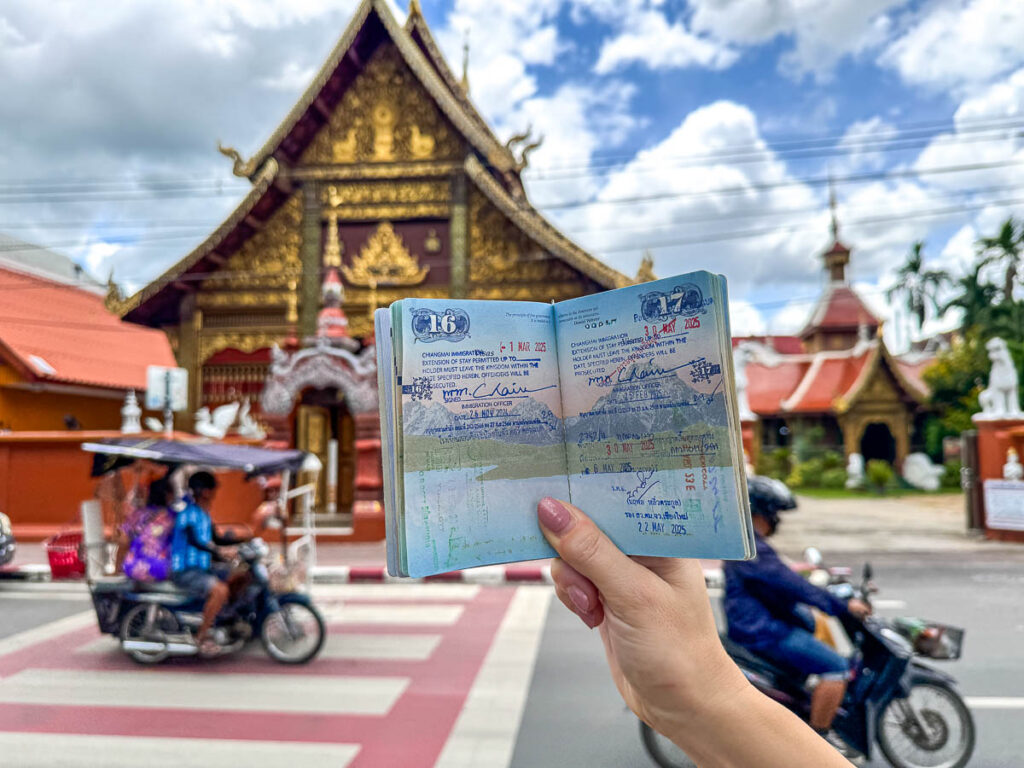
At $2,000, you’ve got wiggle room for:
- Nicer apartment
- Extra trips around Thailand / SE Asia
- Some savings or debt payments
Visa reality: tourist visas + extensions can keep you for a bit, but long-term you need a legit option (education visa, retirement, new “digital nomad” style options as they evolve, etc.).
Example: Da Nang, Vietnam
Big beach, real city, not full chaos.
Sample monthly budget:
- Rent (modern 1BR near the beach): $350–$550
- Utilities + Wi-Fi: $60–$90
- Phone + data: $10–$20
- Groceries: $180–$230
- Eating out + coffee: $200–$280
- Transport (scooter + gas / Grab): $50–$90
- Health insurance / travel insurance: $80–$150
- Fun + weekend trips (Hoi An, Hue, etc.): $200–$300
👉 Total: roughly $1,130–$1,710
Again, $2,000/month here = comfort, not survival mode.
Visa reality: Vietnam keeps tweaking visas, but longer e-visas + extensions are making it more realistic to stay past a quick tourist run. Long-term life still needs real visa strategy, not border-run vibes.
The Balkans: “Europe-ish” Life Without EU Rent Prices
If you want European-ish vibes without Lisbon/Barcelona rents, the Balkans are such a good cheat code.
Example: Tirana, Albania
Tirana is one of the easiest “starter Europe” cities for Americans.
Sample monthly budget:
- Rent (central 1BR): $400–$600
- Utilities + Wi-Fi: $70–$100
- Phone + data: $10–$20
- Groceries: $200–$250
- Eating out + coffee: $180–$250
- Transport (buses, taxis, some day trips): $60–$100
- Health insurance / travel insurance: $80–$150
- Fun + coastal weekends (Vlore, Himare, etc.): $200–$300
👉 Total: roughly $1,200–$1,770

The magic Albania bonus:
Americans can often stay up to a year visa-free, which is unheard of in most of Europe. That alone makes it an insane value for a first year abroad.
Example: Belgrade, Serbia
More “city city” energy: cafés, nightlife, river walks, winter that actually exists.
Sample monthly budget:
- Rent (nice 1BR in good area): $400–$650
- Utilities + Wi-Fi: $100–$140 (winters can spike heating)
- Phone + data: $10–$20
- Groceries: $200–$260
- Eating out + coffee: $200–$280
- Transport (buses, trams, taxis): $50–$90
- Health insurance / travel insurance: $80–$150
- Fun + regional trips (Novi Sad, Sarajevo, etc.): $200–$300
👉 Total: roughly $1,340–$1,890
At $2,000, you’re not balling, but you’re fine. Nights out, wine, and cafés don’t feel like financial crimes.
Latin America: Comfort If You Avoid the Ultra-Pricey Pockets
Latin America is wide. You’ve got everything from super cheap small towns to “this might as well be Miami” neighborhoods. $2,000/month works very well if you dodge the top 1% expat bubbles.
Example: Medellín, Colombia
The internet’s favorite “spring forever” city.
Sample monthly budget:
- Rent (1BR in Laureles / Envigado / non-fancy Poblado): $450–$700
- Utilities + Wi-Fi: $70–$100
- Phone + data: $10–$20
- Groceries: $200–$260
- Eating out + coffee: $200–$280
- Transport (metro, taxis): $60–$100
- Health insurance / EPS / private top-up / travel ins: $80–$150
- Fun + weekend trips: $200–$300
👉 Total: roughly $1,270–$1,910
$2K gives you room to:
- Pick a nicer building
- Travel around Colombia (Cartagena, coffee region, etc.)
- Save a bit or send extra to debt
Example: Mid-Size Mexico (Not Beach-Inflation Central)
Think Oaxaca City, Mérida (non-tourist center), Querétaro, Puebla.

Sample monthly budget:
- Rent (1BR in a good neighborhood): $450–$750
- Utilities + Wi-Fi: $70–$110
- Phone + data: $15–$25
- Groceries: $220–$280
- Eating out + coffee: $220–$300
- Transport (buses, occasional Uber/inDrive): $60–$100
- Health insurance / travel insurance: $80–$150
- Fun + short trips: $200–$300
👉 Total: roughly $1,315–$2,015
$2K/month here is very doable as long as you’re not trying to live like a resort guest every day.
Southeast Europe / “Other Europe But Not the Usual Suspects”
There are also non-Balkan, non-Portugal countries where $2K still works if you pick your city carefully.
Example: Smaller Cities in Portugal or Spain
Lisbon / Barcelona? $2K is tight unless you’re sharing or living farther out. But:
- Secondary cities in Spain (Valencia, Granada, Málaga, Coruña)
- Smaller cities in Portugal (Braga, Coimbra, some parts of Algarve inland)
…can be significantly cheaper.
Very rough “second city” budget:
- Rent (1BR in a non-hyped neighborhood): $650–$900
- Utilities + Wi-Fi: $100–$150
- Phone + data: $15–$25
- Groceries: $250–$300
- Eating out + coffee: $220–$300
- Transport (public + occasional Uber): $60–$100
- Health insurance (private, if needed): $60–$120
- Fun + weekend trips: $200–$300
👉 Total: roughly $1,555–$2,195
Here, $2K/month is possible if you stay in the middle-ish of these ranges, not at the top of everything.
How to Tell If $2,000/Month Is Enough For You
A few questions to check yourself:
- Do you need a fancy apartment, or are you fine with “clean and cute”?
- Are you okay using public transport / scooters instead of owning a car?
- Are you trying to pay off major debt aggressively at the same time?
- Do you get joy from simple stuff (walks, cafés, markets), or do you need constant pricey outings?
If you’re reasonably low-maintenance and pick your city well, $2K/month in 2025 can still buy:
- Your own place
- A normal social life
- Some travel
- Less financial anxiety than in most of the U.S.
If you want help sanity-checking specific cities (“Could I do X on $2K?”), send me the short list and your non-negotiables and we can build real-world budgets for each.
