
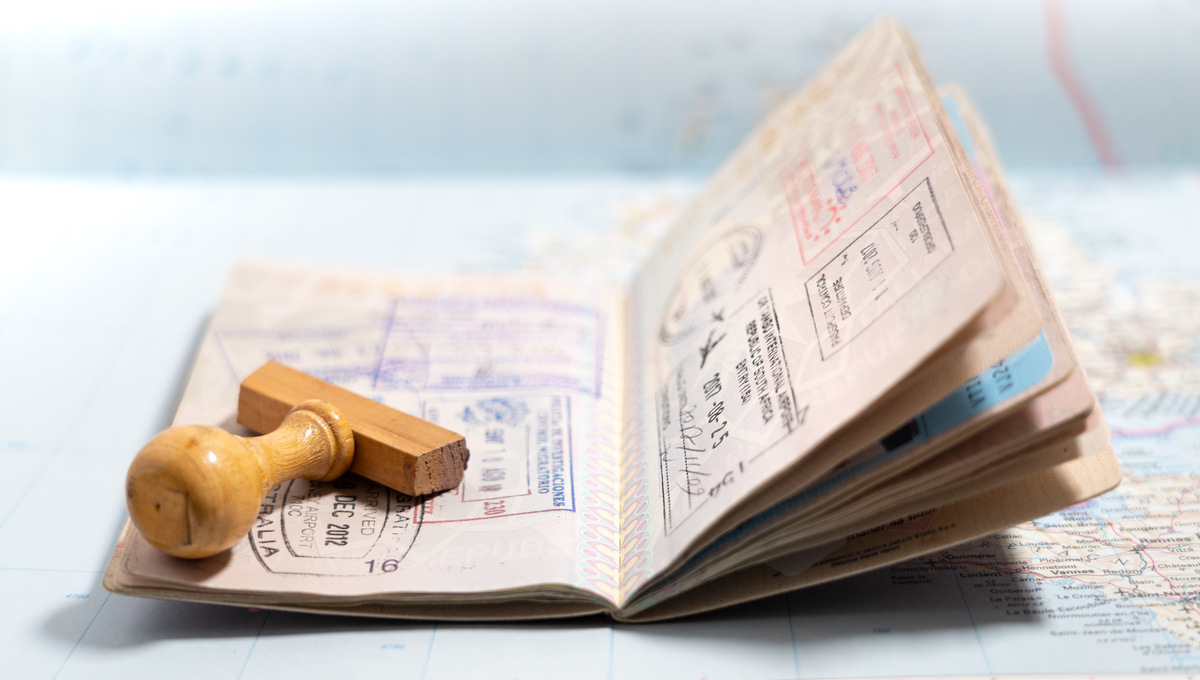
What actually happens if you overstay a tourist visa
One extra day past your visa’s expiration date can cost you a few hundred dollars, or it can lock you out of an entire region for years. The penalty has almost nothing to do with how sorry you are and everything to do with which country’s stamp is in your passport.
Most travelers assume an overstay works the same everywhere: a small fine, an apologetic conversation at the airport, maybe a stern look from an officer. That’s true in some places. In others, one missed day sets off a chain reaction that follows you home.
The rules reset completely at every border
There’s no global overstay policy. Every country decides independently how to fine, ban, or deport people who stay past their allowed window, and the gap between the mildest and harshest versions of that policy is bigger than most travelers expect. Here’s how three of the most common regions for American travelers actually handle it.
Thailand fines you by the day, then caps it
Thailand’s overstay fine is fixed at 500 baht per day, and it stops accumulating once it hits 20,000 baht, which lands around the 40-day mark.
What changes the outcome isn’t the math, it’s whether you report yourself. Travelers who realize they’ve overstayed and turn themselves in, either at a Thai immigration office or at the airport on their way out, pay that capped daily fine.
Travelers who get caught during a routine check, an arrest for something else, or a police checkpoint face significantly harsher penalties, and any resulting entry ban roughly doubles compared to the self-reported version.
Thai authorities have also shown they’ll bend the rules when travel itself is the problem: in 2026, overstay fines were temporarily waived for travelers whose permits expired on or after February 28 and who could prove flight disruptions from Middle East airspace closures kept them from leaving on time.
The Schengen area remembers even after you’ve gone home
In the Schengen zone, there’s no grace period built into the math. Even one day past your allowed 90-in-180 counts as an overstay, and the consequences scale with how long you went over.
Some countries treat a short overstay of three days or less as a non-event, but push past that and you’re looking at an entry ban that can run one year for overstays up to 90 days, and up to two years for anything longer. Individual countries can be stricter: Denmark, for example, hands out a 3-year ban for overstays of 30 days or less and 5 years beyond that.
Fines climb with the calendar too, starting in the low hundreds of euros for the first week and climbing past 3,000 euros the longer it drags on. And catching people has gotten a lot easier: the EU’s Entry/Exit System, fully operational as of April 2026, uses biometric fingerprint and facial scans to log every entry and exit for non-EU travelers and flags overstays automatically. The days of a border agent eyeballing stamps in a passport are over.
The US bar doesn’t start ticking until you leave
The American system works differently, and it catches people off guard because the penalty doesn’t activate while you’re still in the country. Unlawful presence builds up quietly in the background. Accumulate more than 180 days but less than a year of it, and you’re facing a 3-year bar from reentry. Cross the one-year mark, and it becomes a 10-year bar.
Here’s the part that trips people up: that bar isn’t triggered by the overstay itself, it’s triggered by departure. Someone can be unlawfully present in the US for years without the clock on the bar ever starting, because the bar only attaches the moment they physically leave the country. It’s a strange incentive structure, and it’s exactly why so many overstay cases turn into years-long limbo rather than quick fixes.
What to actually do if the math isn’t in your favor
If you’re not sure where you stand, don’t wait for a border agent to tell you. Count your own days using your entry and exit stamps (or a Schengen calculator if you’re bouncing between multiple countries in the zone), and do it before you book your exit flight, not after.
If you’ve already gone over, get ahead of it. In places like Thailand, self-reporting is the difference between a capped fine and a doubled ban. In the US, the fact that the bar doesn’t start until you leave means the smartest move is often to get legal advice before you cross any border, not after. And if you’re the type who’s already tracking visa requirements that keep shifting on you, add overstay rules to that same list. They change more often than travelers assume, and they’re a lot more expensive to find out about the hard way.
So, before your next trip: do you actually know how many days you have left in the country you’re headed to?
